Adolfo R. Valencia
1952 - 2026
Share Adolfo R. Valencia's obituary with others.
Invite friends and family to read the obituary and add memories.
Stay updated
We'll notify you when service details or new memories are added.
You're now following this obituary
We'll email you when there are updates.
Please select what you would like included for printing:
Adolfo arrived in this world on October 28, 1952, in San Francisco, California, a city that suited him perfectly, like himself always reinventing itself, always beautiful, always restless.
On Sunday, April 5, 2026, he left it having loved more deeply than he was ever able to show, having wandered further than most would dare, and having carried into every room a bright passion for life.
He was, in the truest sense, a man of paradoxes. Those who knew him knew a man of uncommon humor and charm. He had the gift of genuine curiosity, the rare and generous ability to make a stranger feel, within minutes, that they were the most interesting person in any room. He loved music with the devotion of someone who understood it as a language the heart speaks when words have given out. The world fascinated him. He was moved by other cultures, other ways of being human, other rhythms and colors and stories, and he journeyed through his life with an openness that many people spend entire lifetimes trying to cultivate. For him, he simply existed.
What the world saw less of, what only the people who loved him closest ever fully witnessed, was the weight he had been handed before he was old enough to refuse it. He came into this life carrying a wound that was not his making. A father whose own damage left marks that don’t show up in photographs. Early abuses that a child’s nervous system absorbs and translates into a single, persistent, devastating belief: that he was not safe, not enough, not worthy of the uncomplicated love he so clearly needed. He spent the rest of his life in a complicated negotiation with that belief, sometimes outrunning it through adventure and connection, service and creative joy, sometimes being overtaken by it, reaching for substances that promised relief and instead extracted compound interest on an already painful debt.
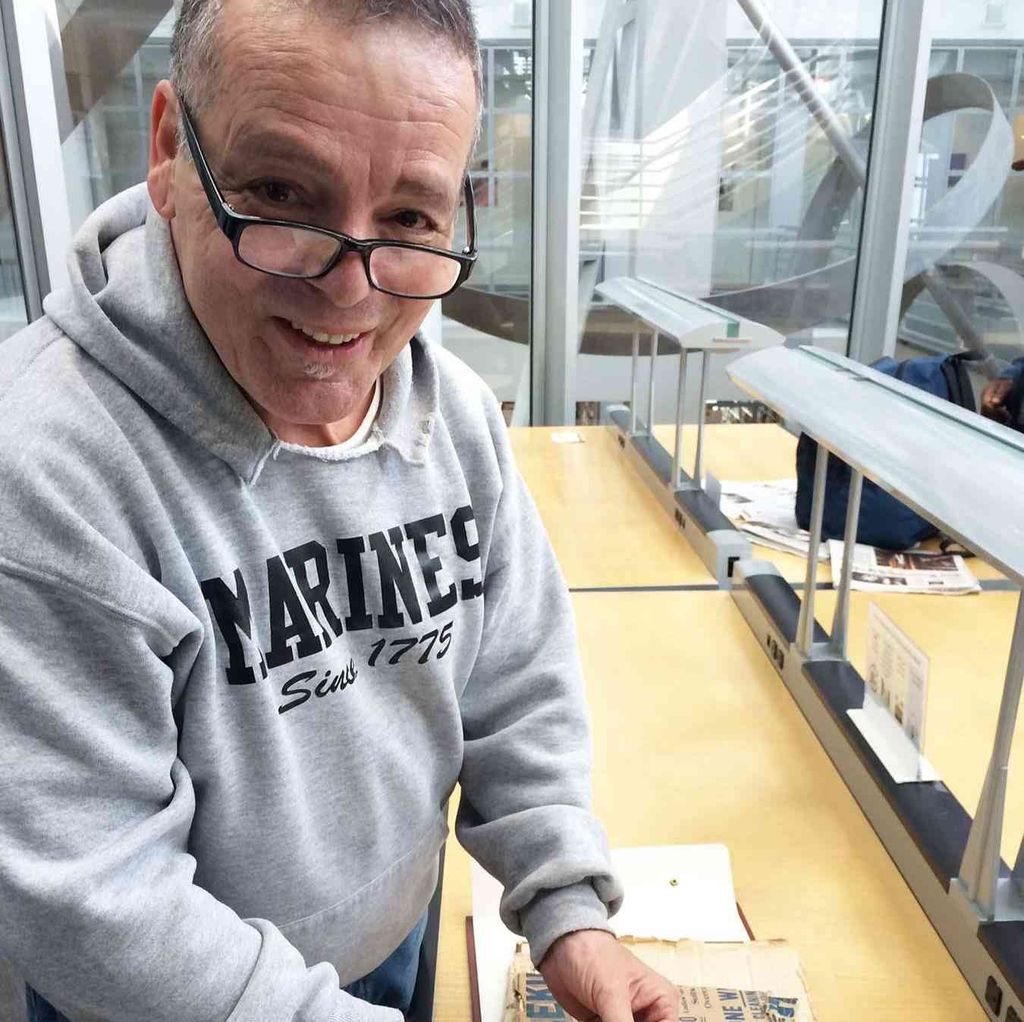
Adolfo’s family and friends celebrated his significant achievements, his service as a U.S. Marine in the Vietnam War, his decades of sobriety, his world travel, his education, his arduous and successful pursuit of a career as a Registered Nurse, and his recovery from devastating loss and illness.
Addiction is not a moral failure. It is what happens when an intelligent, sensitive, feeling person encounters pain too large to metabolize alone and finds something, anything, that turns the volume down. He was not weak. He was, in fact, extraordinarily strong in ways that many never properly witnessed or acknowledged. He survived things that would have leveled others. He kept showing up to a life that kept asking more of him than anyone had ever taught him how to give.
Adolfo was a deeply beautiful person in a great deal of pain, doing what people in pain do, sometimes reaching outward for connection, sometimes retreating in ways that left real damage in their wake, often both in the same afternoon.
His relationships bore the full weight of this complexity. He was magnetic and then elusive. Generous and then gone. He moved through partnerships and friendships and family bonds. Estrangements accumulated. Distance became the vocabulary of people who loved him and needed, for their own survival, to love him from further away. He understood this, at some level. That particular loneliness of knowing you are the one people need distance from is its own quiet devastation.
And yet there was his daughter. She is, by every measure, the place where the truest version of him lived. His only child. He carried his pride in her the way some men carry a photograph, close to him, taken out often, shown to anyone who would look. The distance between them over the years, the estrangements that addiction and its gravity field create, never diminished what he felt. If anything, absence seemed to concentrate it. She was the best of him, gathered together and walking around in the world doing things he marveled at. In her, his creativity found a face. In her, his curiosity found a continuation. In her, the part of him that always believed in beauty, despite substantial evidence to the contrary, was proven right. He was immensely proud of her. In whatever room he was in, whatever chapter of his complicated life he was living through, that was a constant.
He is survived by his daughter, Esperanza, his loving sister Maricela, his mother Carolina and his siblings, Sandra, Ruben, Carolina, and Rosalia, his many nieces and nephews and his beloved dog, Lola.
He is survived by every piece of music he loved so well it became part of him. He is survived by the laughter he generated, and he generated a great deal of it, and by the conversations that went long into the night and felt, to the people in them, like exactly what human beings are meant to do with their short and luminous time here.
He is survived, too, by his complexity, which is to say, by his full humanity. He was not simple. He did not live cleanly. He wrestled with his inheritance and did not always win those rounds. He hurt people he loved and knew it and carried that knowing. He was also funny and warm and genuinely, deeply interested in the strange and remarkable fact of being alive.
What a soul carries into this world is not always what it manages to put down before it leaves. Some wounds travel the full distance. Some lessons arrive as understanding only in the final quiet, or perhaps just past it, in whatever spaciousness opens up on the other side of a complicated life.
May he rest in that spaciousness now.
May he know, wherever he is, that he was loved, imperfectly, sometimes from a necessary distance, but genuinely and without final condition by the daughter who carries his best self forward in everything she does, by his family, by his good friends, Jeff and Jan.
Adolfo was a beloved father, brother, son, uncle and friend. Restless spirit. Seeker of beauty.
Adolfo R. Valencia's Guestbook
Visits: 25
This site is protected by reCAPTCHA and the
Google Privacy Policy and Terms of Service apply.
Service map data © OpenStreetMap contributors