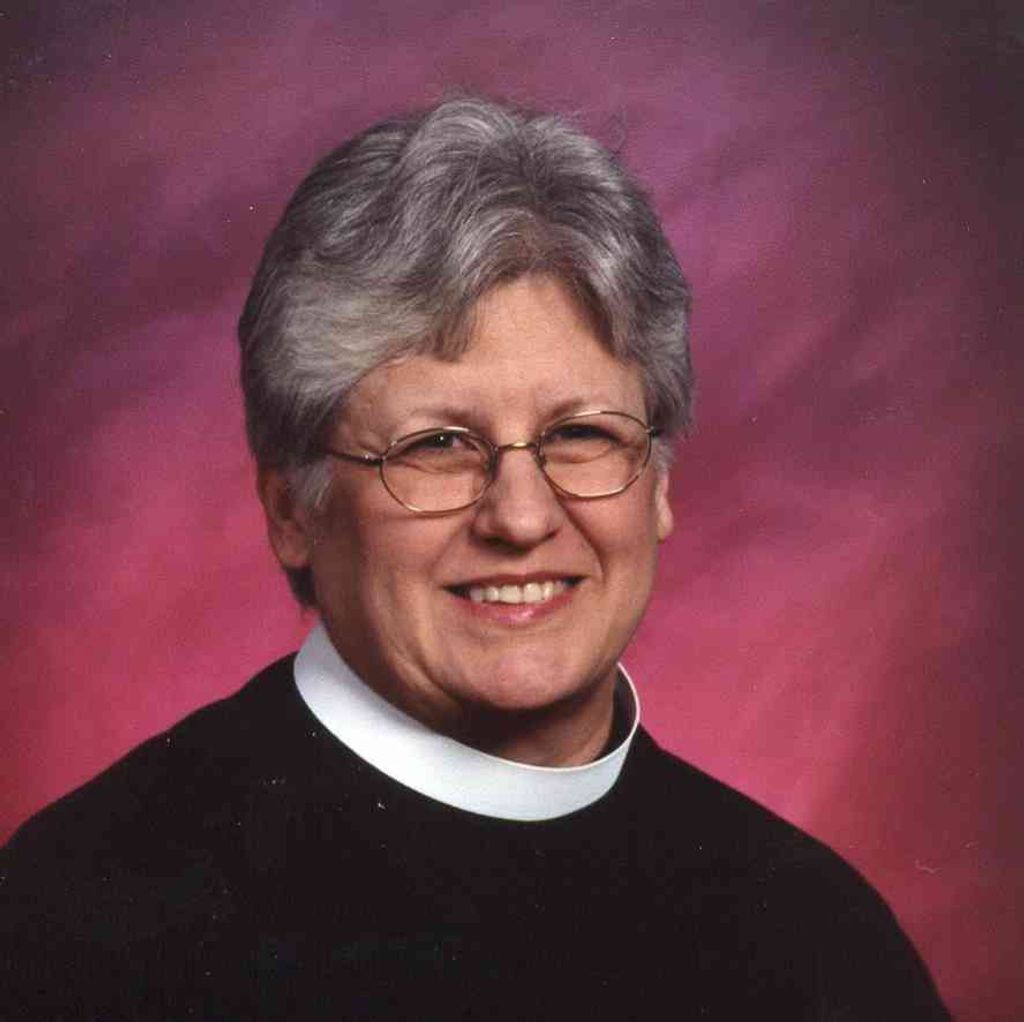
Alice Morse
1947 - 2026
Share Alice Morse's obituary with others.
Invite friends and family to read the obituary and add memories.
Stay updated
We'll notify you when service details or new memories are added.
You're now following this obituary
We'll email you when there are updates.
Please select what you would like included for printing:
Alice Janette Morse (née Suter),
June 18, 1947 – April 21, 2026
Alice Janette Morse died on April 21, 2026, at the age of 78. Shy by nature and soft spoken, she was a carefully articulate woman whose words carried weight. She lived with a deep moral seriousness, a quiet humor, and a fierce devotion to the people and communities she served. Her life’s work—as a mother, a priest, and a steady presence of love—was shaped by her belief that Jesus cared for the uncared for, and that love itself is God’s presence in the world.
She was preceded in death by her parents, Walter Morris Suter (1912–1974) and Ellamae Gray Suter Anosovich (1925–2014), and by her infant son, Barry Walter Morse (1975–1975). She is survived by her siblings Nancy Suter, Jack Suter, Jason Suter, and Tina Navarre (Byron); by her children Andrew Morse (Gala), Holly Morse, and John Morse; and by her grandchildren Marina, Erika, Athena, Persephone, Andrey, Lucy, Damon, and Stella.
Alice was raised in Hamburg, Michigan, by loving parents—her father, a grocer with gentle devotion and a warm sense of humor, and her mother, a no nonsense homemaker who taught her cookery, housekeeping, and the quiet, steady forms of motherly love. As the eldest of five, she helped care for her younger siblings, for whom she held a lifelong fondness. She was a good student, especially gifted in art and writing, though her future path was uncertain. Her parents “didn’t know what to do with Alice” after high school, and it was her mother who ultimately drove her to Eastern Michigan University and enrolled her in the art education program, setting her on a path she would later reshape into her true vocation.
In 1971, Alice married Michael Morse. Together they raised their children through many happy years, navigating the challenges of military life. The strain of that lifestyle eventually led to their divorce in 1987, but the end of the marriage did not end their friendship. They remained close for the rest of her life, coordinating the care of their children and supporting one another through the years. Michael was with her even on the day of her death, and her gratitude for him was among the last things she ever spoke about. Her greatest legacy was the unconditional love she gave her children—a love that endured through every hardship, every move, every change.
Alice’s faith was shaped in her childhood church, St. Stephen’s Episcopal Church in Hamburg, where she played the organ as a teenager and was deeply influenced by her church leader Deaconess Robinson. This was a time when women in the Episcopal Church had few paths to leadership beyond becoming a nun or a deaconess. Even so, Alice felt the beginnings of a calling to ministry. As a young military wife, she moved frequently and struggled to establish a home diocese, delaying her pursuit of ordination. Still, she persisted. She began her ministry as a lay minister in American Samoa, where her husband was stationed. Later, while he was away on military duties, she attended Nashotah House Theological Seminary in Wisconsin—full time, while raising three school age children on her own. Those three years of theology, ethics, and liturgy were a time when she could finally exercise her intellect. She formed friendships there that she cherished for the rest of her life.
After her Nashotah graduation in 1986, her male peers were ordained almost immediately. For Alice, it took seven more years. She endured years of poverty, working as a secretary—using the skills she learned in high school—to keep a roof over her head. Despite holding a Master of Divinity, she was often overlooked or dismissed. Yet she kept going. In 1993, when the men around her could no longer find a reason not to ordain her, she was finally ordained to the priesthood at St. James’ Episcopal Church in Milwaukee. Even then, she continued working full time as a secretary while supplying as a priest for years before leading her own parish.
Her final parish was Trinity Episcopal Church in Monroe, Michigan, where she served until her retirement in 2015. When she arrived in Monroe, she received hate letters from men outraged that a woman held a position of church leadership. She continued anyway. Though she never set out to be a feminist, she became one—quietly, gently, and powerfully. One of her greatest private delights came from a memory of her high school speech class. Her teacher had told her—and her parents—that she would likely never speak in public. She delighted in proving him wrong every single time she stepped into a pulpit.
Alice spent her final years at Medilodge of Cheboygan, where she made friends among the staff and even among visiting schoolchildren. She remained thoughtful, observant, and quietly humorous, even as the world she moved through became smaller and quieter. Shy by nature and never physically demonstrative, she felt love and hurt with a fierce intensity. She reserved her words for moments that mattered. When she spoke, people listened. She was not interested in traditional paths or easy answers; she lived her life with careful articulation, moral clarity, and a gentle but unshakeable strength.
In lieu of flowers, please consider a donation to Meadow Montessori School in Monroe, Michigan, a cause Alice supported throughout her retirement in gratitude for the education from which her granddaughter Lucy continues to benefit.
Alice Morse's Guestbook
Visits: 133
This site is protected by reCAPTCHA and the
Google Privacy Policy and Terms of Service apply.
Service map data © OpenStreetMap contributors