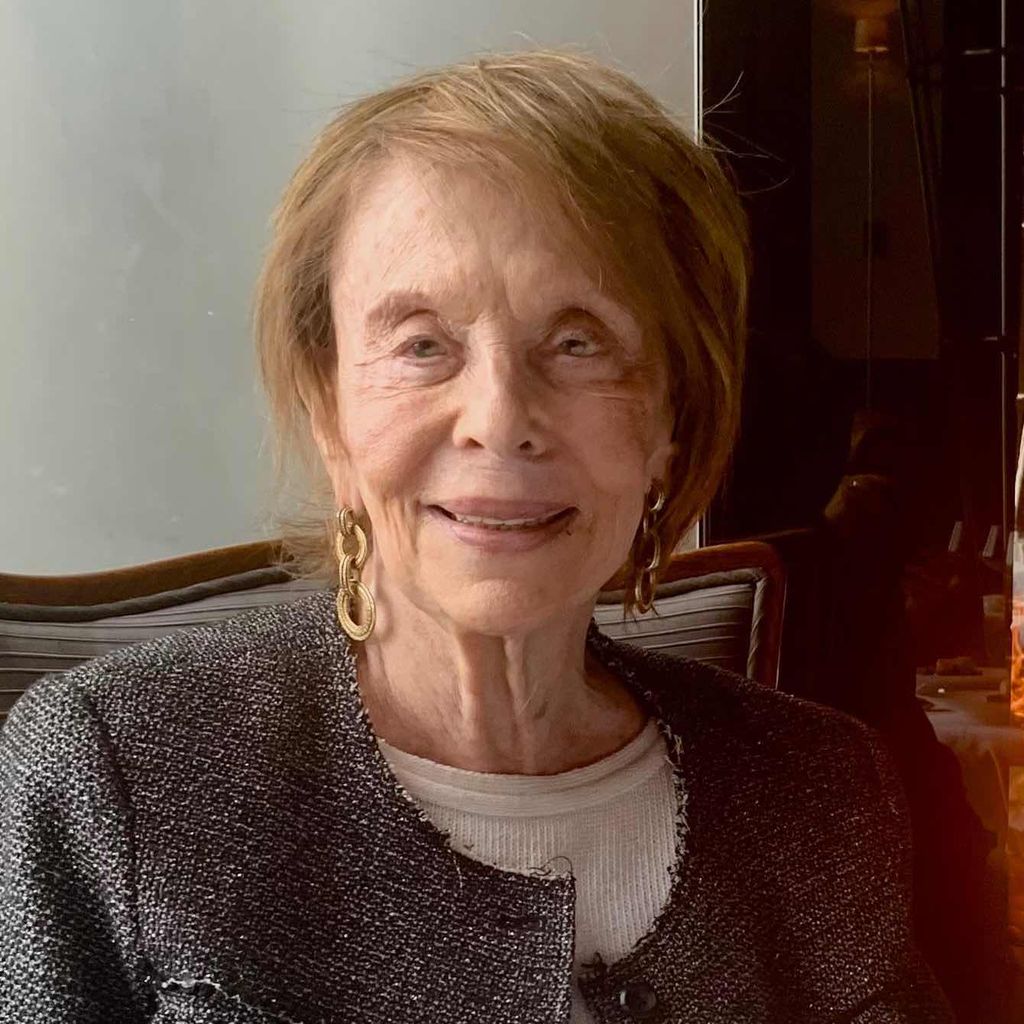
Barbara Gordon
1935 - 2026
Share Barbara Gordon's obituary with others.
Invite friends and family to read the obituary and add memories.
Stay updated
We'll notify you when service details or new memories are added.
You're now following this obituary
We'll email you when there are updates.
Please select what you would like included for printing:
By Sandra Luckow, April 7, 2026
Barbara Gordon, the documentary filmmaker and author whose 1979 memoir I’m Dancing as Fast as I Can chronicled her struggle with Valium dependence and helped focus public attention on the dangers of overprescribing, died on April 7, 2026 at her home in Manhattan overlooking Central Park. She was 90.
“Although an urbanite through and through, she was a force of nature,” her brother, Edward Loeb, said.
Ms. Gordon’s memoir — a candid, unflinching account of a professional life unspooling under the grip of prescription drugs — was a finalist for the American Book Award for outstanding autobiography, losing to Lauren Bacall’s By Myself.
The book was translated into 9 languages and was a runaway bestseller. Adapted for the screen in 1982; the experience left her bitter. “It was an awful disappointment, so different from the book, so unfeeling, so yucky,” she wrote to a young fan. “But I’m not the first writer who had her book horribly altered by Hollywood and I’m afraid I won’t be the last.”
Born Barbara Sue Loeb on Dec. 19, 1935, in Miami Beach, Fla., to Lewis and Sally Loeb, she lived there with her family until leaving for college in 1953. She attended Vassar and received her degree from Barnard College in 1956, after which she made New York City her home for the rest of her life.
She began her career at NBC as a secretary in public relations and rose through research and production to become a writer on The Today Show. In the late 1960s she moved into public television, working at National Educational Television and later WNET on the innovative series The Great American Dream Machine, where she produced segments on figures such as Studs Terkel, Dalton Trumbo and Jane Fonda. As a documentary filmmaker she produced hard-hitting films on subjects including CIA whistleblower Victor Marchetti and the rights of mental health patients.
Her television work earned broad recognition: she won three New York–area Emmy Awards for reporting and documentary work, and was nominated for additional honors. Colleagues remembered her for a fierce commitment to using the media to hold power to account. “She was an independent thinker with a complete devotion to the use of the news media to hold powerful people and institutions accountable,” said Gary Gilson, a former colleague. “Every day of our time together was a joy.”
The family asks, in lieu of flowers, donations be made to local public broadcast stations.
Ms. Gordon published two more books after her memoir: Defects of the Heart (1983) and Jennifer Fever (1988). She spent years touring the country to speak about prescription drug safety and mental health policy.
She married Myron Gordon in her late 20s; the marriage lasted for several years. She had no children.
A devotee of what she called “classic” Manhattan as represented in the city’s arts, Ms. Gordon was a regular at Broadway theaters and could recite the lyrics of Ira Gershwin, Cole Porter and Irving Berlin with encyclopedic ease. Friends said that loyalty, intellectual independence and a fierce sense of humor defined her private life as much as her public work.
She is survived by her brother, Edward Loeb, and his wife, Melinda; her nephews, David, Jason and Michael Loeb, and their wives Andrea, Jessica and Erin; and great-nephews Matthew, Alec and Elijah Loeb and great-nieces Shelby, Laura, Jamie and Phoebe Loeb.
Ms. Gordon opened I’m Dancing as Fast as I Can with her favorite joke — “A man and a woman meet at a singles resort in the Catskills. They are dancing together on a Saturday night. He says, ‘I’m only here for the weekend.’ She replies, ‘I’m dancing as fast as I can.’ ” Friends said, it was a distillation of her approach to life: brisk, self-aware and resilient. Even in the final five years, when chronic pain left her largely homebound, she carried that urgent, unflagging tempo with her.
Barbara Gordon's Guestbook
Visits: 18
This site is protected by reCAPTCHA and the
Google Privacy Policy and Terms of Service apply.
Service map data © OpenStreetMap contributors