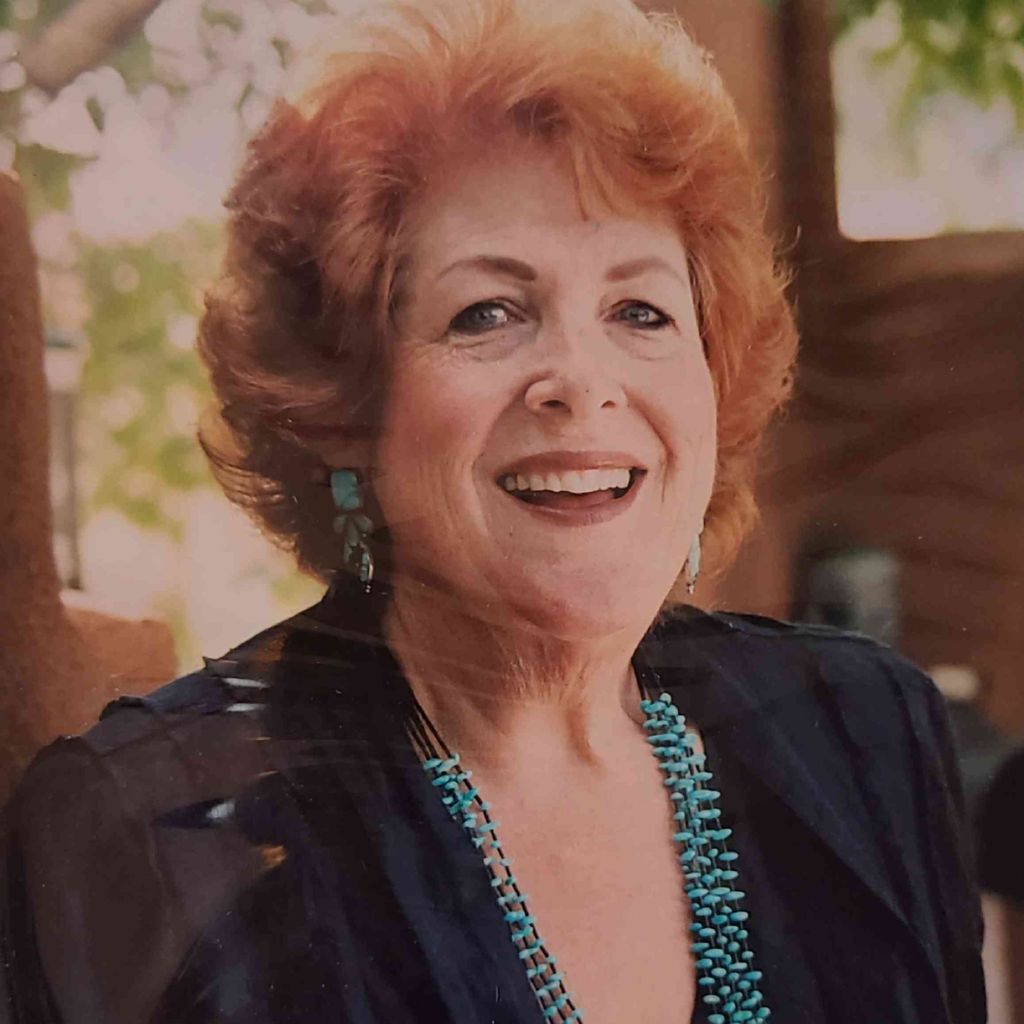
Carolyn Sue Ruis
1943 - 2025
Share Carolyn Sue Ruis's obituary with others.
Invite friends and family to read the obituary and add memories.
Stay updated
We'll notify you when service details or new memories are added.
You're now following this obituary
We'll email you when there are updates.
Please select what you would like included for printing:
Born on December 31, 1943, in Los Angeles, California, Carolyn grew into a woman who celebrated life in all its forms. She loved people of all kinds and was known for her warmth, generosity, and genuine interest in others. Whether talking with a stranger on a park bench, mentoring a young teacher, or welcoming friends and family into her art-filled home and garden, she created spaces of connection, beauty, and belonging.
Nowhere was Carolyn’s spirit more vividly expressed than in her role as “Nana.” She delighted in creating traditions and shared experiences that her grandchildren would carry with them for a lifetime. Each year, they looked forward to her curated Halloween and Valentine’s Day packages—filled with small treasures she had gathered throughout the year, often including her signature gift of delightfully funky socks. Time with Nana often meant “Nana Camp,” where days were filled with carefully planned adventures—observing nature, creating art, visiting museums, and exploring the world with curiosity and delight. Through these experiences, she encouraged her children and grandchildren to take risks, learn from their mistakes, and embrace life as an adventure, modeling that philosophy beautifully in her own life.
Carolyn devoted her professional life to education. Over a long and distinguished career, she taught 6th grade, trained teachers and principals throughout California in the science of teaching and later served as principal of two schools. She was a brilliant and consummate professional who set high expectations for herself and those around her, always placing children at the center of her work. As a teacher, she inspired her students and guided them down the learning paths she carefully designed. As an instructional leader and principal, she influenced classrooms across the state and became, in the words of those who worked with her, a tireless warrior for the good of her students. Mediocrity was never an option for her—whether in education, in her travels, in her garden, or in her relationships.
Outside of her work in schools, Carolyn lived boldly and with an adventurous spirit. She was never afraid to dream big and make those dreams real. With her dearest friend of more than fifty years, she crisscrossed North America in a Ford Econoline van. Together they drove to the tip of Baja and back, followed the Pacific Coast from Los Angeles to Vancouver Island, traced the Rio Grande from Big Bend to Brownsville, and explored the deserts and mountains of New Mexico, Arizona, Utah, and Montana. Their travels eventually extended across the world—to places like Mexico, Thailand, China, Guatemala, Italy, and Hungary—each journey planned with Carolyn’s characteristic curiosity and depth of research, and each one expanding the minds and hearts of those who traveled with her. When faced with a new idea or adventure, she was famous for asking, “What’s the worst thing that could happen?” and “Why not?”—questions that captured her willingness to take risks in the service of a full and meaningful life. She shared this spirit of exploration generously with her family, introducing her children and grandchildren to the magic of New Mexico, as well as to theater, music, and art—opening doors to experiences that expanded their worlds and shaped their own sense of curiosity and creativity.
Carolyn’s curiosity was one of her defining traits. She wanted to know about everything and left no stone unturned in learning about the people, cultures, arts, and natural worlds that fascinated her. When she became interested in something—saint-carving in New Mexico, for example—she learned its history, sought out the artists, sat at their tables, and asked question after question, always with respect and genuine wonder. Her home library was extensive, filled with books on Indigenous peoples, folk art, travel, nature, and more. She preferred non-fiction, often saying she had no time for made-up stories when there was so much to learn from the real world. Many who visited her remember her in a favorite chair, deep in “a study,” reading to better understand whatever had captured her attention.
A passionate birder, Carolyn turned a casual interest into a lifelong practice of close observation and delight. Binoculars were always within reach, and it was not uncommon for her to pull off the road to identify a bird on a wire, then carefully record the sighting in her well-used bird guides. Wherever she traveled, she sought out the birds of that place—Mexico, Thailand, China, Guatemala, and beyond—building a life list that reflected both her love of nature and her joy in paying attention. Her enthusiasm was contagious; friends and family soon found themselves learning bird calls, leafing through field guides, and investing in good binoculars under her gentle but persuasive mentorship.
Carolyn was also a gifted photographer, particularly known for her intimate portraits. She was unafraid to get close—sometimes very close—with her camera, capturing the lines, expressions, and emotions that revealed a person’s inner life. Her portraits documented moments of aliveness and presence, and her work from travels in places like China and Guatemala has been displayed and cherished by many.
A powerful aesthetic sense infused every part of Carolyn’s life. She had an eye for color, texture, and form, and she expressed this in how she dressed, the jewelry she chose, and the art she collected and displayed on the brilliantly colored walls of her home. A “get up,” as she and her friends liked to call a fully considered outfit, was to her a form of art—an expression of joy and personality. Even in the hospital near the end of her life, she wore dangly witch earrings, and nails painted black with silver Halloween designs. She remained herself—playful, stylish, and fully alive to the details—until the very end.
Her home and garden were works of art in themselves. The house she envisioned and brought into being became a sanctuary of folk art, color, running water, birds, and flowers. It was a place of peace and beauty, where guests felt welcomed, inspired, and deeply at ease. Friends likened walking through her front door to entering a cultural museum, every piece carefully chosen, beautifully arranged, and loved.
One of the great gifts in Carolyn’s later life was her long partnership with Eddie Johnson, a gentle and talented saint-carver. Together for 27 years until his death at age 94, they were a unique and well-matched couple—she the energetic planner and doer, he the soft-spoken artist who loved wood and what he could create from it. Their shared passions for art, nature, and adventurous travel wove their lives and families together. Summers in his adobe casita in Velarde, New Mexico, among the artist community there, balanced the rich world Carolyn had created in Claremont. Her children and grandchildren lovingly called him “Papa Eddie,” and Carolyn took great joy in watching those relationships grow, weaving together the Ruis–Immel and Ruis–Johnson families into an extended circle of love, shared experiences, and deep connection.
In her final days, she was able to enjoy a last, perfect outing with her daughter—a sunny November day in Washington, watching salmon return to their birthplace, calling out bird sightings (“There’s a merganser!”), reading every informative sign, lingering in the gift shop over brightly colored bowls, savoring a bagel and lox, and visiting a towering troll sculpture adorned with birdhouses and created to honor nature and the land. That day, filled with nature, birds, learning, art, shopping, good food, and children playing around her, gathered so many of the things she loved most into one final adventure.
In her later years, Carolyn faced a difficult and little-understood chapter of her life. She was eventually diagnosed with Lewy body disease with parkinsonism, a condition that quietly alters thinking, mood, and behavior long before it is clearly recognized. For those who loved her, the changes were painful and confusing; at times she could seem angry, self-centered, or difficult in ways that did not match the woman we knew. Only later did we come to understand how much she was struggling with everyday tasks and how frightening and exhausting that must have been for her. We share this not to define her by her illness, but to invite gentleness toward those whose personalities seem to change with age, and to encourage families to pay attention to early signs and seek help. What may look like “just getting older” can sometimes be something more, and early understanding can bring much-needed compassion to everyone involved.
In her own reflections on dying, written a decade before she became ill, Carolyn wanted those who loved her to know that she loved them, that she asked forgiveness for any hurt she may have caused, and that she offered forgiveness in return. She hoped that her death could be a time of personal growth for everyone, and she encouraged those who struggle with grief to seek help. She wanted to be remembered as she was before illness, and for memories of her life to bring joy. She did not fear death, even though she didn’t know whether it was an end, or the beginning of something new.
The love Carolyn gave her family remains one of her most enduring legacies— expressed not only in her constant interest in their lives, but in how she encouraged them to live boldly, stay curious, and find beauty and meaning in the world around them. To her grandchildren, she will always be “Nana”—a source of wonder, creativity, and unconditional love.
Carolyn was buried in Oak Park Cemetery in Claremont, California, a place that felt like home to her, surrounded by beautiful oak trees and birds. It is a fitting resting place for a woman who lived so fully in the natural world, and whose spirit of boldness, curiosity, and love continues to echo through the lives and landscapes she cherished.
Carolyn Sue Ruis's Guestbook
Visits: 8
This site is protected by reCAPTCHA and the
Google Privacy Policy and Terms of Service apply.
Service map data © OpenStreetMap contributors