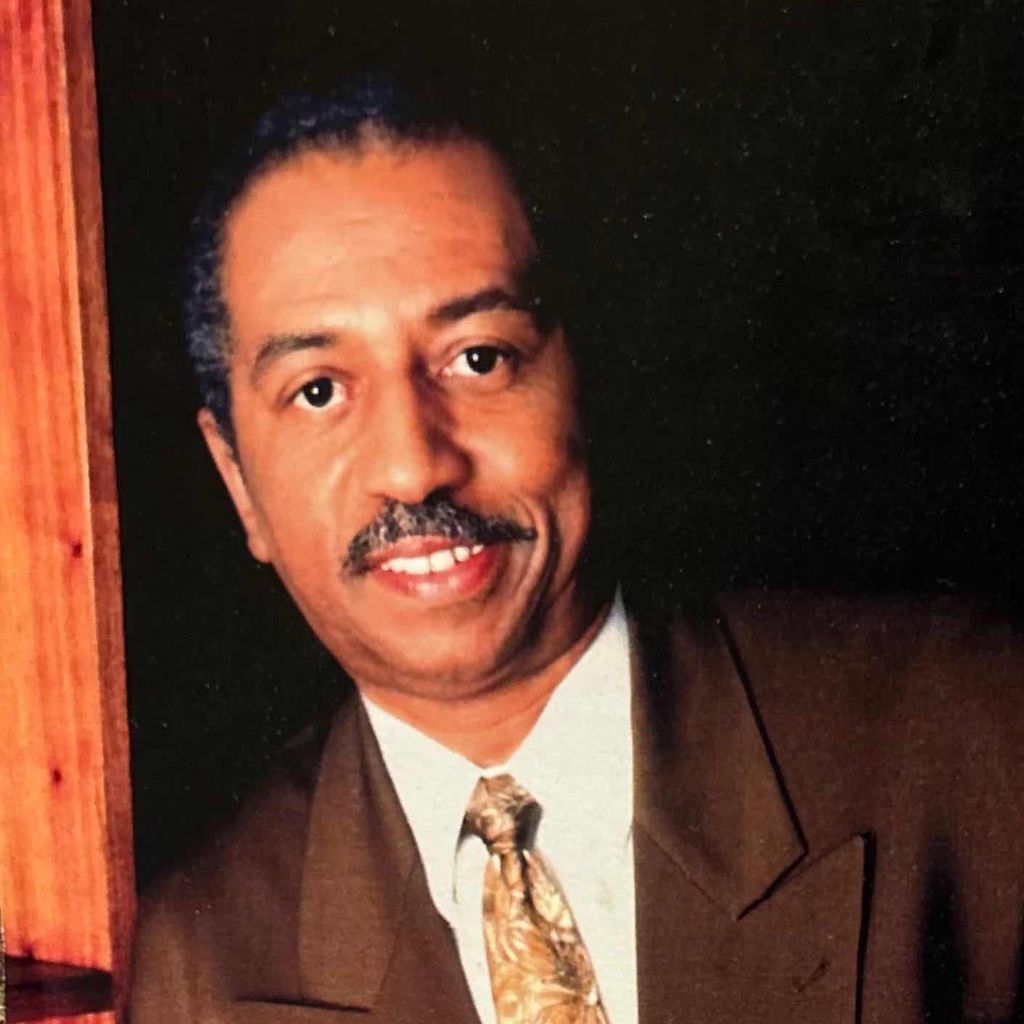
Crawford “Mac” Garfield McGill
1937 - 2025
Share Crawford “Mac” Garfield McGill's obituary with others.
Invite friends and family to read the obituary and add memories.
Stay updated
We'll notify you when service details or new memories are added.
You're now following this obituary
We'll email you when there are updates.
Please select what you would like included for printing:
Share Crawford “Mac” Garfield McGill's obituary with others.
Invite friends and family to read the obituary and add memories.
Stay updated
We'll notify you when service details or new memories are added.
You're now following this obituary
We'll email you when there are updates.
Please select what you would like included for printing:
Mac's life traced one of the most remarkable arcs in American broadcasting. Born in Raleigh County, West Virginia, raised in the small communities of Prince and Lester, Mac rose from extremely modest beginnings to become one of NBC's most Senior Technical Vice Presidents with one of the highest levels of responsibility and power one could achieve at the network level.
Mac had been a gifted student and class president at Stratton High School in his youth, where he excelled in mathematics and was working on plans for college. But life intervened; by graduation he was both married and a father. Determined to create a future beyond what often became limited opportunities available to young black men in 1950's Appalachia (often service jobs or the West Virginia coal mines), he enlisted in the U.S. Army in 1957. There, as the sole person of color in all of his classes, he studied broadcast technologies - radio, television and RCA's innovative early color TV systems (at that time only used by the military). This knowledge later defined his life's work.
After leaving the service as a Staff Sergeant in 1965, Mac went to WETA-26, PBS Washington, D.C., where he spent a decade as part of the technical excellence of programming for programs such as Sesame Street, Evening at Pops, Bill Moyer's Journal and Tony Brown's Journal. Mac played a major role in the station's move from their leased space on Howard University's campus to their new facility in Arlington, Va., ensuring strong signals and professional broadcasts. He was an Engineering Supervisor.
During that time his contributions extended beyond WETA. For Howard University, Mac provided the technical blueprint for WHUR-FM, the HBCU's groundbreaking radio station, and later designed and installed the television system for the creation of Howard's School of Communication and broadcast station WHUT-TV, the first of its kind at an HBCU. Mac often volunteered his time and expertise without fanfare as he opened doors for aspiring broadcasters who had previously been excluded from such technical knowledge or opportunities. Among those he assisted during that time were Dewey Hughes, Cathy Hughes, Bob Johnson - figures who would go on to shape outlets such as WOL, BET, and TV One.
Mac later joined NBC's Washington National News Bureau along with affiliate WRC, becoming the first Black Technical Director on a major network broadcast, "Meet the Press". His mastery of complex systems, calm leadership, and ability to modernize aging infrastructure propelled him upward through the network. He became Director of Engineering, and after 5 years he was promoted to Vice President of Technical Operations and Production for NBC Television, based out of New York. Over two decades Mac McGill continued to rise, handling many titles and higher levels of power and responsibility in both East Coast and West Coast operations. In 1992 he was called back to New York to take the role of Vice President, Broadcast Operations where he oversaw the entire on-air and satellite distribution as well as all direct technical aspect of all on-air programming. He was tasked with supervising the design of the network's entire technical facility including introducing and implementing the use of robotic technology to network television on live broadcasts. NBC became the first American network to utilize the technology. A system now common, was highly expensive and experimental then. Mac was known for his leadership and fairness, making him well respected during NABET (engineer's union) negotiations and arbitrations, as the union trusted him.
Mac McGill was highly respected in his field during his many years in broadcasting. His influence extended far beyond the technical systems he built, he inspired generations of both people of color, as well as women (once openly locked out of engineering) broadcasters to pursue careers in radio and television, helping diversify an industry long resistant to change. Though he retired at the young age of 59, Mac McGill's fingerprints remain embedded in the broadcast landscape. His legacy is found in the systems, programs and people who define television.
Beyond his professional achievements, Mac was defined by his generosity towards everyone he met, his constant sense of humor, and his deep devotion to family. He carried a steady, calm and grounding presence, someone you could always rely on, offering support without hesitation and guidance without judgment. His quiet confidence, quick wit, smile and genuine kindness filled every room with warmth and laughter, making people feel instantly at ease and truly seen. Mac was loved by everyone who had the privilege of knowing him.
Crawford "Mac" McGill was preceded in death by his mother, Margarine McGill Bratton; his sister Barbara McGill Tyree; his daughter Shelia McGill Niska; his granddaughter Julia Richards; his former wives Phyllis Waller McGill, Patricia Allen McGill; and his beloved childhood caregivers Anna and Moses Jones.
He is survived by his beloved wife Aida Lopez McGill; his children and children by marriage: Pamela McGill, Janet McGill (Debra Summer), Sharon McGill Richards, Olivia McGill Duclair (Farell Duclair), Crawford "Mickey " McGill (Jamie McGill), Louis Latimer, and Tenille Dunning (Hannah Pagaduan); his grandchildren and grandchildren by marriage: Jason McGill, Juliette and Genevieve McGill, Sloan and Talia Latimer, Markus and Olivia Duclair, as well as other close family and friends.
It was Mac's wish to be cremated upon his passing at Las Vegas Cremations in Las Vegas, NV.
A celebration of his life and legacy is being planned for early spring 2026 in Las Vegas, NV.
Reflecting Mac's lifelong belief in helping others, in lieu of flowers, the family encourages donations to the following organizations:
Alzheimer's Association,
Alzheimer's Foundation of America,
Dementia Society of America,
National Kidney Foundation,
National Coalition for the Homeless,
Big Brothers Big Sisters of America
* Because flowers are fleeting, your donations to causes he cared about will honor his memory in a much more enduring way.
Consider a donation, as requested by the family.
Crawford “Mac” Garfield McGill's Guestbook
Visits: 142
This site is protected by reCAPTCHA and the
Google Privacy Policy and Terms of Service apply.
Service map data © OpenStreetMap contributors