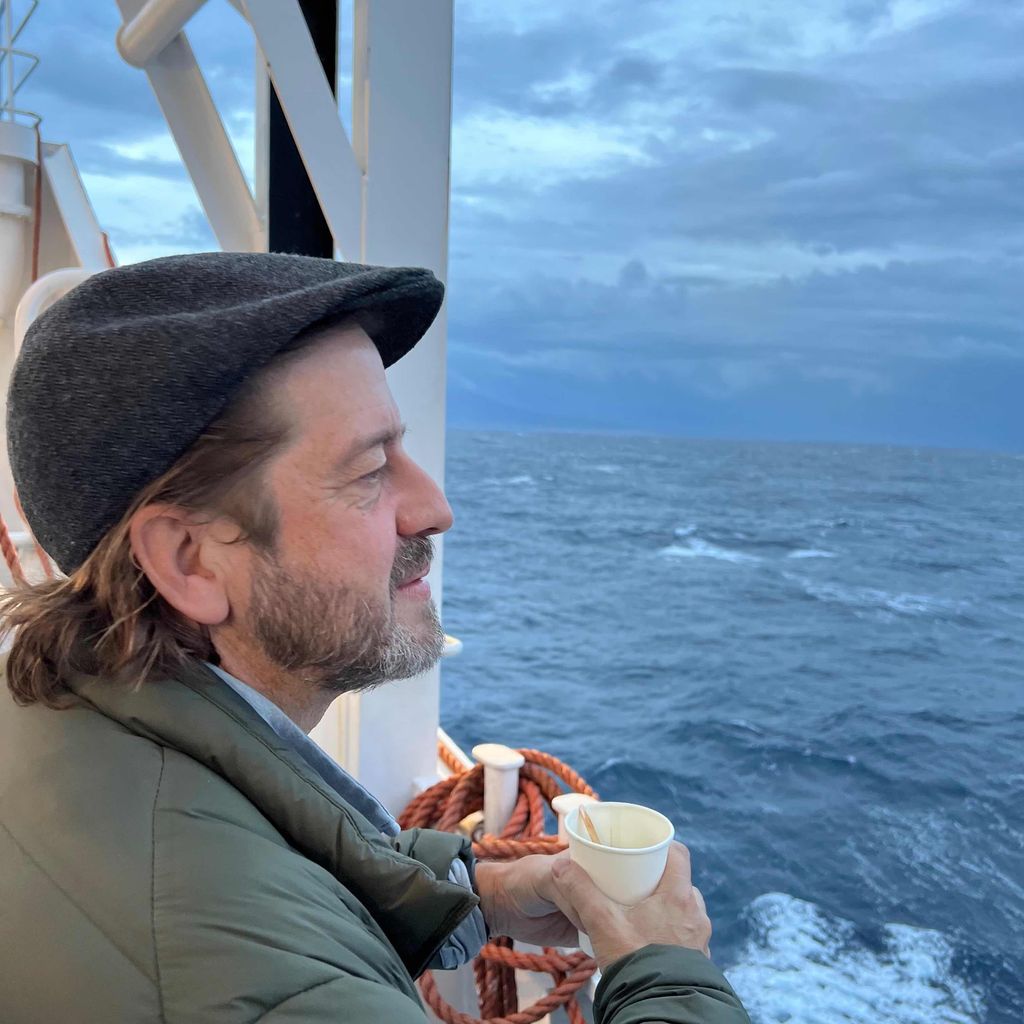
David Alan Ziegler
1965 - 2025
Share David Alan Ziegler's obituary with others.
Invite friends and family to read the obituary and add memories.
Stay updated
We'll notify you when service details or new memories are added.
You're now following this obituary
We'll email you when there are updates.
Please select what you would like included for printing:
Those who knew David best were struck by the breadth of his intellect, his lightning-quick wit, his moral strength, and, perhaps most of all, his kindness:
"He was Austen's Emma. He was the Artful Dodger. He was simultaneously Falstaff and Mistresses Page and Ford. He was a cynic without being cynical. He was an incisive, hilarious light shining on a world that is duller and dimmer without him."
"No one person that I have known brought so much joy to so many people. David balanced his humor with a calm seriousness that found its best expression in his compassion, and his moral strength served as a lesson to those who knew him."
"He was beloved."
David's dual fluency in the humanities and engineering made him a rare thinker, a true polymath. He was as comfortable on a stage performing Shakespeare as he was solving math problems. He took as much delight in throwing a party for friends that lasted through the night as he did in spending hours alone with Hegel's dense prose or Mahler's complex scores.
David grew up in Niles, Ohio, an inveterate reader and member of the marching band at Howland High School. He delighted in telling people that his clarinet teacher was named Carl Marks. David attended the University of Texas at Austin, where he entered as a freshman in the Plan II Honors Program on a full scholarship. He quickly rose to first chair clarinet in the Longhorn band and distinguished himself in his classes, focusing his studies on physics and English literature.
He spent three summers performing in the university's Shakespeare at Winedale program under the directorship of Dr. James "Doc" Ayres. David found his tribe at Winedale, an historic rural property near the small town of Roundtop, Texas. It was there that he formed enduring and deep friendships with a group of peers as they immersed themselves in Shakespeare in the intense Texas summer heat, performing in an old barn adapted to resemble an Elizabethan theater.
Doc remembers David's first day at Winedale in 1985, when the class formed a circle before breakfast. David, ever direct, broke the silence by asking: "So... are we all bonded now? Can we eat?" It was pure David—funny, impatient, curious, and unwilling to take any ritual too seriously. While his wit drew people toward him, beneath the humor was a seriousness, expressed most clearly in his compassion. When a dear friend in Arizona fell ill, David traveled often to care for her as devotedly as a family member.
Books were one of David's first and deepest loves. As a child, his father took him and his brother to the library, where David checked out as many books as he could carry—plus classical music albums. Even floating in a Texas lake on an inner tube, he read until his book fell apart, carefully drying wet pages so he could finish it. He would carry at least two well-chosen books even while running daily errands, just in case he found himself with a little spare time.
In adulthood, his library became legendary. He even bolted his bookcases to the walls in his homes in California to protect them from earthquakes. He meticulously packed and donated more than 100 boxes of books to the Friends of the San Francisco Library, cataloging them so he could request any title by box and number. He treated books with reverence; he would never write in their margins. They were too precious.
David embraced life's pleasures with joy and gusto, a way of being that only got better in the years he spent with his husband and travel partner, Alan. They loved cooking and eating spectacular food, drinking exquisite wine, immersing themselves in music, opera and poetry, traveling widely¬ and engaging with friends.
Their first trip together was to Sicily - exploring the vineyards of Mt. Etna, scouring markets for ingredients to prepare dishes in the apartment they rented. David's favorite experience was a day cooking with a duchess, preparing a feast with other travelers, and sharing anecdotes with the quirky duke.
Their travel adventures also took them to many corners of Mexico. One trip took them from Mexico, to Spain, France, Italy and finally to Turkey where they went up in a balloon over Cappadocia in winter. It was a trip taken with no set itinerary: they went eastward until it was time to return home to San Francisco. It was pure David - his curiosity fueling new experiences and pushing boundaries.
His oft repeated words to Alan during his illness were: "No regrets, no regrets".
David's professional life was marked by intellectual rigor, leadership, and an enthusiasm for problem-solving. He mastered the tools needed to build a successful career in tech, where he became a respected mentor and conscientious manager, helping shape careers and forming deep friendships with colleagues.
David spent more than nine years at Prosper Marketplace in San Francisco, rising from Staff Software Engineer to Software Engineering Manager and ultimately Senior Software Engineering Manager. Before Prosper, he served as a Senior Software Engineer at Insightly, and prior to that built an 11-year career at Tracker Corp, advancing from Technical Support Specialist to Vice President of Technology.
Before entering the tech industry, David was devoted to the study of English Renaissance literature. This love was kindled by his college mentor, the honored UT-Austin English professor R.J. "Jim" Kauffman. David went on to earn an M.A. in English Renaissance literature from the University of California at Santa Barbara, completing all the work toward a Ph.D. but the dissertation, and spending more than eight years at the university teaching literature, composition, and rhetoric as a teaching assistant and associate lecturer.
David is survived by his husband, Alan; his brother Donald (Don) Ziegler; niece Shiina Ziegler; and hundreds of friends and colleagues.
"And a softness came from the starlight and filled me full to the bone." (W.B. Yeats)
David Alan Ziegler's Guestbook
Visits: 294
This site is protected by reCAPTCHA and the
Google Privacy Policy and Terms of Service apply.
Service map data © OpenStreetMap contributors