Diane Walker Smith
1935 - 2026
Share Diane Walker Smith's obituary with others.
Invite friends and family to read the obituary and add memories.
Stay updated
We'll notify you when service details or new memories are added.
You're now following this obituary
We'll email you when there are updates.
Please select what you would like included for printing:
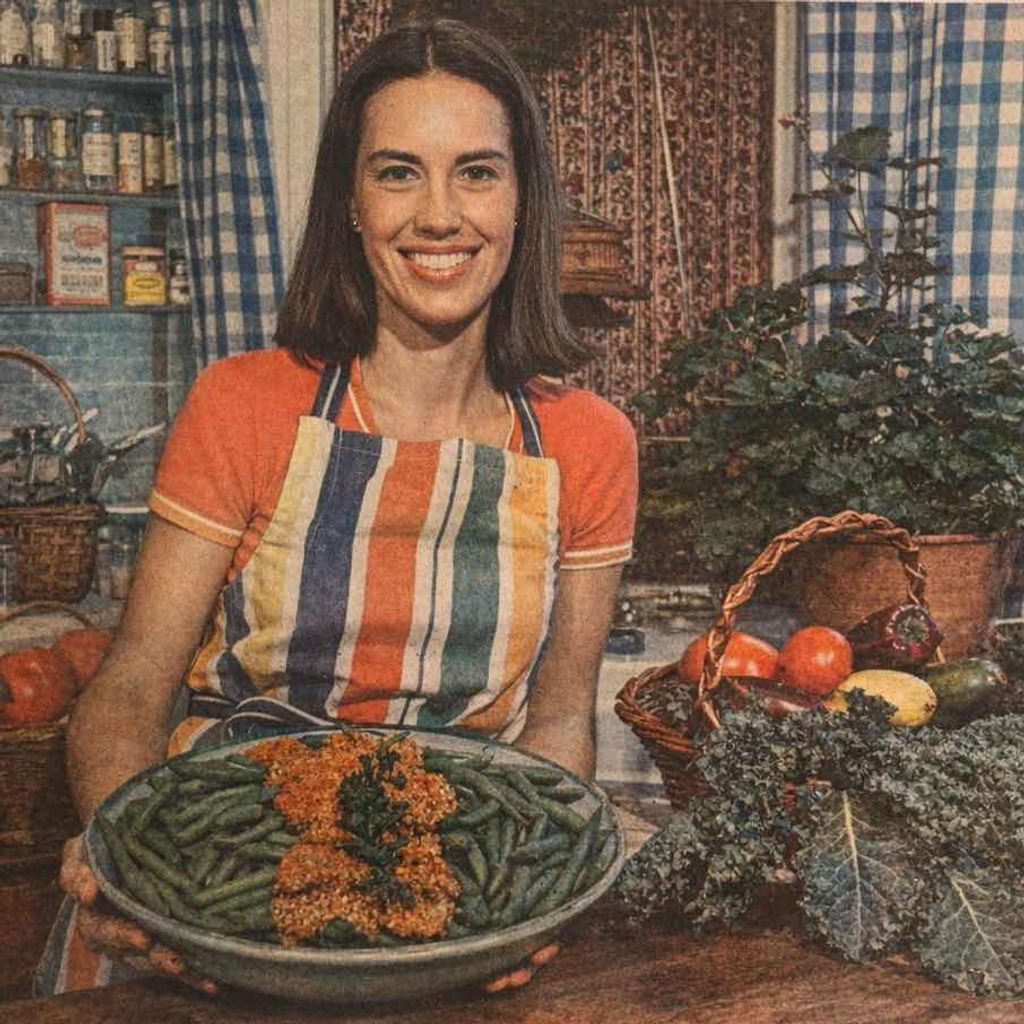
Diane (Walker) Smith, amateur paleobiologist, longtime Chicagoan, engaged community member, and accomplished home chef whose cooking, gardening, and home design were featured in numerous books and magazines, died peacefully on January 7, 2026, in Decatur, Georgia, 5 days after her 91st birthday.
Diane was born on January 2, 1935, in Hardy, Arkansas, the elder of two daughters to Joseph Edward Walker and Eunice (Arnaud) Walker. In 1942, she moved with her family to Havana, Cuba, where her father was an agronomist in charge of the cooperative fiber research program. Over the years, his work took the family to West Palm Beach, Florida; Alexandria, Virginia; and ultimately back to Havana, where Diane graduated from Ruston Academy.
After high school, Diane attended Wellesley College in Wellesley, Massachusetts, graduating with a degree in geology, a discipline that reflected her lifelong curiosity about the natural world. During a summer break, she met David W.E. Smith at a National Park Service camp in Washington, D.C. The two married in 1960 and moved to New Haven, Connecticut, where David earned his MD from Yale University, and Diane conducted research and tested individualized reading programs for children with dyslexia.
The couple went on to live in Bethesda, Maryland; Bloomington, Indiana; Naples, Italy; and finally Chicago, Illinois, which became their beloved long-term home. In Chicago, David served as a professor at Northwestern University Medical School and co-director of the Buehler Center on Aging, while Diane threw herself into historic preservation, urban farming, and community, cultural, and civic engagement.
Diane had a remarkable gift for creating beauty—whether imagining and executing an exquisite meal, restoring a historic home, cultivating lovely gardens, or recognizing and nurturing beauty in everyday life. She meticulously renovated the couple's Victorian row house in Chicago's Lincoln Park neighborhood, which was later featured in newspapers, magazines, and a coffee-table book on notable Chicago homes. Diane and David led the development of Belden-Halsted Farm, reclaiming a weedy, rubble-filled lot in Chicago and turning it into a cooperative vegetable garden. Diane's kitchen was a command center for preparing the vegetables and herbs harvested from the community plot into farm-to-table meals (before the trend), enjoyed by family and friends. Her recipes for ratatouille and tomato sauce (secret ingredients include fennel seeds, saffron, and coriander) appeared in the Chicago Tribune.
When David was diagnosed with multiple sclerosis, Diane turned much of her attention to becoming David's fiercest advocate and caregiver, remaining his steadfast partner. Despite the progression of David's illness, the couple traveled widely, continued to entertain, attended symphonies and theater performances, explored museums, discovered new restaurants, and maintained their longtime friendships. When David could no longer navigate the stairs in their 4-story house, they moved into an apartment with a view of Lake Michigan. There, Diane cultivated a beautiful balcony garden overflowing with flowers so abundant that hummingbirds braved the winds off the Lake to fly dozens of stories to reach them.
After David's death, Diane continued to pursue her passions, forming book clubs, gardening, and preserving David's memory by, among other things, establishing a memorial fund in his name at the Northwestern University Pathology Department. Chicago never had a greater travel and tourism promoter than Diane. She believed everything in Chicago - the food, the medical care, the culture - was, without question, superior to anywhere else in the world. She traveled the city by foot and public transport, intrepidly navigating bus and rail lines into her mid-80's, undaunted by Chicago winters. With a heavy heart, Diane eventually left her beloved Chicago and relocated to Decatur, Georgia, in 2021 to be closer to family.
Fiercely independent and uniquely herself, Diane's quirks were part of family lore. Her insistence that humans evolved from fish and that you could see the remnants of gills behind her ears. The Thanksgiving she appeared carrying the second volume of the Oxford English Dictionary and a fold-out copy of the Bayeux Tapestry. Her unwavering loyalty to Eileen Fisher, The Vermont Country Store, Nueske's, Treasure Island Foods, and Barnes & Noble. Her love-hate relationship with French vanilla ice cream and hate-hate relationship with canola oil.
Diane approached phone calls the way she approached dinner parties, with a curated menu of topics to be delivered on her own timetable. She could carry a conversation on her own from beginning to end, stopping only briefly to confirm that the other member of the conversation was still paying attention. She had a special loathing of answering machines and later voicemail, which never allotted enough time for her to leave a complete message.
She was an intellectual who collected the works of Albert Camus and Joseph Conrad, corrected people's pronunciation of Vincent VanGogh (preferring the Dutch pronunciation Van Khokh to the Americanized Van Go), and scolded anyone who didn't take the appropriate length of time to explore a museum exhibit. Despite these decidedly high-brow preferences, she also had an appreciation for red-eye gravy and biscuits, and listed The Original Pancake House among her favorite restaurants.
A fall and head injury in Diane's later years impacted her speaking and use of language. She fought this decline by taking copious notes on all manner of things, from favorite book passages to terms she wanted to remember. Sometimes her inability to locate the correct word was like a guessing game or a riddle. "What's it called when there are a lot of people in a church...and also a dead body?" she asked, searching for the word "funeral."
In Diane's library, which strained the shelves of nearly a dozen bookcases, were several books by Julian Barnes, who writes about loss in Levels of Life: "This is what those who haven't crossed the tropic of grief often fail to understand: the fact that someone is dead may mean that they are not alive, but doesn't mean that they do not exist."
Diane is survived by her nieces Susannah (Robert) Khayat of Decatur, Georgia and Sarah ("Sally") Baker (Mike Kelly) of Alexandria, Virginia and their children, as well as David's niece and nephew Martha Nance (John Trusheim) of Chaska, MN, and Dana Mackenzie (Kay) of Santa Cruz, California; and Martha's sons and grandchildren. Aside from David, Diane was predeceased by the numerous cats the two loved and cared for throughout their marriage, including Pest, Pippa, and Phoebe. Diane was also predeceased by her sister, Carole Walker.
The family wishes to thank the care management team from Metta Johnson & Associates, the caregivers from Five Sisters, the staff of the Holbrook, and Capstone Hospice, who provided Diane with compassionate and devoted care in her final years.
A private family service will be held in Chicago in the spring. For those wishing to honor Diane's memory, the family requests that donations be made to the Field Museum of Natural History, the Shedd Aquarium, the David W.E. Smith Memorial Research Fund at Northwestern University, Feinberg School of Medicine, the Chicago Museum of Art, or the Chicago Symphony, institutions that reflect her lifelong love of science, culture, and learning.
Diane Walker Smith's Guestbook
Visits: 147
This site is protected by reCAPTCHA and the
Google Privacy Policy and Terms of Service apply.
Service map data © OpenStreetMap contributors