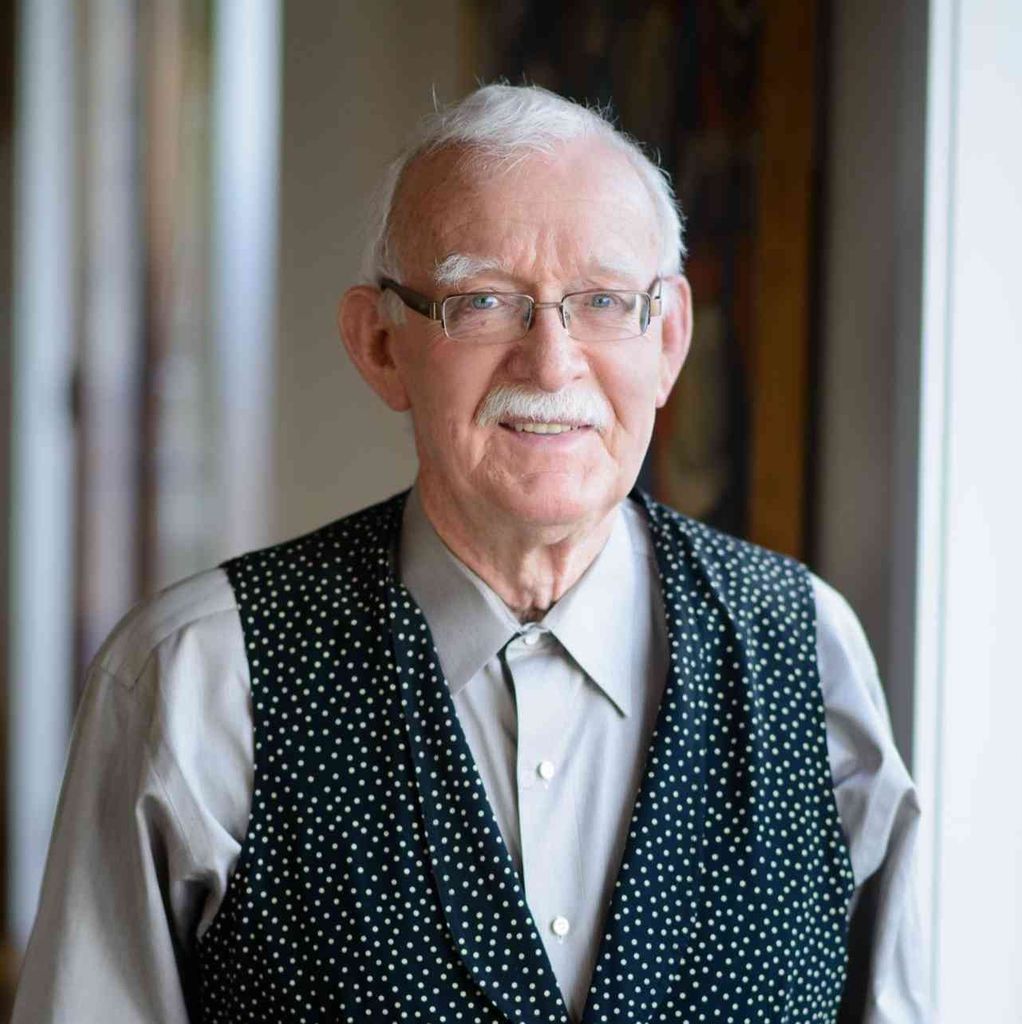
Donald Royse
2026
Share Donald Royse's obituary with others.
Invite friends and family to read the obituary and add memories.
Stay updated
We'll notify you when service details or new memories are added.
You're now following this obituary
We'll email you when there are updates.
Please select what you would like included for printing:
Donald Royse, a small-town farm boy who made the world his playground, died in January at the age of 93. He passed peacefully, on his own terms, in the home he designed overlooking Lake Washington, surrounded by family, holding his hands, until his last dying breath.
Born in LaPlata Missouri, he treasured his childhood on a farm with a close-knit family that had lots of love and not much else.
Even with no formal art program in the one-room school house he attended, he was artistic from the get-go. He was always drawing what he saw around him, and what he imagined the world could be. That never changed. His art hangs in the home of everyone in his family, countless friends, and even people who simply bought it when he had shows.
Eventually, the US Army took him out of the Midwest, and that started a lifetime of traveling the world. When asked if he "served" he was quick to say that he was in the army, yes, but he never saw combat or conflict. He could type, so he worked in offices the whole time. He valued his time in the army, but never wanted anyone to conflate his service with the service of those who saw conflict.
The army opened his eyes to the world, and awakened a hunger for both exploration and justice. The GI bill allowed him to attend UC Berkely where he earned a degree in architecture. With eyes already open to the beauty that our planet's diversity had to offer, his time at Berkely in the 1950's and 60's showed him the power of community and protest.
His success at Berkeley led him all the way to a PhD in Urban design from M.I.T. in Boston. That, in turn, led to more than 30 years as a tenured professor of Architecture and Urban Design at Washington University in Saint Louis. As a professor and mentor, he helped countless young architects learn to value the interaction between environment, built form and human need. His students have led major firms around the world, designed homes for the rich and famous, championed affordable housing and urban design. He lives on in all of their work.
He also brought those values to his tenures at both the St. Louis Design Commission and the Seattle Design Commission. He tirelessly championed light rail in both cities, which left a lasting mark for generations to come. (Though he was still salty that Seattle didn't provide near-urban parking so that people in close neighborhoods could ditch their cars in a way that would make light rail useful to more people.) He was passionate about helping to restore downtown Saint Louis, and his impact can be seen on the redevelopment of the downtown mall.
His own private architecture practice produced homes and intentional communities from coast to coast in the US, many with his former student, business partner and friend, Heidi. His favorite project was the house that he designed for himself in Seward Park, Seattle.
It would be easy to just focus on his professional accomplishments. But if you knew Don, none of that is what you'd remember, not really.
If you knew Don, you'd probably think of him singing. Doesn't matter what, he was probably singing. Bowie, Wagner, Dylan, Puccini, no matter what it was, he'd sing it. A devout Atheist, he sang in the choir at St. Michael in Clayton just so he could sing. He performed in Gilbert and Sullivan operettas at Washington university so that he could sing. He sang in the St. Louis symphony Chorus; with them he sang at Carnegie Hall.
If you knew Don, you knew he loved to explore. He traveled voraciously. He couldn't get enough of the world and the bounty of design, food, music, art and people in it. He went to Opera around the world, as it combined is love of music and art perfectly. (You may even know the story of how he and his beloved partner, Frank, captured an escaped serial killer in Prague!)
If you knew Don, you knew a man who was gentle and kind. He never raised his voice, he never centered himself, he would give you the shirt off his back. (That serial killer in Prague? Don got his gun away from him, immediately turned it around in his own hand so that he wouldn't accidentally shoot the guy. Choosing to try and hit him over the head instead, which was the least violent option.)
If you knew Don, you know that he absolutely loved to garden. Especially daylilies. He could identify any plant, knew what color they came in and used his homes as pallets for whatever vibrancy of nature he could harness to make beauty around him.
If you knew Don, you knew a man who probably loved you.
And, since some of his last words were words of despair about the state of American politics, if you knew Don, you knew someone who fought like hell for human rights for all people and he would want you to carry that fight on.
He marched at Selma, protested for Civil Rights for everyone and never gave up his belief that we can become a society worthy of all of us. When the younger generation would say things like "we haven't made any progress" he would calmly point to the past - when a gay man like him couldn't be open in his career, or a Black person couldn't eat a sandwich in public, much less be president - and sternly say "we have come so far, and you keep fighting to get us the rest of the way."
Though his early life was in a time and place where he could not be open and out and true to who he is, he made up for that in his later life. A proud gay elder, he just wanted everyone to know they belong and are loved for who they are. His roiling hatred for Trump, and anyone who supports him, was evident in the many creative ways he hurled curses at the TV news before he'd change the channel to watch something more fun. (He was so amazed to see the incredible popularity of Heated Rivalry. He didn't really like the show, but loved that it existed in a world where in his own lifetime it wasn't safe to tell many friends and family that he was gay.)
To know Don was to know someone who understood the value of art, music, food and love. Someone who never gave up on the power of those things.
His professional accomplishments are nothing compared to the community of love that he built around himself.
His soul lives on in the friends and family he left behind. He is survived by two daughters (Alyssa and Bronwyn,) two sons-in-law (Brady and Justin) and 4 grandchildren (Celia, Zoe, James and Sarah) who love him madly. He is also survived by friends too numerous to mention who thought of him as everything from a father to a brother and an irreplaceable presence in their lives.
He was so loved.
If you want to make donations in his honor, please make a donation to Human Rights Watch or Forest Park Forever. And continue to fight for a world in which everyone can be as safe and loved as he was.
Born in LaPlata Missouri, he treasured his childhood on a farm with a close-knit family that had lots of love and not much else.
Even with no formal art program in the one-room school house he attended, he was artistic from the get-go. He was always drawing what he saw around him, and what he imagined the world could be. That never changed. His art hangs in the home of everyone in his family, countless friends, and even people who simply bought it when he had shows.
Eventually, the US Army took him out of the Midwest, and that started a lifetime of traveling the world. When asked if he "served" he was quick to say that he was in the army, yes, but he never saw combat or conflict. He could type, so he worked in offices the whole time. He valued his time in the army, but never wanted anyone to conflate his service with the service of those who saw conflict.
The army opened his eyes to the world, and awakened a hunger for both exploration and justice. The GI bill allowed him to attend UC Berkely where he earned a degree in architecture. With eyes already open to the beauty that our planet's diversity had to offer, his time at Berkely in the 1950's and 60's showed him the power of community and protest.
His success at Berkeley led him all the way to a PhD in Urban design from M.I.T. in Boston. That, in turn, led to more than 30 years as a tenured professor of Architecture and Urban Design at Washington University in Saint Louis. As a professor and mentor, he helped countless young architects learn to value the interaction between environment, built form and human need. His students have led major firms around the world, designed homes for the rich and famous, championed affordable housing and urban design. He lives on in all of their work.
He also brought those values to his tenures at both the St. Louis Design Commission and the Seattle Design Commission. He tirelessly championed light rail in both cities, which left a lasting mark for generations to come. (Though he was still salty that Seattle didn't provide near-urban parking so that people in close neighborhoods could ditch their cars in a way that would make light rail useful to more people.) He was passionate about helping to restore downtown Saint Louis, and his impact can be seen on the redevelopment of the downtown mall.
His own private architecture practice produced homes and intentional communities from coast to coast in the US, many with his former student, business partner and friend, Heidi. His favorite project was the house that he designed for himself in Seward Park, Seattle.
It would be easy to just focus on his professional accomplishments. But if you knew Don, none of that is what you'd remember, not really.
If you knew Don, you'd probably think of him singing. Doesn't matter what, he was probably singing. Bowie, Wagner, Dylan, Puccini, no matter what it was, he'd sing it. A devout Atheist, he sang in the choir at St. Michael in Clayton just so he could sing. He performed in Gilbert and Sullivan operettas at Washington university so that he could sing. He sang in the St. Louis symphony Chorus; with them he sang at Carnegie Hall.
If you knew Don, you knew he loved to explore. He traveled voraciously. He couldn't get enough of the world and the bounty of design, food, music, art and people in it. He went to Opera around the world, as it combined is love of music and art perfectly. (You may even know the story of how he and his beloved partner, Frank, captured an escaped serial killer in Prague!)
If you knew Don, you knew a man who was gentle and kind. He never raised his voice, he never centered himself, he would give you the shirt off his back. (That serial killer in Prague? Don got his gun away from him, immediately turned it around in his own hand so that he wouldn't accidentally shoot the guy. Choosing to try and hit him over the head instead, which was the least violent option.)
If you knew Don, you know that he absolutely loved to garden. Especially daylilies. He could identify any plant, knew what color they came in and used his homes as pallets for whatever vibrancy of nature he could harness to make beauty around him.
If you knew Don, you knew a man who probably loved you.
And, since some of his last words were words of despair about the state of American politics, if you knew Don, you knew someone who fought like hell for human rights for all people and he would want you to carry that fight on.
He marched at Selma, protested for Civil Rights for everyone and never gave up his belief that we can become a society worthy of all of us. When the younger generation would say things like "we haven't made any progress" he would calmly point to the past - when a gay man like him couldn't be open in his career, or a Black person couldn't eat a sandwich in public, much less be president - and sternly say "we have come so far, and you keep fighting to get us the rest of the way."
Though his early life was in a time and place where he could not be open and out and true to who he is, he made up for that in his later life. A proud gay elder, he just wanted everyone to know they belong and are loved for who they are. His roiling hatred for Trump, and anyone who supports him, was evident in the many creative ways he hurled curses at the TV news before he'd change the channel to watch something more fun. (He was so amazed to see the incredible popularity of Heated Rivalry. He didn't really like the show, but loved that it existed in a world where in his own lifetime it wasn't safe to tell many friends and family that he was gay.)
To know Don was to know someone who understood the value of art, music, food and love. Someone who never gave up on the power of those things.
His professional accomplishments are nothing compared to the community of love that he built around himself.
His soul lives on in the friends and family he left behind. He is survived by two daughters (Alyssa and Bronwyn,) two sons-in-law (Brady and Justin) and 4 grandchildren (Celia, Zoe, James and Sarah) who love him madly. He is also survived by friends too numerous to mention who thought of him as everything from a father to a brother and an irreplaceable presence in their lives.
He was so loved.
If you want to make donations in his honor, please make a donation to Human Rights Watch or Forest Park Forever. And continue to fight for a world in which everyone can be as safe and loved as he was.
To order memorial trees or send flowers to the family in memory of Donald Royse, please visit our flower store.
Donald Royse's Guestbook
Visits: 241
This site is protected by reCAPTCHA and the
Google Privacy Policy and Terms of Service apply.
Service map data © OpenStreetMap contributors