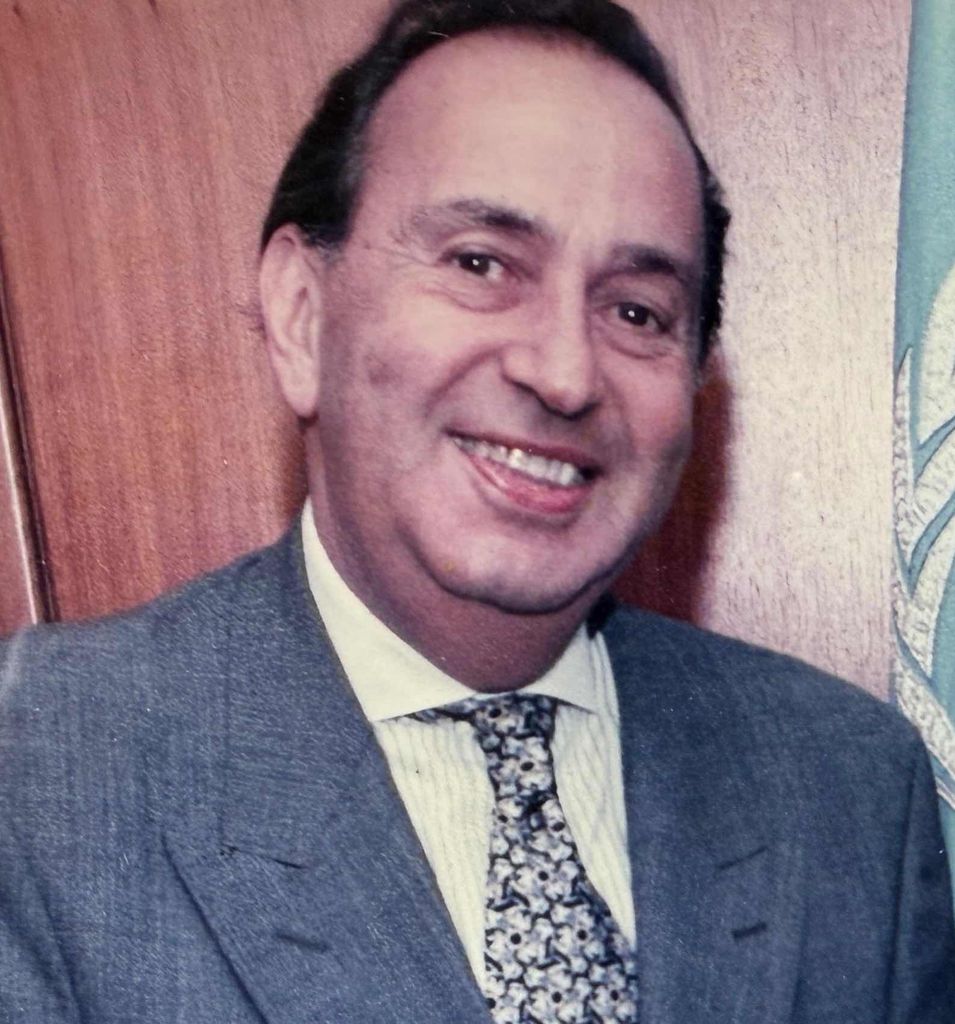
Dr. Uner Kirdar
1933 - 2026
Share Dr. Uner Kirdar's obituary with others.
Invite friends and family to read the obituary and add memories.
Stay updated
We'll notify you when service details or new memories are added.
You're now following this obituary
We'll email you when there are updates.
Please select what you would like included for printing:
Dr. Üner Kırdar, the Turkish diplomat, United Nations statesman, and pioneering architect of modern human development theory whose work helped shift global thinking beyond economics toward human dignity and well-being, died peacefully on April 1. He was 93.
Over a career that spanned diplomacy, international law, and the highest ranks of the United Nations, Dr. Kırdar became one of the earliest and most influential voices behind the idea that the true wealth of nations lies not merely in gross domestic product, but in the capabilities, freedoms, and flourishing of their people. His intellectual leadership helped lay the groundwork for what became the United Nations Development Programme’s Human Development Reports. 
Born on January 1, 1933, in İzmir, Türkiye, Dr. Kırdar was the son of Dr. Mehmet Lütfi Kırdar, the distinguished physician, statesman, and former governor and mayor of Istanbul whose name remains closely associated with the civic modernization of the city.  From his father, he inherited a profound sense of public duty, intellectual seriousness, and commitment to service.
He was educated at Galatasaray High School, pursued graduate studies at the London School of Economics, and earned his doctorate in international economics and law from Jesus College, Cambridge, in 1962. 
He began his career in the Turkish Foreign Ministry before moving into international diplomacy and later the United Nations, where his work became his defining legacy. In senior roles across the U.N. Secretariat and the United Nations Development Programme, Dr. Kırdar helped shape global conversations on development, sustainability, urbanization, and multilateral cooperation. 
Among his most enduring achievements was the creation of the UNDP Development Study Programme, which convened leading thinkers, policymakers, and scholars from around the world. Those gatherings became incubators for ideas that profoundly influenced the intellectual foundations of human development theory. 
His influence extended well beyond the United Nations. Dr. Kırdar was a Fellow of the Foreign Policy Association and served as a Board Member of The American Turkish Society, where his commitment to strengthening intellectual, diplomatic, and cultural ties between Türkiye and the United States found enduring expression.
Yet those who knew him best remember not only the statesman and thinker, but the man himself: intellectually elegant, morally serious, and deeply devoted to his family.
For 60 years, he shared a loving and enduring marriage with his wife, Berna, whose partnership was a sustaining force throughout his life and career. He is survived by his daughter Konca and her husband Ali; his daughter Asu; and his son Mehmet and daughter-in-law Audrey.
He also leaves behind four cherished grandchildren — İpek, Kaya, Reese, and Sadie — in whom he took immense pride and delight. To them he passed on not only affection and wisdom, but a lifelong reverence for education, integrity, and service.
Though his public life touched institutions and nations, his private life was anchored in family: in long conversations, in stories told across generations, and in the quiet joy he found at the family table.
Dr. Kırdar’s legacy endures in the vocabulary of international development itself, in the institutions he helped shape, and in the family whose lives were immeasurably enriched by his presence.
He is mourned by family, friends, former colleagues, and generations of scholars and public servants whose work continues to bear the imprint of his vision.
Dr. Uner Kirdar's Guestbook
Visits: 1
This site is protected by reCAPTCHA and the
Google Privacy Policy and Terms of Service apply.
Service map data © OpenStreetMap contributors