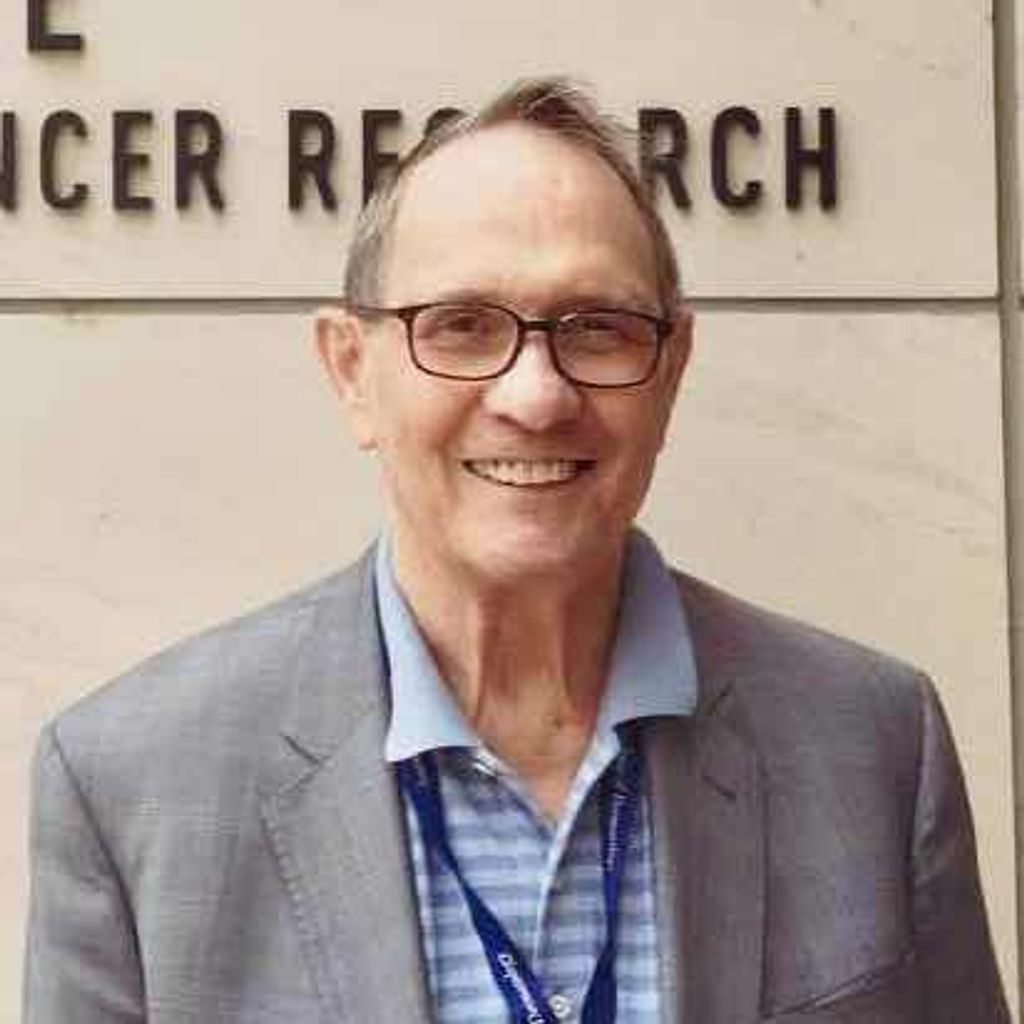
Dr. William Robert Levis
1939 - 2025
Share Dr. William Robert Levis's obituary with others.
Invite friends and family to read the obituary and add memories.
Stay updated
We'll notify you when service details or new memories are added.
You're now following this obituary
We'll email you when there are updates.
Please select what you would like included for printing:
For almost 25 years he was the Attending Physician at the Hansen's Disease Clinic at NYC Health + Hospitals/Bellevue in Manhattan, treating patients, many of them poor immigrants, and reassuring them they need not suffer the same frightening outcomes that leprosy was historically known for.
"The first thing I tell my patients is that leprosy is 100 percent curable," Dr. Levis would say. "But you want to get the patients early, before they're deformed."
Dr. Levis, a Wisconsin-born dermatologist who for more than 35 years was at the forefront of leprosy treatment in the United States, died in his sleep on Nov. 14 while in his Manhattan home, the city's medical examiner said. He was just a few weeks shy of turning 86, and while his health had been in decline in recent years, his death, believed to have been caused by a heart attack, was a surprise to all who knew him.
Three days before he passed Dr. Levis was treating patients as usual at his Bellevue clinic, and was planning on attending a medical conference later that week, said Sharice Easterlin, administrative manager of the Hansen's Disease program since 2001.
"He was an excellent, excellent clinician," she said. "No matter what time of day, his patients could rely on him to answer their questions, relieve their fears ... His basic goal was to make sure that each and every one of them got the very best of care."
Dr. Levis attended medical school at the University of Wisconsin, where he became enamored with the role that T cells, which are white blood cells, played in the body's immune system. He co-authored his first paper on them in 1970, when he was acting chief and senior investigator in dermatology at the National Cancer Institute in Bethesda, MD. T cells, also known as lymphocytes, would largely influence his professional trajectory for the next 55 years, leading him into the field of leprosy, as they are central to understanding the disease.
His study of leprosy, in turn, led him to explore potential connections between Hansen's Disease and HIV, psoriasis, cancer, and even COVID-19. He co-authored his last paper, "A hypopigmented and enlarging granulomatous eruption," about a patient's pigmented skin found to be leprosy, in June of 2024. It was his 132nd published paper.
Dr. Levis had a fondness for armadillos, one of the few animals also known to contract leprosy, though he did not necessarily share the common belief that they could transmit it to humans - there is still no medical consensus on why leprosy presents in patients. He was adamant that more should be done to publicize the disease and that doctors should be better trained on how to spot it. He routinely did press interviews, including with the New York Times, believing that potentially hundreds more New York City residents could be treated with effective medications if they were just properly diagnosed.
He never shied from holding a patient's hand.
"As a long-standing partner in the National Hansen's Disease Program, Dr. Levis played a vital role in strengthening treatment practices, expanding understanding of the disease, and fostering collaboration across the clinical and research community," said Amy Bowman, the program's acting director, speaking on behalf of many who knew Dr. Levis's work within the agency, which is a part of the U.S. Department of Health and Human Services.
"His leadership, mentorship, and dedication helped shape the field and supported generations of providers who continue this important work. He will be remembered ... for his lifelong commitment to reducing stigma, and improving care for all those affected."
Born on Nov. 28, 1939 to William and Enda Mae (Flentje) Levis, Dr. Levis, who went by the name Bill, was a sports hound, a lover of jazz and classical music, a longtime regular at Manhattan's Harvard Club, and loved dining at fancy New York City restaurants, only half joking that he would never eat at a restaurant with a Zagat's rating below 25 (out of 30.) He played basketball into his 70s at his local YMCA, and at the Canyon Ranch resort in the Berkshires, and loved watching Wisconsin Badgers basketball and football games, and New York Yankees games.
Dr. Levis had a remarkable memory, able to recall literally what page in what book he first learned some medical fact 60 years ago, and was continually reading research papers, often on the website PubMed late into the night. He loved to laugh and had a wild sense of humor, one that rarely had a filter, which made him all the more entertaining, though at times inappropriate.
He also was terrific at connecting people together across medical circles, thinking nothing of introducing complete strangers to each other because he thought they should talk -- "Carpe Diem" was his motto. He had a wide network of professional friends and associates, among them Dr. Anthony Fauci, and the late Nobel Prize winner Ralph Steinman, whom Dr. Levis met in the 1980s while teaching at The Rockefeller University in New York. A veteran, he was a retired Captain with the Commissioned Corps of the United States Public Health Service, one of the country's seven uniformed services, having received its Meritorious Service Medal for career achievement.
Dr. Levis married his first wife, Rita Kennedy, in 1961, and the couple had two sons, Robert and William. He married again in 1980 to Georgia (Barnett) Schuller, a fellow researcher whom he met at the National Institutes of Public Health while they were studying a childhood genetic disorder. They settled in Staten Island, where he began his leprosy work at Staten Island University Hospital, and the couple had one daughter, Laura Beth Levis, who became a writer and magazine editor in Cambridge, MA.
Tragedy struck their family in 2016, when Laura died outside a locked, hospital door while suffering an asthma attack. She was 34. Massachusetts has since passed a law in her memory, Laura's Law, mandating first-ever hospital standards for safe patient access to emergency care. Georgia Levis passed away from cancer on July 4, 2018.
Dr. Levis is survived by son Rob Levis and his wife, Henrietta, of Colorado Springs, CO; son Will Levis and his wife, Catlin, of Manhattan; granddaughters Jessica, Katie and Summer Levis and grandson Kyle Levis of Colorado Springs, CO; and granddaughter Amber Levis and grandson Wyatt Levis of Manhattan. He is also survived by his brother and best friend, Bob Levis, and his wife, Rose Davis, of San Diego, CA, and was brother to the late Jill (Levis) Ragatz, and brother-in-law to Dick Ragatz, of Edina, Minnesota. He is survived as well by several nephews and nieces. Peter DeMarco, of Somerville, MA, was his son-in-law and Paullet Buchanan, of New York City, was his longtime housekeeper and friend.
A memorial service has not yet been planned. Dr. Levis's wishes were to have his ashes brought to a favorite creek in West Virginia, where both his wife's and daughter's already have been spread.
Gifts in Dr. Levis and Georgia Levis's names can be made to Gilda's Club of NYC, named after the comedian Gilda Radner, a support haven for people diagnosed with cancer. The club's donation site is https://reddoorcommunity.org/donate/
Dr. William Robert Levis's Guestbook
Visits: 1898
This site is protected by reCAPTCHA and the
Google Privacy Policy and Terms of Service apply.
Service map data © OpenStreetMap contributors