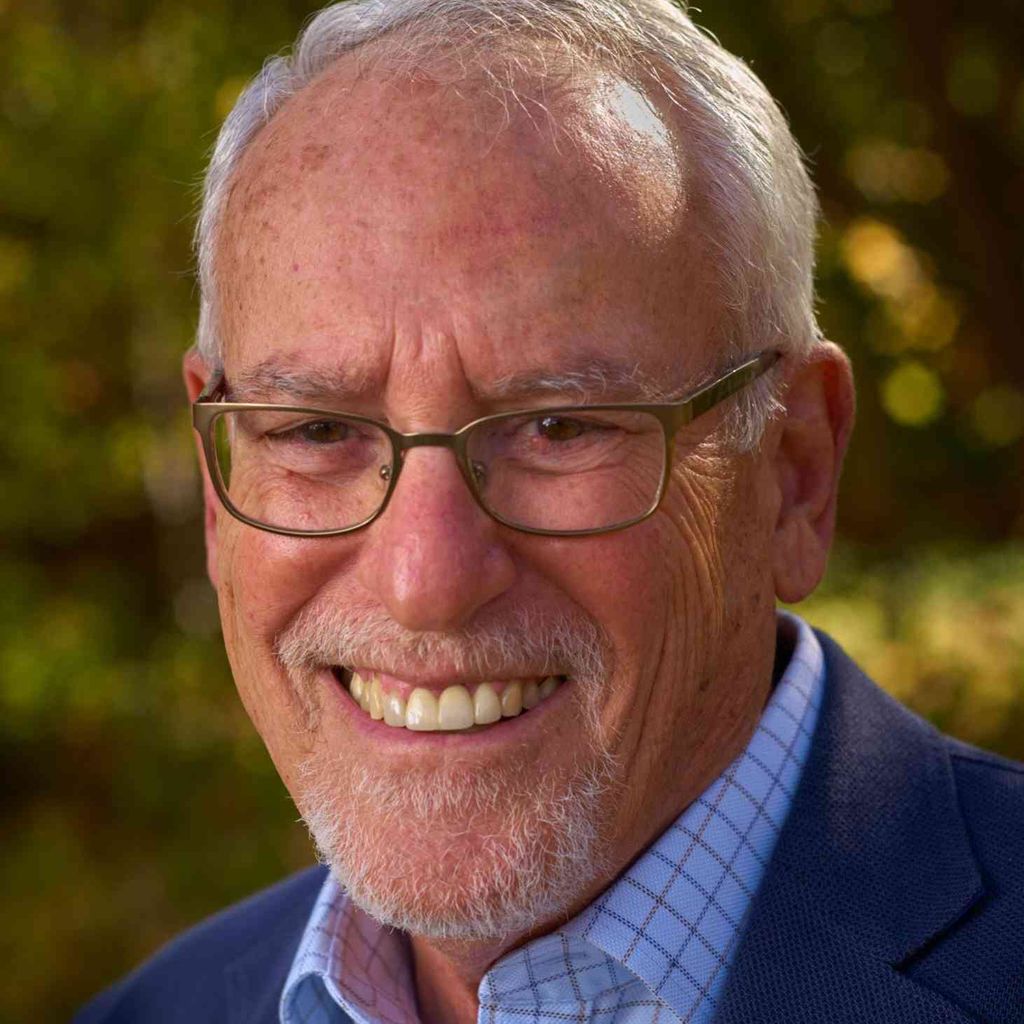
Edward S. Greenberg
1942 - 2025
Share Edward S. Greenberg's obituary with others.
Invite friends and family to read the obituary and add memories.
Stay updated
We'll notify you when service details or new memories are added.
You're now following this obituary
We'll email you when there are updates.
Please select what you would like included for printing:
Edward S. Greenberg was born on July 1, 1942. His father, Samuel Greenberg, hailed from Philadelphia and his mother, Yetta Kaplan, immigrated to New York at the age of eight from the Pale of the Settlement, Belarus. She was a survivor of the pogroms.
Born in Philadelphia, Ed, along with his younger brother Stanley, grew up in Riggs Park, D.C. His parents practiced conservative Judaism. But his grandparents were prohibited from speaking Yiddish in the home to encourage the boys' use of English. As a child, Ed's first love was sports. He reveled in the superstars of his era and saw in person some of the all-time greats: Mickey Mantle, Joe DiMaggio, Sandy Koufax, and Ted Williams. In high school, at Calvin Coolidge, he was a three-sport athlete. He lettered six-times in football (quarterback), baseball (shortstop), and basketball (two-guard).
The first in his family to go to college, Ed left home, in 1960, to attend Miami University in Ohio. As far from Riggs Park as he could imagine, it was there, at a fraternity and sorority mixer in his freshman year, that he first laid eyes on the dazzling, blond haired shiksa from the rural Ohio township of Portage Lakes, Martha Baker. Known by her friends as "Party Martie," Martha was equally mesmerized by the outsider. They fell in love on the dancefloor—Chuck Berry, The Coasters, Bo Didley—and would go on to marry at twenty-two years of age, in 1964. They remained by each-others' side in good times and bad for fifty-seven years until Martha's death, in 2022.
From Ohio, Eddie and Martie set out into the world and into the beating heart of the 1960s. They missed Woodstock but were present at Altamont. Gerry Mulligan, Bob Dylan, and a then unknown comic named Woody Allen, were among the acts Ed caught while visiting New York over the summers. Shortly after getting married, Ed and Martha worked long hours at a factory job (Ed) and a greenhouse (Martha) to save money for a honeymoon trip to Europe. They took with them a copy of Arthur Frommer's Europe on $5 A Day and hitchhiked across the continent—mostly lost and overflowing with joy—for nearly two months.
During the summer of 1963, while working at the NIH as a pre-med in Chemistry, Ed joined in the March on Washington where he heard Martin Luther King Jr. deliver his "I have a Dream" speech. His younger brother Stanley—a future pollster and Democratic luminary—was working the organizing tent at the March as a volunteer for the NAACP. Ed had grown up in a segregated Washington with integrated schools. He later wrote about the injustices he witnessed against African Americans when traveling outside of the city. The emergent Civil Rights Movement became his focus. He abandoned pre-med and dove head-first into political science, completing a Master's degree at Miami, and later a PhD in Political Science from the University of Wisconsin, Madison. His thesis, a grassroots study of political participation among African American youth in Pittsburgh and Philadelphia, helped position him at the forefront of a critical new field in the study of American politics.
After completing his Ph.D., in 1968, Ed was hired by the Department of Political Science and the Institute for Political Studies at Stanford University. He taught one of the first classes in the country on the politics of race. It was an intense time for the young couple. With the anti-Vietnam War movement in full swing, Ed and Martha would attend a formal function with administrators and faculty one night and a sit-in with students the next. In 1971, their son Joshua was born. He became a fixture at many anti-war events riding on Ed's back while wearing a white knit cap with a red star in front. Not surprisingly, Stanford and the Hoover Institute (formerly the Institute for Political Studies) did not take kindly to any of it. When Ed's thee-year review came around he was not renewed.
Down but not defeated, the following year, in 1972, with the help of his friend and collaborator from graduate school, David Olson, Ed was hired on another tenure track at Indiana University, Bloomington. Ed published voraciously and quickly gained tenure but the dreary weather left the couple longing for change. As fate would have it, IU was just a stepping stone.
In 1973, Ed took a position with the Department of Political Science at the University of Colorado, Boulder. He would remain there until his retirement, in 2015. Although far from their East Coast roots and West Coast dreams, the small hippie town at the foot of the Rocky Mountains became an ideal destination for the young couple. They bought an historic home on Bluff Street near downtown. Ed's career accelerated with a grant to study workplace dynamics and Martha opened a dance studio on Pearl Street with several women including her soon-to-be lifelong friend Marcia Kahn. Marcia's husband, Coleman, along with Philip Gordon and his wife Lena formed a precious tribe for the academic nomads. The families spent Thanksgivings and Passovers together. Most years also included Christmas and Chanukah celebrations as well as many cocktail hours in between. In 1979 they sold the house on Bluff and moved to Eleventh Street near Chautauqua Park where their second son, Nathaniel, was born. The family hosted giant Fourth of July parties, backyard barbecues, election night gatherings, and Super Bowl parties. Ed laid concrete for a half-court basketball hoop in the backyard and the boys ran pickup games with friends late into the summer nights. He often schooled the Boulder teens with his East Coast defense and deadly jump shot.
In between coaching sports and cooking dinners, spending long, thoughtful hours with his boys on homework, and supporting his wife's burgeoning acting career, Ed continued to push the boundaries professionally. In 1985 he became Chair of the Political Science department and almost immediately was met with a scathing public attack by a conservative Board of Regents that accused him of discrimination against political conservatives in the department. He denied the charge which he attributed to a disgruntled faculty member who was unhappy about the Chair's new publishing standards. Outside Poli. Sci. the Institute of Behavioral Sciences was Ed's primary stomping ground. He served as Director of the Research Program on Political and Economic Change from 1978 to 2011 and as a member of the Board of Directors for the same period. He was four times Interim Director of the Institute. Over the course of his long career at CU Ed helped bring in millions of dollars in grants from the National Science Foundation and the National Institutes of Health and he authored or co-authored over fifty referred articles and chapters on topics like American government, Black politics, political economy, participatory workplace democracy, and the effects on employees of working in large organizations undergoing change. His major books included Capitalism and the American Political Ideal (M.E. Sharpe 1985), Workplace Democracy (Cornell 1985), and Turbulence: Boeing and the State of American Workers and Managers (Yale 2010). His co-authored textbook, The Struggle for Democracy, now in its fourteenth edition, has sold over a million copies.
In his later years, with Martha's health in decline and retirement afoot, Ed leaned in to new adventures. He studied and learned the game of golf which allowed him to reconnect with his old Calvin Coolidge buddies. The gang crashed high-end golf courses around the country and rejoiced in each other's presence. He and Martha made trips to Russia, China, Ireland, and Mexico and during a brief window under the Obama administration, they traveled with friends to Cuba. As a capstone to his career, Ed was named a Fellow at the Rockefeller Study Center in Bellagio, Italy, in 2009. He described it often as the greatest experience of his career. In his final trip abroad, at age 82, he traveled to Spain to visit Nathaniel and his family where Nathaniel was on a Fulbright Scholarship in Málaga.
Ed suffered greatly in Martha's final years, often caring for her twenty-four hours a day and struggling to mitigate her complicated illnesses of post-Polio syndrome and eventually ALS. However, in his final years, after Martha's death, he set out on another journey, rediscovering a life of the mind and soaking in the glory of the Bay Area which he long described as his favorite part of the country. Living with Josh and Susanna and their youngest son Grant (their older son Addison newly off to college), Ed surrounded himself with loving family while rediscovering the vibrant intellectual scene around Stanford. A full-circle of sorts, he took classes on earth science, history, and astronomy and rejoiced in lunches and conversation with new and brilliant friends.
Moving ever forward with no direction home, he was a self-invented man. Those whose life he touched admired him greatly and cherished his presence.
He passed away on November 30, 2025, in California. He is survived by his brother Stanley, his two sons, Joshua and Nathaniel, their wives Susanna and Elizabeth, and his grandchildren Addison, Grant, Lulu, and Samuel.
Edward S. Greenberg's Guestbook
Visits: 368
This site is protected by reCAPTCHA and the
Google Privacy Policy and Terms of Service apply.
Service map data © OpenStreetMap contributors