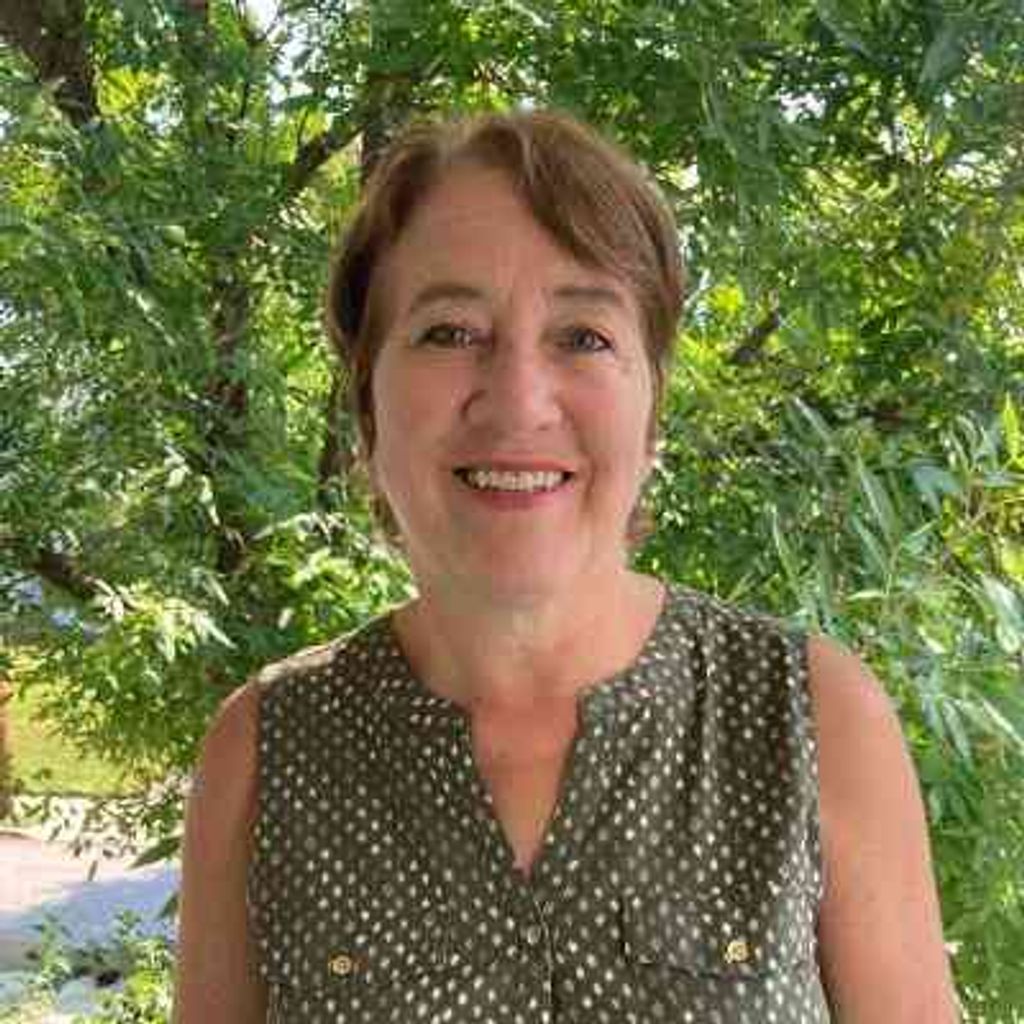
Ellen Joan Peixoto
1955 - 2026
Share Ellen Joan Peixoto's obituary with others.
Invite friends and family to read the obituary and add memories.
Stay updated
We'll notify you when service details or new memories are added.
You're now following this obituary
We'll email you when there are updates.
Please select what you would like included for printing:
What she did not imagine was how soon, how painful, or how untimely her own death would be.
Not long before she died, she said: "It's just such a bummer. I had a lot of big plans."
She did. She was going to do a walking tour of the Scottish moors with her son Jeffrey. She and her husband Paul planned to travel throughout their beloved Europe. She was eagerly anticipating her son Christy's summer wedding. And in what felt almost inevitable from the child of a woman who believed deeply in the power of books, her daughter Caroline had started a literary arts center in rural Montana, where Ellen planned to spend long stretches.
She learned she was sick less than eleven weeks before she died.
NUT carcinoma. A rare, aggressive cancer with so few cases, the wonderful doctors who treated her had never encountered it before.
It was shocking. Not because she was young and healthy. Sometimes young and healthy people become very sick. It was shocking because Ellen was good. She radiated goodness and generosity and warmth.
She delighted in slipping $20 bills into strange places for her children to discover later. When her niece had her first child and didn't quite know how to care for her, Ellen appeared at the front door. She became a surrogate mother to many and embraced her role with enthusiasm. If she accepted an invitation to your home, she arrived armed with boxes of homemade cookies. If you were invited to hers, every dish was cooked with care. She was the only person on the planet who enjoyed shoveling snow - until her grandson Wilder came along, and they delighted in the activity together.
Ellen didn't have a moment's rest after her diagnosis. Because Ellen's world was enormous. And she was a prolific pen pal. She could not walk down the street without popping her head in a doorway to chat with its inhabitant. She could not wait at a train station without striking up a conversation. She could not leave a protest without a new friend. If you met Ellen at random, you were in for a lifelong commitment.
You could regularly find her zooming with tutees in Russia and France. Acquaintances in Portugal and Switzerland and the UK became close confidants over the years. Her beloved friends in New Jersey and New York and Vermont were on speed dial. And, of course, her students. Every marker- scrawled note from a student was cherished; every construction paper missive was answered with care. Ellen spent her last lucid hours on the phone, talking with the people who love her.
Ellen saw the good in everyone. She possessed a deep, uncanny empathy. Any slight or poor treatment at her expense infuriated her protective family. But Ellen always had an explanation: the offending party was going through something in their own life, they didn't mean it, they were struggling in ways no one else could see.
At the same time, the core injustices of the world incensed her. And she was fearless in her fight against guns, racism, poverty, misogyny, genocide and fascism. She did not tolerate cruelty. She did not ignore violence. She confronted it. Loudly. She was a steadfast member of her local Black Lives Matter chapter. Some people sigh and make concerned faces and turn their phones off. Ellen showed up.
Ellen was the only daughter of Lawrence and Joan Musci. She grew up in New Jersey in a home of brothers whom she loved. Early on she knew she belonged in the world of books. She wrote to authors she admired - not fan mail, but thoughtful notes about their work. Kurt Vonnegut liked her letter so much, he wrote her back.
She met her Californian husband in Dijon, France when they were 19 and 20, both studying the French language. She graduated from Ramapo College of New Jersey in three years with a degree in American Literature. After she and Paul married, they traveled the world in service of God and the principles they held close: faith, community, compassion.
She educated her own children, homeschooling them in New Jersey, Portugal, and California. She taught the children of strangers and neighbors, sometimes in classrooms, sometimes around the kitchen table. She edited, proofread, cross checked, copy wrote and corresponded with authors — preparing their words for prime time. She campaigned to get an out of print children's book she loved republished so new readers could discover it. She earned her Master's Degree in Education in 2018, formalizing a credential she had practiced for decades.
Over the last decade of her life she taught full time as an elementary school teacher. First in a bilingual English-French school, then in the public system in Paterson, NJ, and finally at her beloved Cinnabar School in Petaluma, CA. Before the winter break this past December she tidied up her classroom and switched off the lights, excited to resume teaching in the new year. Throughout the weeks of appointments, surgery, recovery, and through her final days, she told her family and friends "I hope I can get back to my class by May."
Ellen was our teacher. Her lesson was joy and light. Ellen made all of us feel loved and seen and important.
She is loved and seen and important.
—
Written by Anna Bahr
Ellen Joan Peixoto's Guestbook
Visits: 162
This site is protected by reCAPTCHA and the
Google Privacy Policy and Terms of Service apply.
Service map data © OpenStreetMap contributors