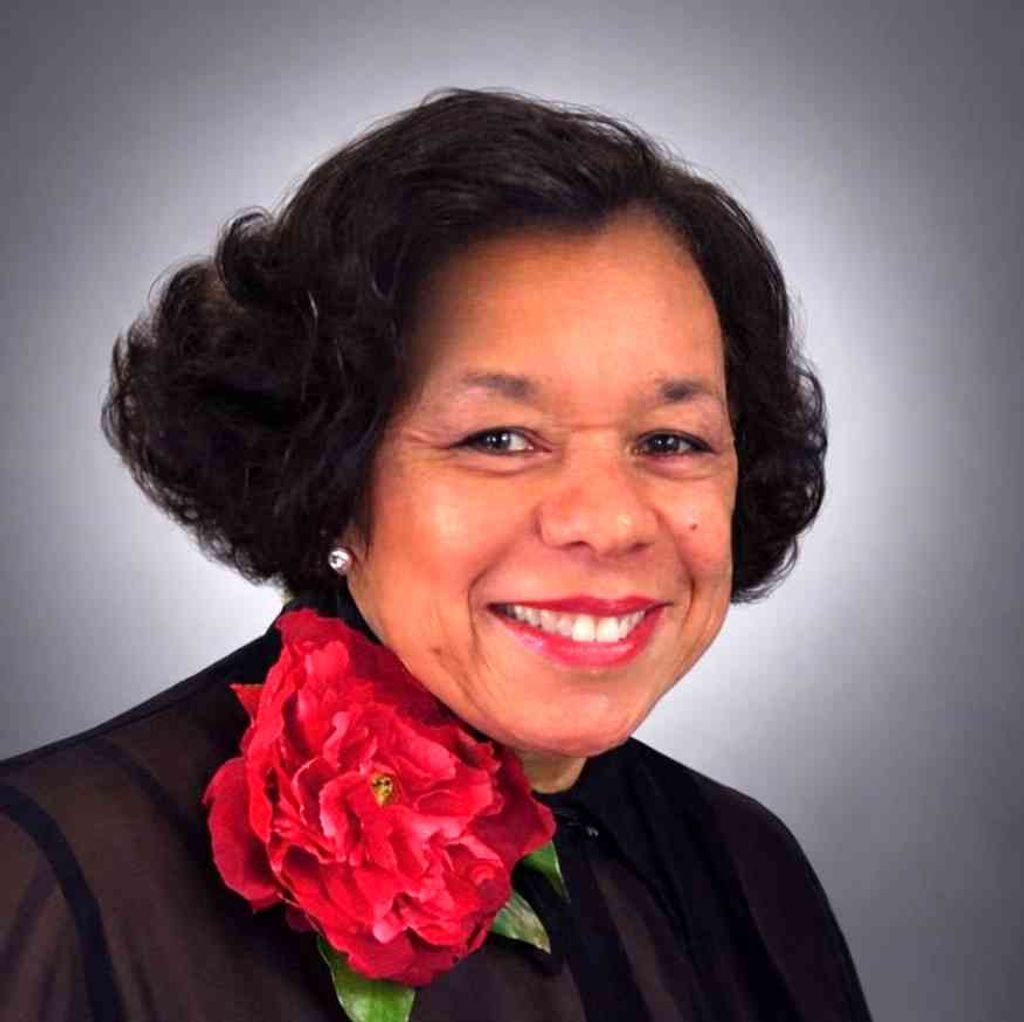
Esther Scott Carter
1944 - 2026
Share Esther Scott Carter's obituary with others.
Invite friends and family to read the obituary and add memories.
Stay updated
We'll notify you when service details or new memories are added.
You're now following this obituary
We'll email you when there are updates.
Please select what you would like included for printing:
In every generation, there are a few individuals whose lives seem to move effortlessly between history and legacy; people who inherit great traditions and then expand them for those who follow. Esther Scott Carter, II was one of those rare individuals. During her 81 years of life, Esther “Honey” Carter moved through the world with intellect, elegance, beauty, unrelenting courage and a steadfast commitment to community, justice and excellence. Educated under the aegis of the Scott newspaper family, The Atlanta Daily World (https://en.wikipedia.org/wiki/Atlanta_Daily_World) and her Harvard Law school graduate father (https://westhighalumni.com/russell-luther-carter-36-civil-rights-lawyer-judge/), Esther appreciated not only on whose shoulders she stood, but also her charge to further fortify what had come before.
After graduating from Dayton, Ohio’s Roosevelt High School, Esther earned her B.A. in Government from Oberlin College and her Juris Doctorum from Georgetown University Law Center. Her sharp legal mind and passion for public service secured her selection as a National Urban Fellow and the opportunity to join California Governor Jerry Brown’s legal policy staff. Subsequent to her tenure with Governor Brown, Esther joined Mayor Moscone’s team as Deputy Mayor. In that role, she oversaw unprecedented crises in the Police, Fire, Health, Mental Health, and Education departments. Experiences that further clarified her resolve to champion positive change for the marginalized.
Although Esther’s time serving with both California’s Governor and San Francisco’s Mayor were landmark, she had already served in the Civil Rights Division of the U.S. Department of Justice. In the late 60s, Esther joined the historic National Advisory Commission on Civil Disorders, widely known as the Kerner Commission (The Kerner Report ISBN 9780691169378 and The Drive for Equality: A Personal History of Civil Rights Enforcement: 1954-1965 ISBN 9781608367795). As the only woman on the four-person lead investigative team, she reported directly to President Lyndon B. Johnson. Esther’s contributions helped shape the Commission’s defining report, which Dr. Martin Luther King, Jr. called a “prescription for life” as the report aligned with Dr. King’s timeless assertion, “It may be true that the law cannot change the heart, but it can restrain the heartless.”
Esther began her ‘second career’ after witnessing how public funds were appropriated. These observations inspired her to master the principles of wealth creation and preservation. She made a decisive pivot into the investment business, specializing in tax-advantaged investments. Her success allowed her to return to her Ohio roots to open offices for several investment firms. Esther was celebrated by The Dayton Daily News as one of the 1986 recipients of the “Top Ten Women” designation… and later “Businesswoman of the Year.”
Esther’s entrepreneurial spirit led her to her ‘third and final career' with American Communications Network (ACN). As a Regional Vice President, she led a global marketing organization spanning five continents. For Esther, business was never merely transactional it was transformational. Her life experience has taught her financial literacy and ownership were tools of sovereignty. She was a fountainhead of knowledge, sharing generously with everyone she encountered.
Equally important to her professional life was Esther’s lifelong commitment to community service and sisterhood. She accepted the charge to uplift the Black community and buttress the foundation that would support future generations of change-makers. She offered her time and talent as a member of The Links, Incorporated, contributing to initiatives that strengthened educational, cultural, and civic endeavors. In 1992, Esther became a member of The Tenacious Twenty; inducted into the Beta Eta Omega chapter of Alpha Kappa Alpha Sorority, Inc. Like her sorority, her life’s story had been “scholarship, leadership, and service to all mankind.” It seemed only natural she was asked to leverage her financial knowledge as a member of the Alpha Kappa Alpha’s Business Roundtable.
While Esther’s civic and professional résumés were extraordinary, she made it known to anyone who dared listen, her grandchildren, Vincent “VJ” Brown and Carter Brown, remain her greatest investment and heirs to her legacy. In addition to VJ and Carter, Esther is survived by her daughter, Amber Brown and a host of Scott and Carter family cousins.
Esther’s life was a masterclass in scholarship, leadership, cultivation, devotion, and grace under pressure. She did not simply witness history… she was born into it, leaned into it, immersed herself in it and fostered every opportunity to create it. To everyone who loved her, she will forever remain Queen Esther.
______________________________________________________________________________
It was Esther’s wish that no funeral or memorial service be held, preferring instead that her life be honored through continued investment in the education and advancement of future generations.
Her legacy lives on at Oberlin College through The Dr. Martin Luther King, Jr. Endowed Internship Program; a program established by Oberlin’s Class of 1965 in honor of Dr. King having delivered their commencement address. The program provides financial support to students with demonstrated need, enabling them to pursue meaningful internships aligned with social justice values, honoring Dr. King’s legacy and Oberlin’s commitments to equity and opportunity.
You may donate to Oberlin in Esther’s name via https://advance.oberlin.edu/campaigns/dr-martin-luther-king-jr-internship-fund or by mailing a check to Oberlin College, PO Box 72110, Cleveland, OH 44192-0002
Learn more about:
• The legacy of the Scott family’s historic newspaper, The Atlanta Daily World by enjoying Thomas Aiello’s, The Grapevine of the Black South: The Scott Newspaper Syndicate in the Generation before the Civil Rights Movement, ISBN 978-0820354477
https://www.amazon.com/Grapevine-Black-South-Newspaper-Generation/dp/0820354465 and https://www.jstor.org/stable/j.ctt22nmc2n?turn_away=true
• The culture and tradition Esther was cultivated in by enjoying Lawrence Otis Graham’s Our Kind of People: Inside America's Black Upper Class, ISBN 978-0061870811
https://www.amazon.com/Our-Kind-People-Inside-Americas/dp/0060984384
• The historic preparatory/ finishing school Esther and her Atlanta cousins attended as teens; Sedalia, North Carolina’s Palmer Institute. https://en.wikipedia.org/wiki/Palmer_Memorial_Institute, https://historicsites.nc.gov/all-sites/charlotte-hawkins-brown-museum, https://historicsites.nc.gov/all-sites/charlotte-hawkins-brown-museum/history and https://historicsites.nc.gov/all-sites/charlotte-hawkins-brown-museum/history/dr-charlotte-hawkins-brown/rules-school
Esther Scott Carter's Guestbook
Visits: 230
This site is protected by reCAPTCHA and the
Google Privacy Policy and Terms of Service apply.
Service map data © OpenStreetMap contributors