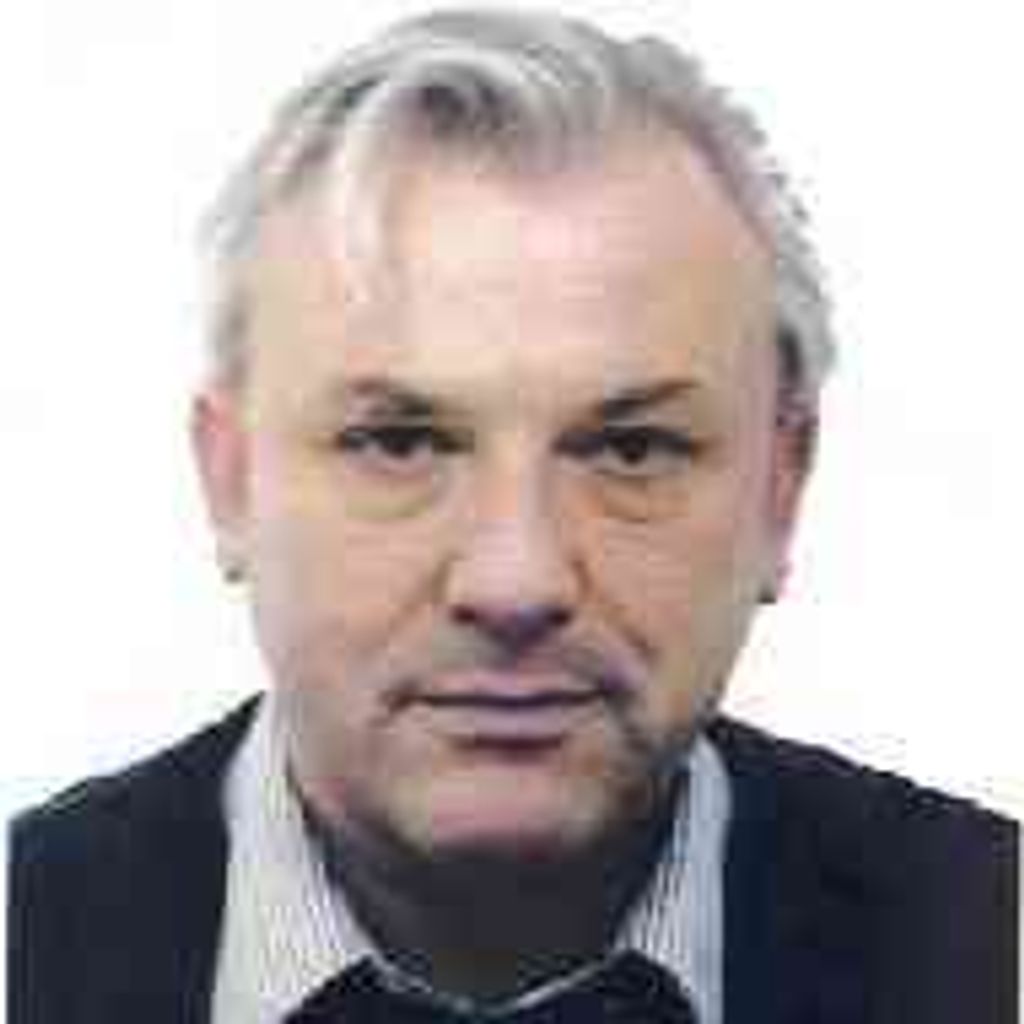
Guenakh Mitselmakher
1945 - 2026
Share Guenakh Mitselmakher's obituary with others.
Invite friends and family to read the obituary and add memories.
Stay updated
We'll notify you when service details or new memories are added.
You're now following this obituary
We'll email you when there are updates.
Please select what you would like included for printing:
Guenakh Mitselmakher was born to Victor and Anna on December 5, 1945 in Vilnius, Lithuania. He was the youngest child in a joint post-war family, with his brother Anatoly adopted by Victor after Anna's first husband was killed in World War II, and his orphaned sister Rina joining the family after being saved from the war camps where her parents perished. At the age of 17 he moved to Moscow, Russia to study physics at the Moscow State University.
After graduating in 1968, he began his career as a particle physics theorist at the Joint Institute for Nuclear Research in Dubna, Russia, a picturesque science town on the banks of the Volga river in the Moscow Region, soon transitioning to experimental work.
In Dubna in 1970 he met his beautiful future wife Tonya, who became his kind and gentle spouse for 55 years. Their daughter Irina was born in 1972, and son Victor in 1977. They built a good and peaceful life in Dubna.
He often recalled his mentor Bruno Pontecorvo as the person who made the largest impact on his scientific vision and "physics taste". Guenakh was involved in and led a few spectacular high energy physics experiments in Russia. In the mid-1980s, Guenakh and his group joined the DELPHI experiment at then being built Large Electron-Positron Collider (LEP) at the CERN laboratory in Switzerland, making impactful contributions to the experiment and to the LEP physics program.
In 1991, at the age of 46, Guenakh was invited to work as a Senior Scientist at the Superconducting Super Collider (SSC), a high energy physics laboratory being established in Texas, United States. Guenakh took a bold leap of faith by moving his family to America, having only visited it once before. After working at SSC and Fermilab for a number of years, Guenakh took the role of professor at the University of Florida and settled in their new home in Gainesville.
At UF, Guenakh spearheaded a vigorous experimental program, leading to a group that, at its peak, was seven faculty strong and had more than 40 members, including students, postdocs, and engineers. This group played major leadership roles in several significant scientific discoveries.
In particular, Guenakh led the design and construction of a primary component of the CMS experiment at CERN. The CMS experiment, along with ATLAS, confirmed the existence of the Higgs boson in 2012. At UF, from 2000 and until recently, Guenakh was the director of the Institute for High Energy Physics and Astrophysics (IHEPA). In 2001, Guenakh was elected Fellow of the American Physical Society and in 2004 he was appointed as Distinguished Professor.
Guenakh was also the driving force behind UF joining the Laser Interferometer Gravitational-Wave Observatory (LIGO) experiment in 1996, and the gravitational wave detection program in general. The UF LIGO group is internationally recognized for its major leadership roles, its significant contributions to the design and construction of the LIGO apparatus, and in data analyses. Notably, the earliest detection of gravitational waves in 2015 is fully credited to UF. Both the Higgs boson discovery and the gravitational wave discovery went on to win Nobel prizes in physics, in 2013 and 2017, respectively.
Guenakh was a relentless advocate for the UF physics department growing strong and aspiring to pursue physics of pivotal and international significance. His scientific legacy will persist through the many scientists he mentored during his long career. Guenakh will be remembered and missed by his many colleagues and friends all over the world.
Guenakh enjoyed a rich and fulfilling life. He loved classical music, art, good food and travel. He had a gifted mind, an enthusiasm for knowledge, an indomitable will and the perseverance to achieve his goals. He carved out an extraordinary path.
Above all, Guenakh loved his family. He is survived by his beloved wife Tonya, his sister Rina, his children Irina (Marc) and Victor and grandchildren Marc and Ella.
Guenakh Mitselmakher's Guestbook
Visits: 96
This site is protected by reCAPTCHA and the
Google Privacy Policy and Terms of Service apply.
Service map data © OpenStreetMap contributors