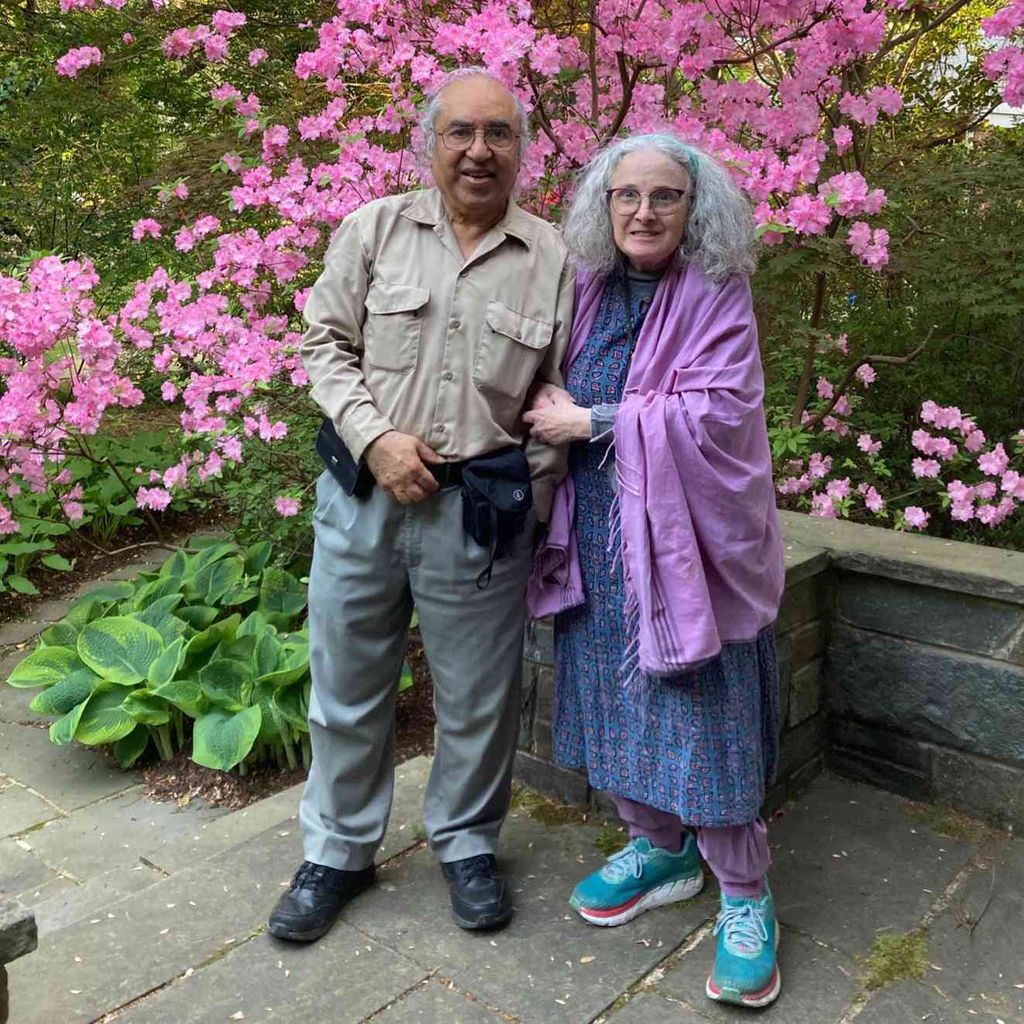
Isa Mariella Bernardini
1943 - 2025
Share Isa Mariella Bernardini's obituary with others.
Invite friends and family to read the obituary and add memories.
Stay updated
We'll notify you when service details or new memories are added.
You're now following this obituary
We'll email you when there are updates.
Please select what you would like included for printing:
Isa was born on January 1st, 1943, in the city of Cagliari, on the Italian island of Sardinia, to Giovanni and Anna-Maria (née Lastrucci) Bernardini. Her father was a chemist and anti-fascist, and inspired Isa's twin passions for science and social justice. In high school, she came to the United States as a foreign exchange student to San Diego, California. She began her university education at San Diego State, completing a bachelor's in marine biology and master's in chemistry education at Tufts University outside Boston. Isa briefly taught at the high school level, but her real love was research, and she joined a laboratory at the Dana-Farber Cancer Institute. An active member of Science for the People, she marched for the ERA and against the Vietnam War.
In 1971, while working at the DFCI, Isa met her husband, Zmarak Shalizi, an Afghan student turned émigré completing doctoral work in Urban Studies and Planning at the Massachusetts Institute of Technology. They married a year later, and welcomed a son, Cosma, in early 1974. They relocated to Bethesda, Maryland after the birth of their second son, Aryaman, in late 1975, when Zmarak was offered a job at The World Bank. Isa began working at the National Institutes of Health shortly thereafter. In 1982 she joined the laboratory of William Gahl as a metabolic biochemist, a collaboration that lasted until her retirement in 2013.
A lover of all things that grow, Isa cultivated a Japanese-inspired garden and Italian vegetables with Zmarak at their home just north of the NIH campus. She cultivated her sons' interest in the sciences, as well, sharing her favorite books by Oliver Sacks, Lewis Thomas, and Paul de Kruif, and taking her sons to her laboratory after school every afternoon. Cosma embraced theoretical work after spending a summer in the lab, and Aryaman became a molecular biologist after realizing it meant he could make a career out of playing with the tools he thought were children's toys.
Isa loved to cook and brought a bench scientist's sense of adventure and experimentation to the kitchen. She was an expert at the dishes of her native Italy, taught both sons how to cook, and knew that proper lasagna is made with bechamel sauce. Isa also mastered dishes from around the world. A sign of her mastery of cooking was not simply the ability to follow new recipes impeccably, but to create sumptuous meals from nothing but leftovers. She and Zmarak enjoyed entertaining family and friends and strangers and were known for the generosity of their table at festive gatherings throughout the years. They regularly hosted "orphans" from the NIH or World Bank who were away from their families during holiday celebrations.
Isa's love of international cuisine extended to a love of travel. Never having traveled east of Venice before meeting Zmarak, they took advantage of opportunities provided by NIH and the Word Bank to travel to conferences or overseas programs, visiting India, Italy, Kenya, Turkey, Japan, Australia, New Zealand, Indonesia, Malaysia, Vietnam, Spain, and more. Often accompanied by their children and Zmarak's mother Prita, Isa climbed mountains, explored caves, snorkeled, visited remote temples and bustling cities with equal ease. Particularly fond of sculptures and textiles, they curated a museum-quality collection of folk art during their travels. Finding it more comfortable and more practical than Western clothing, she adopted north Indian salwar kamees as her standard attire after their first visit to India in 1981.
Isa's taste in the arts was no less eclectic. She loved Opera, classical, and baroque music, modern art, and adventure and fantasy novels. A lifelong fan of Star Trek, particularly The Next Generation, she believed working at the NIH was the closest thing in this world to joining the Federation: a dedicated group of people from many nations, united in the scientific enterprise of exploring the inner workings of life to establish a better future for all.
She was intellectually and socially progressive and a believer in improving democratic institutions to help those in need or who were underrepresented or discriminated in different cultures. Though an introvert and private person, she was generous of spirit and willingly shared her house with her in-laws for decades. Even as aphasia stole her voice, Isa's affection for her family and friends shone brightly. She was always ready with a smile and a warm embrace. She was very proud of her children and grandchildren and loved them so much she insisted on walking and accompanying the latter to zoos and museums despite debilitating pain caused by severe spinal stenosis during the last few years of her life.
Isa is survived by her partner of fifty-four years, Zmarak Shalizi, of Bethesda, Maryland; her elder son, Cosma Shalizi, of Pittsburgh, Pennsylvania, his wife Abigail Owen, and their son Leo Zmarak; her younger son, Aryaman Shalizi of San Rafael, California, his wife Lisa, and their daughters Prita and Aliyah; her brother Antonio Bernardini, his wife Giovanna (née Cugini), and their children Mattia and Anna in Italy. In lieu of flowers, the family asks those who are able to donate to one of the many causes she supported throughout her life: the Friends of the National Zoo, the Smithsonian Institution, Oxfam International, or Doctors Without Borders.
Isa Mariella Bernardini's Guestbook
Visits: 18
This site is protected by reCAPTCHA and the
Google Privacy Policy and Terms of Service apply.
Service map data © OpenStreetMap contributors