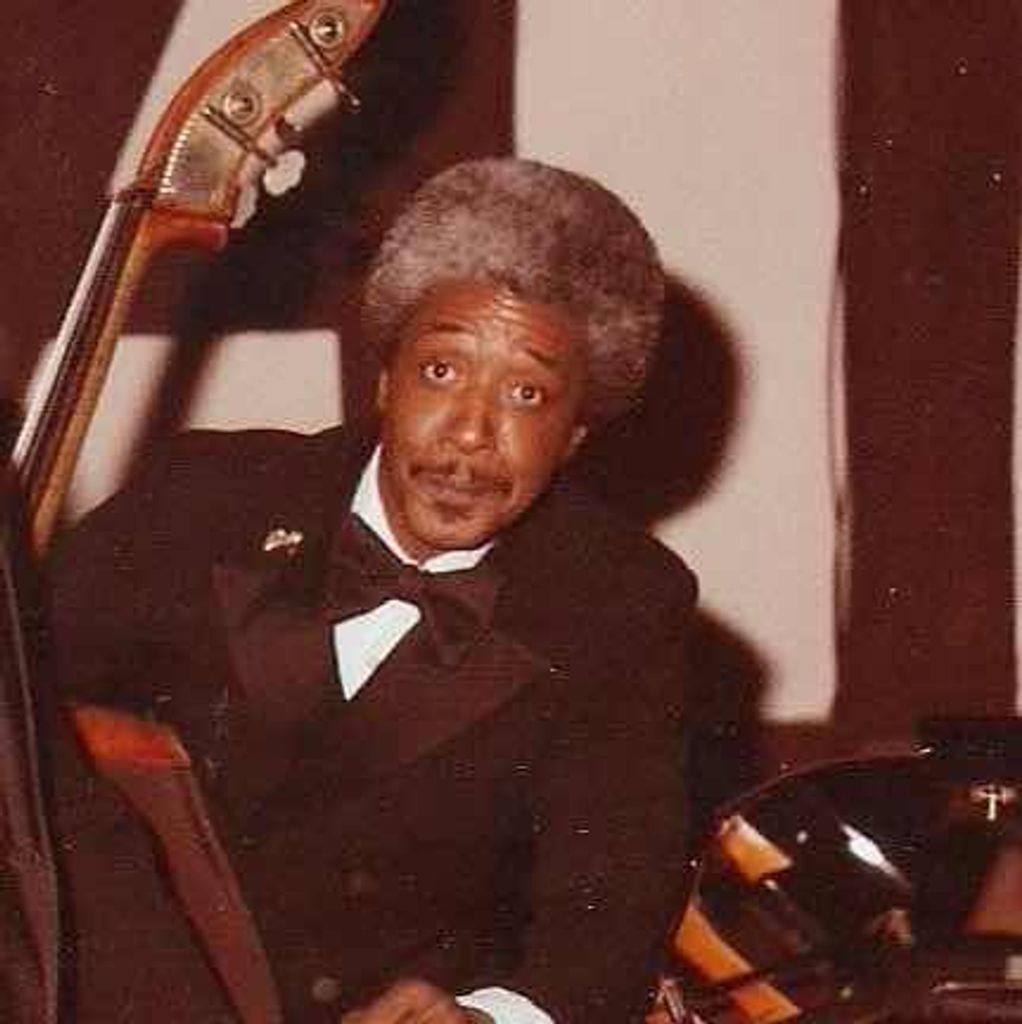
Lamar Gaines
1937 - 2026
Share Lamar Gaines's obituary with others.
Invite friends and family to read the obituary and add memories.
Stay updated
We'll notify you when service details or new memories are added.
You're now following this obituary
We'll email you when there are updates.
Please select what you would like included for printing:
Early Life & Musical Roots
Music was a profound and foundational part of Lamar's life. He was born to DeWitt Gaines and Evelyn Gaines. His father, DeWitt, was a drummer and a skilled cooper. Lamar was early exposed to live music through his father playing drums in a band with his siblings.
As a young boy, Lamar was allowed to stay up late not only to listen—but to play piano at what were known at the time as "house rent parties," watching his father play alongside other family members and absorbing music as part of everyday life. Lamar learned piano at a young age without formal training. His father brought home an old player piano that had belonged to Lamar's grandmother, giving him a place to practice and explore music freely. That piano marked the true beginning of his lifelong commitment to music.
During his school years, Lamar developed a strong boogie-woogie style, modeling his playing
after artists such as Sugar Chile Robinson, whose approach helped shape his early piano
voice.
Military Service
In 1954, Lamar joined the United States Air Force, where he served as a cook. While stationed in Louisiana, he also played piano regularly at the service club, continuing to develop as a musician and expanding his musical vocabulary beyond jazz and blues, including doo-wop and other popular styles of the time.
During his service, Lamar met a young George Carlin. Lamar taught him the doo-wop song "Cherry Pie" on the piano, and the two spent time talking, playing music, and running together throughout their time in the service. They remained in touch whenever Carlin was in town.
Lamar was honorably discharged in 1958, returned to Cleveland, and made the defining
decision to pursue music as his life's work.
Career & Musical Legacy
After returning home, Lamar caught the attention of Cleveland jazz drummer Eugene "Fats" Heard, a prominent figure in the city's jazz scene. Heard—known for his work with Erroll Garner and for recording the landmark composition Misty—took Lamar under his wing, helping guide him professionally and musically during a crucial time of his development.
Originally a pianist, Lamar worked during a period when the Hammond B-3 organ was becoming increasingly popular. Many venues no longer had a piano available, leaving the organ as the primary instrument. As a result, Lamar adapted and began playing organ regularly, developing a strong left-hand bass approach.
After one such performance, legendary bassist Paul Chambers, who happened to be in the audience, encouraged Lamar to switch to bass, impressed by the way he was already thinking
and moving harmonically. Lamar took that advice seriously. After three to four years ofrigorous practice, he emerged as a professional bassist.
In the mid-1960s, Lamar became part of the house band at Cleveland's Theatrical Grill and performed on The Mike Douglas Show from 1965 to 1972. During this period, pianist Wynton Kelly, who had recently left Miles Davis's band to form his own group, recruited Lamar to join him. Lamar left his secure position on The Mike Douglas Show to pursue the opportunity. Just days before the tour was to begin, Wynton Kelly passed away from epilepsy in his hotel room.
Over the course of his career, Lamar Gaines performed with and alongside many of the most significant figures in jazz history.
He performed with countless artists over his career, including Horace Silver, Wes Montgomery, Jackie McLean, Jimmy Smith, James Moody, Milt Jackson, Erroll Garner, Freddie Hubbard, Sonny Stitt, Carmen McRae, Joe Williams, Kenny Burrell, Billy Taylor, Marian McPartland, Mary Lou Williams, Papa Jo Jones, Clark Terry, Dorothy Donegan, Freddy Cole, Joe Lovano, Teddy Wilson, Charlie Shavers, Earl "Fatha" Hines, Bobby Short, Monty Alexander, Rahsaan Roland Kirk, and Anita O'Day.
His career bridged swing, bebop, soul jazz, and modern jazz, and he was widely regarded as a living repository of jazz history.
Family, Character & Legacy
Beyond music, Lamar was a devoted father and family man, deeply committed to those he loved. He was creative and resourceful, with a natural ability to fix things, and he was also a good cook—especially known for his smoked ribs, which were a favorite among family and friends.
He was known for his sharp wit, warmth, and ability to find humor even in the most difficult moments. A natural storyteller, Lamar loved discussing music, history, and life itself—leaving those around him enriched simply by listening.
He is survived by his children: Ardis Michelle Gaines Singleton, mother of Amber Lanel Singleton; Lanella Gaines, mother of Sasha Bolds, Lexington Bolds, and Shiva Bolds; Lamar DeWitt Gaines, father of Aja Elizabeth Gaines; and Will George Gaines.
Celebration of Life
A memorial celebration of life and music will be held on Sunday February 1, 2026, honoring Lamar
Gaines through the very language he spoke best—music
Lamar Gaines's Guestbook
Visits: 168
This site is protected by reCAPTCHA and the
Google Privacy Policy and Terms of Service apply.
Service map data © OpenStreetMap contributors