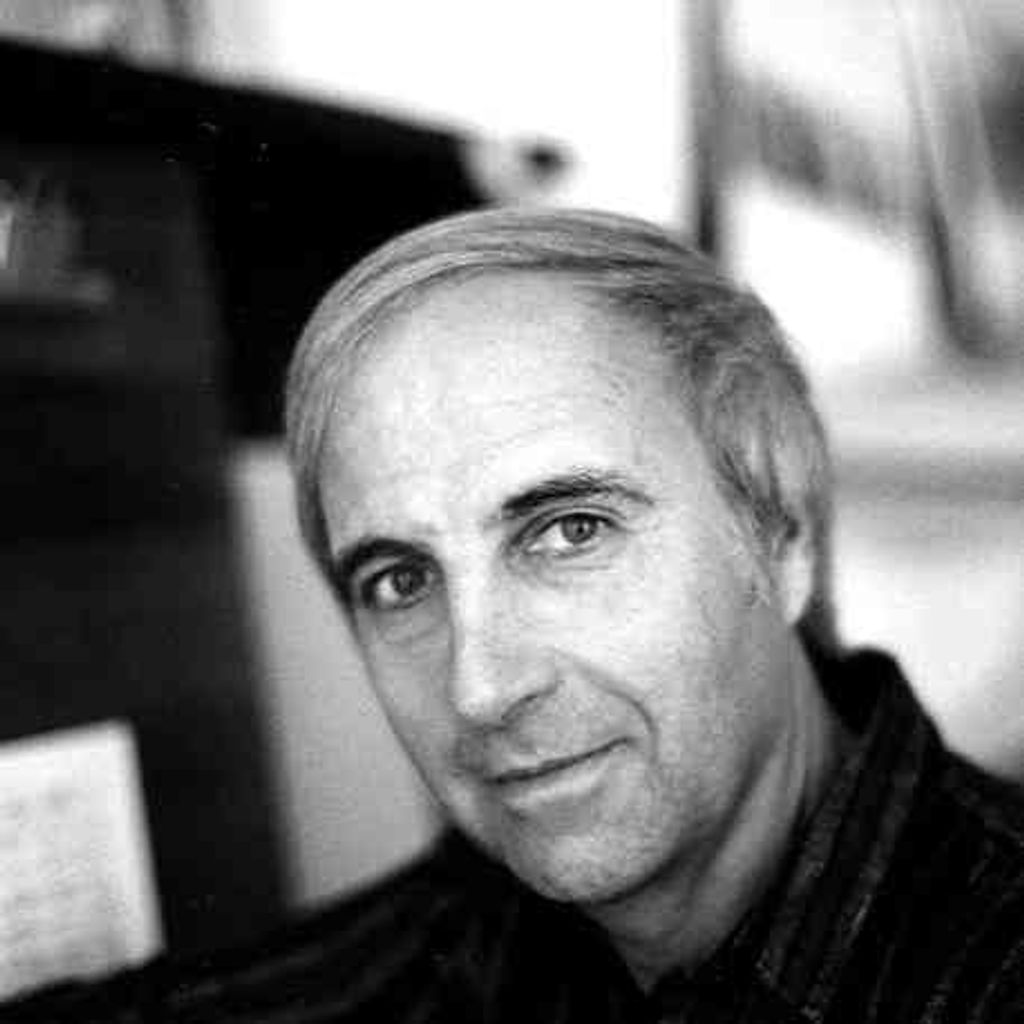
Richard James Felciano
1930 - 2026
Share Richard James Felciano's obituary with others.
Invite friends and family to read the obituary and add memories.
Stay updated
We'll notify you when service details or new memories are added.
You're now following this obituary
We'll email you when there are updates.
Please select what you would like included for printing:
Born on December 7, 1930, in Santa Rosa, he grew up in Sebastopol and fell asleep looking out at the stars in the dark Sonoma sky from his top bunk. That sense of wonder — of possibility on an expansive scale — never left him.
With the support of his parents (neither of whom finished 8th grade) and the encouragement of mentors who recognized his gifts, that aspirational pull drew him to learning: from Analy High School to Santa Rosa Junior College, San Francisco State and Mills College, then to Paris to study with Darius Milhaud, and ultimately to the University of Iowa, where he earned a PhD in music. While studying in Florence, he met his Swiss-born wife, Rita. Their engagement was swift, their marriage enduring: 67 years of shared devotion to family, art, and ideas, with one foot in the classicism of the past, the other in the avant-garde of the future, and little time for the pop culture in between. Richard’s love extended not only to Rita, but to her family and her native culture as well. He eventually became a Swiss citizen himself, while remaining a fiercely proud Northern Californian.
Richard’s striving curiosity could not have found a better time to flower than the transformative postwar era in which he came of age — marked by upheaval, discovery, moral urgency, and a renewed belief in human progress. He was deeply influenced by Teilhard de Chardin, the controversial Jesuit theologian who sought to reconcile science and mysticism. Richard found in Teilhard a vision of Catholicism in which human life, art, technology, and faith were part of a larger unfolding order, moving toward greater consciousness and connection. He found the same hoped-for trajectory in the words of another hero, the Reverend Martin Luther King Jr.: “the arc of the moral universe is long, but it bends toward justice.”
Music gave those convictions form, fusing modernist experimentation, ancient ritual, and new technology into a celebration of the human spirit. Writing for orchestras, chamber ensembles, and choirs as readily as for gamelan and early electronic instruments — including Buchla synthesizers — Richard also pioneered the use of television as a compositional medium and did seminal work at the San Francisco Tape Music Center. When conventional notation proved insufficient, he devised graphically inventive scores informed by his love of Modernist architecture and design, their text always set in Helvetica.
His liturgical contributions were robust. He was among the first to introduce electronic sounds to sacred music at St. John the Divine in New York. He relished being something of a musical heretic, gleefully recalling the busybodies who stormed out muttering that his music was demonic. Belief, for him, involved awe, beauty, mystery, even terror, and an honest grappling with difficult questions — not easy answers or anodyne guitar masses. That need for new forms outweighed the need to be liked, all the more striking given how easily his feelings could be hurt.
Bells held a special place in his heart. He wrote multiple works for carillon, and he loved sitting high above the lake at dusk in his wife’s hometown of Zürich, listening to church bells drift in and out of phase. In Galactic Rounds, inspired by planets as “interlocking circles … moving constantly in and out of phase,” he set brass players spinning, creating overlapping Doppler effects. From the belfry to the concert hall to the cosmos, there were connections to be made. Fascinated by psychoacoustics, he successfully orchestrated a Shepard scale, the auditory illusion of a tone that seems to rise perpetually without ever arriving — an apt metaphor for his life and work.
He wanted that ascendence not only for himself, but for the next generation, and saw himself as part of a vital pedagogical continuum through which old ideas were preserved and new ones nurtured. In 1967, he joined the UC Berkeley Music Department, where in 1987 he founded the Center for New Music and Audio Technologies (CNMAT), an interdisciplinary center grounded in his belief that music is enriched through dialogue with physics, engineering, cognitive psychology, linguistics, and architecture.
Recognition grew over the decades. His work was performed internationally and at the opening of Davies Symphony Hall in San Francisco. Grants, fellowships, awards, and commissions came from the French and Italian governments; the Ford, Rockefeller, Fromm, and Guggenheim foundations; the National Endowment for the Arts; the American Academy of Arts and Letters; the City of Berlin; and the Library of Congress, which has archived his work. Berkeley awarded him both the UC Berkeley Medal and, upon retirement, the Berkeley Citation. Praise from institutions and mentors he respected genuinely mattered to him, not as ornament, but as evidence that standards still existed and could still be met.
For all the exploration and the cosmic scale of his inspirations (Constellations; The Tuning of the Sky; Cosmic Festival; I Make My Own Soul From All the Elements of the Earth), he never forgot his small-town roots, returning often to his childhood home in Sebastopol. His enduring fondness for Sonoma County fostered his interest in Pomo culture and informed works such as Camp Songs, a tribute to Japanese American schoolmates who were sent to internment camps during World War II. That painful and formative experience seeded a lifelong affinity for Japanese culture, and a commitment to fighting injustice.
Indeed, a life lived to its fullest required principles worth fighting for: what he might have called aesthetic justice — the belief that beauty and design were moral imperatives — alongside social justice, environmental stewardship, and civic engagement. He was proud of San Francisco’s progressive courage — once registering as a Republican simply to vote against Nixon in the primaries — and protective of its cultural heritage, serving on the San Francisco Arts Commission.
Even as the world around him became more ironic and self-referential, post-this and neo-that, he remained an unrepentant Modernist, committed to the Enlightenment ideal that human beings can move toward greater freedom and dignity through education, reasoned debate, and mutual respect rather than superstition, brute power, or inherited authority. He clung stubbornly to a Platonic humanist conviction that the good, the true, the just, and the beautiful were bound together — and that life, like the Shepard scale, should be a perpetual ascent in the pursuit thereof.
Besides Teilhard and Dr. King, his heroes included Bach, Boulez, Stravinsky, Joseph Campbell, George Lucas, Catherine of Siena, Thomas Jefferson, Bill Walsh, Steve Jobs, Jony Ive, Barack and Michelle Obama, Mario Botta, Carlo Scarpa, and, above all, Rita.
The expansive sensibility that guided Richard’s life can be reduced to one word: Love. Nowhere was this more apparent than in the most meaningful architecture of his life — his family, anchored by Rita, whose intellect, elegance, and passion he adored. He could be playful and tender, especially with children, who were drawn to both his silliness and his willingness to take them seriously. An involved and present husband and father, he spoke glowingly of his wife and children to anyone who would listen. He and Rita made sacrifices so they could all spend time in Switzerland with her family. Conversations at dinner tables or on long car rides could showcase his forceful convictions. He could be argumentative — testing your claims and defending his own. Ever the Professor, he could slip from conversation into lecture far too easily. To his credit, he was constitutionally incapable of dumbing things down, not out of hauteur, but because he never assumed that anyone was too dull or unsophisticated to understand. On the contrary, he delighted in flinging open the doors of art and ideas to everyone as if to say, “Come on in, you’re gonna love this!” More often than not, they did.
In 1951, at age 20, he wrote his first piece, a choral setting of Robert Frost’s Stars, dedicated to his brother. Sixty-one years and some 125 compositions later, he completed his final work — also choral — in 2012, at age 81. Inspired by Psalm 126, he wrote the text himself:
These who go out weeping
Shall come home with shouts of joy
There shall I shine like a Star and
Glow like the Sun
I will see you again
Clothed in the white robe of Heaven
Joy never ends
Never
Richard is survived by his wife, Rita Maria Theresia Felciano, née Baumgartner; his sons, Ramon (Emma Carlson) and Manoel (Christine Kuper); and his granddaughters, Astrid and Vera. He was predeceased by his brother, Joseph Edward Felciano.
Funeral service details to follow. In lieu of flowers, donations may be made to the Western Sonoma County Historical Society or the Sonoma Land Trust.
His professional archive may be found at www.richardfelciano.com.
Richard James Felciano's Guestbook
Visits: 277
This site is protected by reCAPTCHA and the
Google Privacy Policy and Terms of Service apply.
Service map data © OpenStreetMap contributors