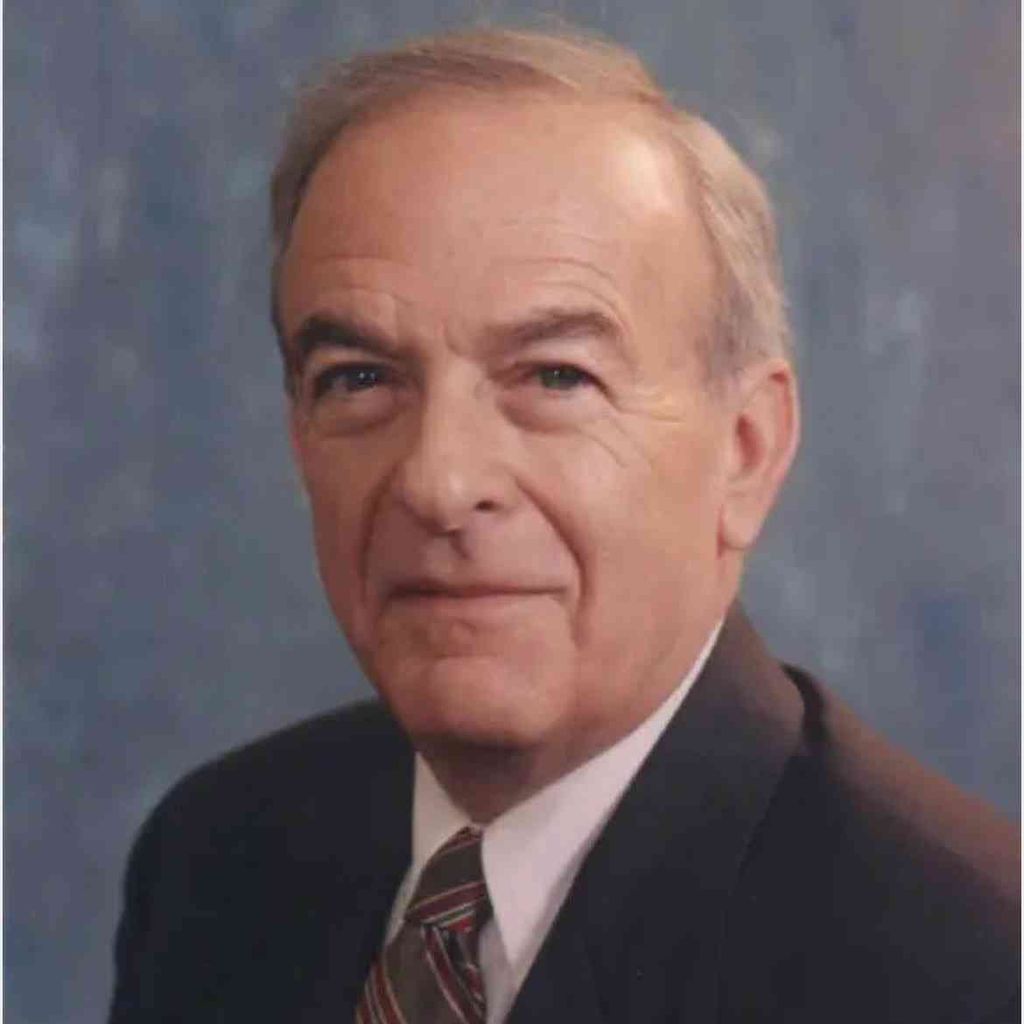
Richard Lawrence Ottinger
1929 - 2026
Share Richard Lawrence Ottinger's obituary with others.
Invite friends and family to read the obituary and add memories.
Stay updated
We'll notify you when service details or new memories are added.
You're now following this obituary
We'll email you when there are updates.
Please select what you would like included for printing:
"Go, go, go with RLO" was not just a campaign slogan, it was a way of life and for his colleagues, staff and family it meant that you'd better keep up!
Ottinger began his extraordinary life of public service as a young man serving with distinction as Captain in the US Air Force in the 1950s. In 1961, Ottinger embarked on one of the most formative and fascinating experiences of his life, helping to start the Peace Corps - President John F. Kennedy's visionary initiative - alongside remarkable founding director and friend, Sargent Shriver. Ottinger was the second staff member and served as regional director for South American programs until 1964.
Eager to continue in public service when he returned home to Pleasantville, New York in 1964, Ottinger ran for and became the first Democrat ever elected to what then was a solidly Republican Westchester County. Inspired to run to address harms caused by pollution in the Hudson River, Ottinger teamed up with local fishermen and concerned citizens to expose the problems and push for solutions. In his first year in Congress, he wrote and passed the Hudson River Compact Act that established an interstate commission representing New York, New Jersey and the federal government to coordinate Hudson clean-up efforts. In doing so, Ottinger stood up to powerful industry players like Con Edison and, as he would do time and time again over the years, walked the talk behind his later campaign slogan, "Ottinger Delivers."
Ottinger served in Congress for 16 years from 1965 to 1971 and then again from 1975 to 1985. He made his mark in Congress as one of its first and foremost environmental policy leaders, just as the environmental movement was growing in the 1960s. Ottinger partnered with and helped to support environmental leaders and groups. In 1969, he became a founding Board member of Friends of the Earth with his friend and its founder, David Brower. The League of Conservation Voters lifted up Ottinger repeatedly as an environmental champion in Congress. He worked often with the Natural Resources Defense Council and others on policy efforts.
Working together with advocates and scientific experts, Ottinger championed solar power, other renewable energy sources and energy efficiency as environmental, economic, health and national security imperatives. Ottinger was the moving force behind several pieces of landmark federal legislation, including the Clean Air Act, Clean Water Act, and Public Utility Regulatory Policies Act (PURPA). Launching this work in the 1960s, Ottinger was well ahead of the times in seeing both the need for and benefits of a clean energy future. (Below is a photo of Ottinger from 1967 in front of the Capitol with an early model electric car.)
In 1975, Ottinger was instrumental in founding the Environmental and Energy Study Conference, a bipartisan and bicameral Congressional caucus to educate members of Congress about environmental issues and innovative policy solutions. The Study Conference, which comprised a majority of senators and representatives, played an important role in the passage of major 1977 amendments to the Clean Air Act and the Clean Water Act.
When the Study Conference could no longer operate within Congress, Ottinger founded and served as the first Board Chair of the Environmental and Energy Study Institute (EESI), an independent, nonpartisan nonprofit to institutionalize and continue the work educating policymakers and other stakeholders. At EESI's 40th birthday in 2024, Ottinger, who was just 95 then, noted that "EESI was one of the earliest leaders in examining environmental and energy policies through a climate change lens."
Congressman Ottinger also stood up boldly for democracy, peace, civil rights, consumer protections and the kitchen table concerns of working people, often battling powerful corporate and political players. As such, Ottinger was a vocal opponent of the Vietnam War standing up to President Lyndon Baines Johnson. Ottinger often recounted an Oval Office encounter in which LBJ grabbed him by the collar to quiet his war criticism. LBJ picked up the wrong person. In 1969, Ottinger introduced the Vietnam Disengagement Act and in 1970 co-authored an amendment to end the war.
In 1970, Ottinger elevated the war issue in his race for the US Senate seat that had been held by his friend Robert F. Kennedy before RFK was tragically assassinated. In the Senate race, Ottinger was endorsed by Senator Eugene McCarthy who warned liberals against voting for Republican Charles Goodell, a recent anti-war convert, arguing that Goodell would siphon off votes from Ottinger and end up electing the Conservative Party's James Buckley in the three-way race. While Goodell stated publicly that he was considering dropping out, he didn't and indeed ended up spoiling the election in favor of Buckley, who won by less than 2 percent of the vote over Ottinger, with Goodell trailing far behind.
Undaunted and never one to look back, Ottinger started his second stint in Congress as one of the leaders of the post-Watergate class of 1974. Having already served three terms, Ottinger provided senior leadership to the large class of reform-minded members who pushed to make Congress more transparent, merit-based and accountable.
That halcyon period was short-lived, however, with the advent of Newt Gingrich and the growing partisan gridlock in Washington. By 1984, Ottinger decided that he could do more good and get important change accomplished outside of Congress. And that is exactly what he did for the next 42 years.
Soon after leaving Congress, Ottinger joined the Elisabeth Haub School of Law at Pace University in White Plains as an environmental law professor and then as Dean of Pace Law School from 1994-1999. In 1987, he founded the Pace Energy and Climate Center (PECC), a respected think tank promoting renewable energy and energy efficiency and addressing the climate change crisis. He also co-directed the Pace Global Center for Environmental Legal Studies and co-founded the Consortium for Ecological Law (CEL) with his close friend and collaborator, distinguished Pace Law Professor Emeritus Nick Robinson. In all of these capacities, Ottinger brought national acclaim to Pace Law School's environmental law program, which is ranked number one in the country by US News & World Report. Professor Ottinger loved teaching and his law students loved him, as described in "A Tribute to Dean Richard L. Ottinger" by environmental law student Alicia Mendez in 1999. Thus, it was fitting that in 2013, Pace Law School dedicated and named its new law student building the Richard Ottinger Hall.
In the past decade, Ottinger focused increasingly on global efforts to address the climate crisis. He partnered closely with leaders of the International Union for the Conservation of Nature (IUCN), which represents governments and civil society organizations totaling more than 1400 members in 160 countries. Culminating a years-long effort by Ottinger, IUCN adopted a motion at its 25th World Conservation Conference this past October to expressly address dependence on fossil fuels as a threat to nature. Ottinger described this important progress in a Zoom presentation he made just a few months ago as part of a briefing for COP30 in Belem, Brazil. He partnered in organizing the Belem briefing (and more) with COPx, a newer global grassroots initiative led by longtime environmentalist and friend Hunter Lovins, which empowers and connects active citizens to combat the climate crisis.
In all of his work, Ottinger collaborated with, mentored and inspired scores of talented and idealistic staff, colleagues and young people to carry on the fight. At a 30th reunion of his Congressional staff in 1994, a Westchester reporter described the outpouring of praise that captured Ottinger's character and impact: "He's one of the most principled men I've ever met." "He had the courage to tell the truth." "He stood for something when he ran for office." "Dick had a set of values and beliefs." "He instilled in all of us...a sense of idealism, a sense of values." And in some more recent comments: "Dick was a model of a type of politics that is long gone, but I hope will return some day." (Robert Litt, former staff); "Dick had a stubborn insistence on bringing new ideas and organization to the challenge of representative democracy and was one of the most important voices in the House for the decade after the big Watergate election of 1974." (Tim Wirth, former House colleague, Senator and UN Foundation president); "Dick was a role model for me and so many others." (Senator Richard Blumenthal, former longtime colleague); "Dick was an inspiration until the end. Tough minded, pushing all the right causes, but always with a smile." (Gus Speth, former colleague, World Resources Institute founder and NRDC co-founder). Ottinger had the remarkable quality of being both down to earth and larger than life.
Ottinger was born on January 27, 1929 and grew up in Scarsdale, NY. His father, Lawrence Ottinger, founded and led the US Plywood Corporation and his mother, Louise Ottinger, was a philanthropist who supported the arts, mental health programs and family planning. Ottinger graduated from Cornell University and Harvard Law School. He also led the Ottinger Foundation, started by his father, helping it to become an influential social change funder during the 1960s to 1990s.
In 1953, a year after graduating law school, Ottinger married Betty Ann Schneider of Louisville, Kentucky. Living in Pleasantville, NY and Washington, DC, they raised their four wonderful children, Ronald, Randall, Lawrence and Jenny Louise. Betty Ann Ottinger, a Ph.D. social worker was a pioneering mental health professional, executive director of the environmentally-focused Winslow Foundation and a trusted friend to liberal leaders and causes for more than 50 years before passing away in January of 2023. After 25 years of marriage, Richard and Betty Ann divorced in 1978. Ottinger married Sharon Frink during his last years in Congress, divorcing in 1984.
In 1987, Ottinger married June Godfrey from Jacksonville, Alabama. They were together and married for 42 years. June was an indispensable life partner in Ottinger's critical work at Pace Law School, PECC, CEL, EESI, IUCN and COPx. In the 2000's June worked closely with the Chemical Weapons Working Group, advocating for use of safe disposal technologies. June has been an important civic leader in Mamaroneck, serving as Village Trustee. founding member of Harbor Island Conservancy and Board Chair of the Larchmont/Mamaroneck Center for Continuing Education.
Ottinger was a proud brother, uncle, father, grandfather, and great grandfather. A passionate tennis fan and player, he delighted in family tennis matches and gatherings around the U.S. Open. He punctuated milestones with witty and wise poems and urged all of his children to live a life of purpose, starting with reading the New York Times every day and calling him every Sunday.
Ottinger was pre-deceased by his sister Patricia Chernoff and nephew Corey Heath.
Ottinger is survived by niece Karen Heath of Maine; son Ronald of San Diego; son Randall (Lea Anne Schoenfeld) of Seattle; son Lawrence (Cinthia Schuman) of Chevy Chase; daughter Jenny Louise (Michael Goldberg) of Manhattan; grandchildren from Ronald - Sam, Kay and Rebecca; grandchildren from Randall - Lauren, Michael and Ryan; grandchildren from Lawrence - Jake and Celia; grandchildren from Jenny Louise - Daniel and Leah Rose; and great-grandchildren Ethan, Sienna and André.
_____________________________________________________________________________________
The family will hold a private gathering and there will be a memorial service in Westchester County later this year.
Any donations may be made to one of the below organizations with which he was associated or to another organization acting boldly and strategically to advance a just and sustainable future.
Energy and Environmental Study Institute
https://www.eesi.org/donate
Pace Energy and Climate Center
https://securelb.imodules.com/s/1655/lg22/form.aspx?sid=1655&gid=2&pgid=604&cid=1492&dids=93&bledit=1
Consortium for Ecological Law
https://ecologicalaw.org/support-us/
COPx
https://natcapsolutions.org/ (and click on COPx)
Richard Lawrence Ottinger's Guestbook
Visits: 305
This site is protected by reCAPTCHA and the
Google Privacy Policy and Terms of Service apply.
Service map data © OpenStreetMap contributors