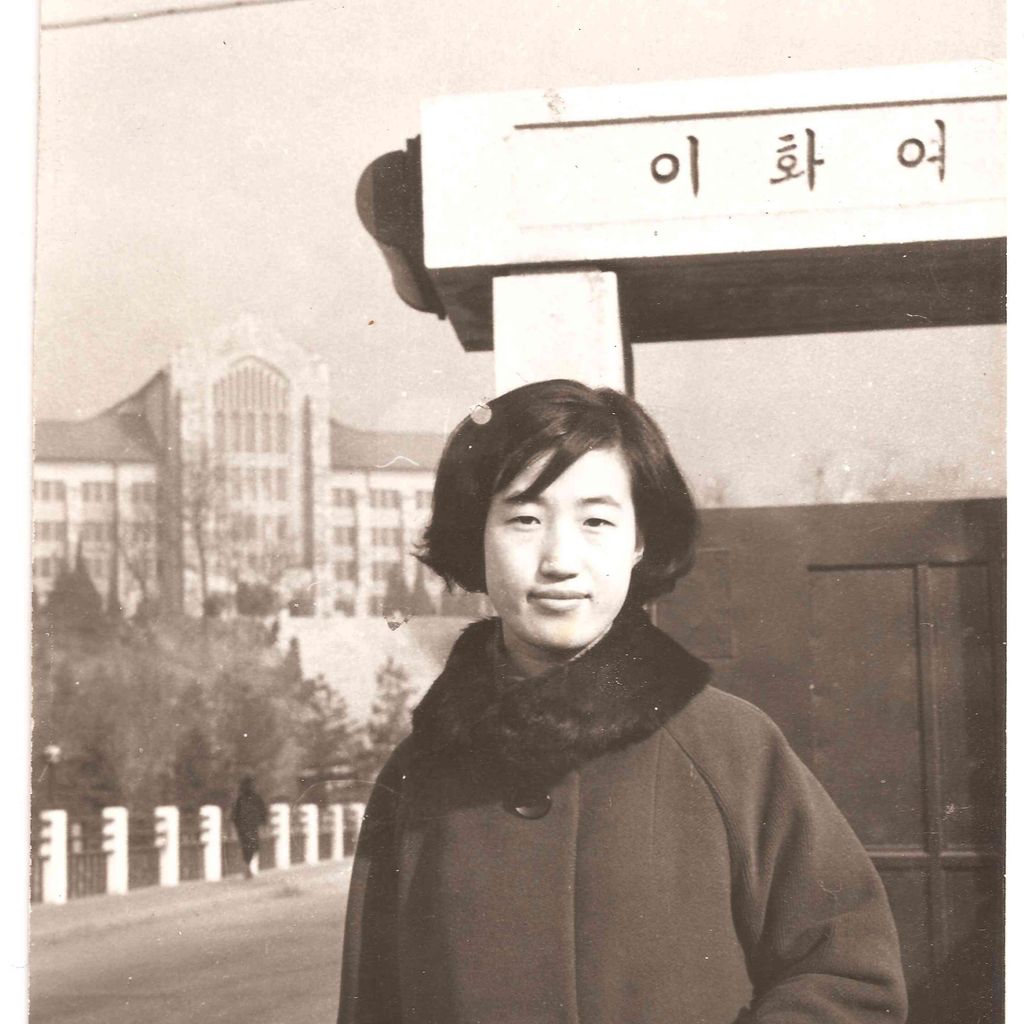
Sung Ja Hong
1943 - 2026
Share Sung Ja Hong's obituary with others.
Invite friends and family to read the obituary and add memories.
Stay updated
We'll notify you when service details or new memories are added.
You're now following this obituary
We'll email you when there are updates.
Please select what you would like included for printing:
She was born as Kim Sung Ja in what eventually became South Korea. Her father, Kim Jung Jin, spent his career at the Seoul Post Office, eventually rising to the head administrator position. Her mother, Cho Byong Sook, was a homemaker who was renowned for her cooking. She was their first surviving child, though she had an older sister who died in childhood. She had three younger brothers.
The Korean War started in 1950, when Mrs. Hong was seven, and ended in 1953. She avoided speaking of the war to her children; when they asked, she only responded that her family was fortunate because her father knew someone who could house them in the countryside where it was safer. She once mentioned seeing dead bodies on the roadside as they fled Seoul for that house in the country.
Her parents were much affected by the loss of their eldest daughter and doted on Mrs. Hong. Her mother often reminisced about how much she spoiled her, never making her help with the cooking despite being the only girl in the family. Mrs. Hong was always grateful to her parents for providing her with a college education, despite the fact that her father's salary as a public employee was relatively modest and they had three boys they also had to send to school.
She went to Ewha Womans University where she majored in Child Development. After college, she spent a year teaching at a rural school, eventually returning to Seoul to work as a research assistant for her former professor at Ewha. She married Hong Dai Soon, an executive at Sunkyong Corporation, in 1969 at the age of 26. They had three girls, Kyungwon in 1970, Heewon in 1971, and Sungwon in 1974.
In 1976, Sunkyong transferred Mr. Hong and the family to Los Angeles, ostensibly for three years. At the time, Sunkyong was a textile and garment manufacturing company, though it later ventured into oil and telecommunications (eventually becoming the conglomerate SK). The couple considered themselves lucky to be able to leave South Korea for a large, modern house in the United States furnished with the latest appliances and housewares, all in a fashionable avocado green. Cold War-era South Korea, in contrast, was in the throes of rapid and forcible industrialization, with the constant possibility of the resumption of war. Mrs. Hong later confirmed that fear of war was a major factor in their impetus to relocate. While the tradition in Korea is for women to keep their maiden names, she took Hong as her last name as many immigrant Korean women do, to keep the family's documents consistent. Kyungwon, Heewon, and Sungwon became Grace, Christine, and Judy.
Mr. and Mrs. Hong decided not to return to South Korea and Mr. Hong resigned from Sunkyong, working for other companies in LA's garment industry and then striking it out on his own. It would be 13 years before Mrs. Hong would be able to return to South Korea to see her family in person. During that time, she was only able to communicate with her parents via brief, scratchy international phone calls and aerograms on thin blue paper that folded to become their own envelopes. In later years, she was able to visit often, spending time with family and college friends.
Family finances after Mr. Hong quit Sunkyong were precarious and the family moved every year from apartment to apartment. Mrs. Hong returned to work, first doing piece-rate sewing at home. Then, through a Korean-run employment agency, she was introduced to a director at Head Start who had been tasked with establishing the first ever location in Koreatown. Mrs. Hong helped recruit Korean children to this location and worked there, initially as a teacher's aide. She attended community college classes at night, struggling with English but successfully earning her preschool teaching credential and then her director's license. After many years as a preschool teacher, she decided she wanted to expand her skills and went back to school, earning a credential to teach special ed. She transferred to a HeadStart for special ed students and found her first year there more difficult than she expected. She recalled, "I thought all I had to do was love them, but it was harder than that." Eventually, she won her special ed students over. To make ends meet, she also often worked summers, weekends, and nights at second and sometimes third jobs. She made hot dogs and sandwiches at fast food and mall restaurants, taught at private preschools after her Head Start day ended at 3 pm, and taught Korean language at the Korean Institute of Southern California (KISC) on Saturdays. She taught at KISC for many years, eventually becoming the principal of one location and then the superintendent of the entire language school system. Even after she retired from Head Start, she continued to teach into her 70s at a private preschool. She was proud to have never taken a sick day in all those years.
She was also proud of her children and their accomplishments. As an immigrant with limited English skills and little disposable income, she managed to find free places to take them on the weekends. Her children remember fondly their trips to the Huntington Library in Pasadena, the Children's Museum downtown, and the Arboretum in Arcadia where they took bags of bread to feed the ducks. After her children left for college, her niece Henna came from Seoul to attend a boarding school in Northridge and then UCSB for college. Henna spent many weekends and every winter and summer break with Mr. and Mrs. Hong during this time and was another daughter to them. Grace got her Ph.D. in literature and, like Mrs. Hong, went into teaching, becoming a college professor. Christine built a career in corporate marketing and as an entrepreneur. Judy worked at a union-affiliated non-profit and then went back to school to become a nurse practitioner. Henna returned to South Korea, got her Ph.D. in biochemistry, and now runs a center at a state agency that fosters international research. In 2011, after Mrs. Hong had given up on being a grandmother, Christine had Olivia, her only grandchild. Henna had two children, Jiyoo in 2017 and Jia in 2025. Mrs. Hong doted on Olivia, delighting in cooking her favorite food, ttukguk, and playing endless games of hwatu. She was happy that she got to spend extended time with Jiyoo in 2024 during her last trip to South Korea, when they all took a vacation to Jeju Island together.
Mrs. Hong was the center of many groups of friends from church, her neighborhood, her work, and the broader Korean immigrant community. She enjoyed meeting them for lunch and going on day trips and had a walking group who met weekly at Descanso Gardens. Without knowing the term mutual aid, she practiced it her entire life, redistributing resources, whether it be food, advice, a funny story, or a connection to someone who knew someone else. She was a prolific regifter who always had a jar of face cream or honey, a bottle of vitamins, or a box of socks for whoever showed up at her apartment. She carried steamed sweet potatoes or rice cakes in her purse in case anyone was hungry. Living in a subsidized senior apartment, subsisting mainly on her social security income, she was proof positive that a person embedded within a community can marshal infinite resources. She made this community wherever she went. Her Christian faith was her bedrock and she attended Choong Hyun Mission Church for over four decades. As a teacher at both Head Start and KISC she earned the love of generations of students and the respect of their parents. There was a time when Mrs. Hong could not go to a restaurant or grocery store anywhere in Koreatown without running into someone she knew. They were always glad to see her.
Mr. Hong died in 2021, after Mrs. Hong cared for him through years of poor health. Three months later, she was diagnosed with lung cancer. Over the course of the last four and a half years, she underwent chemotherapy twice, three rounds of radiation (twice for her lung, once for her brain), brain surgery, and a clinical trial. Throughout, she was cheerful, optimistic, and resolute, staying active by going to the senior center and walking with her friends for an hour every day. Her brain metastasis returned in late 2025, abruptly putting her in a state of advanced dementia. She succumbed to an opportunistic infection two months later.
She is survived by her daughters, Grace Hong, Christine Hong, and Judy Hong, her granddaughter Olivia Hong Saddler, her niece Kim Henna, her grandnephew Kim Jiyoo and her grandniece Kim Jia, her brothers Kim Seung Han, Kim Bo Han, and Kim Ji Han, and a wide community of family, friends, neighbors, and former students who mourn her passing.
In accordance with her wishes, the family is not holding a funeral. In lieu of flowers or gifts, donations in her honor can be made to Head Start CA (https://www.headstartca.org/donate), Choong Hyun Mission Church (https://www.choonghyun.org/main/sub.html?pageCode=11), or an organization of the donor's choice.
홍성자 (1943-2026)
홍성자 여사는 평생을 남을 돌보는 데 헌신했습니다. 웃음이 끊이지 않았고, 낙천적인 성격에 한없이 인내심 많고 친절했습니다. 스스로는 평범하고 눈에 띄지 않는 사람이라고 생각했지만, 바로 그 겸손함 덕분에 의식하지 않고도 끈기 있게, 자신에게 가장 중요한 것, 즉 주변 사람들을 돌보는 데 모든 에너지를 쏟으며 살아갈 수 있었습니다. 정말 특별한 사람이었습니다.
그녀는 김성자라는 이름으로 현재의 대한민국에서 태어났습니다. 아버지 김정진은 서울 체신청에서 근무하며 최고위 관리직인 체신청장 자리까지 올랐고, 어머니 조병숙은 요리 솜씨가 뛰어난 주부였습니다. 위로 언니가 하나 있었지만 어린 시절에 세상을 떠나 첫째 아이로 자랐고 아래로는 세 명의 남동생이 있었습니다.
홍성자 여사가 일곱 살이던 1950년에 한국 전쟁이 발발하여 1953년에 끝났습니다. 그녀는 자녀들에게 전쟁에 대한 이야기를 거의 꺼내지 않았습니다. 물으면 아버지의 지인 덕분에 더 안전한 시골로 이사할 수 있었고, 가족이 운이 좋았다고만 답했습니다. 다만 한 번은 서울에서 시골집으로 피난 가던 길에 길가에 널린 시신들을 보았다고 말한 적이 있습니다.
부모님은 맏딸을 잃은 슬픔이 있어 그녀를 몹시 아꼈습니다. 어머니는 그녀를 얼마나 응석받이로 키웠는지, 집안의 유일한 딸이었음에도 불구하고 한 번도 요리를 시키지 않았던 일을 자주 회상했습니다. 공무원이었던 아버지의 월급이 넉넉하지 않았고, 세 아들도 교육시켜야 하는 어려운 환경 속에서도 딸에게도 대학 교육을 받을 수 있도록 해준 부모님께 늘 감사했습니다.
이화여자대학교 아동발달학과에 진학했습니다. 졸업 후 시골 학교에서 1년간 교사로 근무한 뒤, 서울로 돌아와 이화여자대학교 시절 교수님의 연구 조교로 일했습니다. 1969년, 26세의 나이에 선경그룹 임원이었던 홍대순 씨와 결혼했습니다. 슬하에 경원(1970년), 희원(1971년), 성원(1974년) 세 딸을 두었습니다.
1976년, 선경그룹은 홍대순 씨를 3년 동안 로스엔젤레스로 파견하였습니다. 당시 선경그룹은 섬유 및 의류 제조업체였으나 이후 석유와 통신 사업으로 확장하여 결국 SK그룹으로 성장했습니다. 부부는 최신 가전제품과 생활용품으로 꾸며진 크고 현대적인 집, 그것도 유행하는 아보카도 그린 색상의 집에서 살 수 있게 된 것을 행운으로 여겼습니다. 냉전 시대의 한국은 급속하고 강압적인 산업화의 소용돌이 속에 있었고, 언제든 전쟁이 재개될 수 있다는 불안 속에 있었습니다. 홍 여사는 훗날 전쟁에 대한 두려움이 이주를 결심하게 된 가장 큰 이유였다고 밝혔습니다. 한국의 전통은 여성이 결혼 후에도 본명을 유지하는 것이지만, 그녀는 많은 한국 이민 여성들처럼 서류상의 일관성을 위해 홍씨 성을 사용하게 되었습니다. 경원, 희원, 성원은 각각 Grace, Christine, Judy로 이름이 바뀌었습니다.
부부는 한국으로 돌아가지 않기로 결정했고, 홍대순 씨는 선경 백화점을 사임하고 LA 의류 업계의 다른 회사에서 일하다가 독립했습니다. 홍 여사가 가족을 직접 만나기 위해 한국에 돌아갈 수 있었던 것은 13년 후였습니다. 그동안은 짧고 음질이 좋지 않은 국제 전화 통화와 얇은 파란색 종이에 인쇄되어 접어 봉투로 쓸 수 있는 항공우편으로만 부모님과 연락할 수 있었습니다. 이후에는 한국을 자주 방문해 가족과 대학 친구들과 시간을 보냈습니다.
홍대순 씨가 선경을 그만둔 후 가정 형편은 불안정해졌고, 거의 매년 이사를 해야 했습니다. 다시 일을 시작해 처음에는 집에서 재봉일을 하며 시간당 임금을 받았습니다. 그러다 한국인이 운영하는 취업 알선 기관을 통해 코리아타운에 첫 번째 헤드스타트(Head Start) 지점을 설립하는 임무를 맡은 책임자를 소개받았습니다. 홍 여사는 한국 아이들을 헤드스타트에 모집하는 일을 도왔고, 처음에는 교사 보조로 근무했습니다. 영어 실력 향상에 어려움이 있었지만 밤에는 지역 전문대학에 다니며 유치원 교사 맟 원장 자격증을 취득했습니다. 유치원 교사로 오랜 기간 근무한 후, 자신의 역량을 더욱 발전시키고 싶어 다시 학교에 진학하여 특수교육 교사 자격증까지 취득해 특수교육 대상 학생들을 위한 헤드스타트로 옮겼습니다. 첫해는 예상보다 훨씬 힘들었습니다. 그녀는 "아이들을 사랑하기만 하면 되는 줄 알았는데, 생각보다 훨씬 힘들었다."라고 회상했습니다. 그러나 결국 그녀는 학생들의 마음을 열어 사랑받는 교사가 되었습니다. 생계를 위해 방학과 주말, 밤에도 일하며 두세 가지 일을 병행했습니다. 패스트푸드점과 쇼핑몰 식당에서 핫도그와 샌드위치를 만들기도 했고, 오후 3시에 헤드스타트 프로그램이 끝나면 사립 유치원에서 아이들을 가르쳤으며, 토요일에는 남가주한글학교(KISC)에서 한국어를 가르쳤습니다. 홍 여사는 KISC에서 오랫동안 근무하며 페닌술라 학교의 교장을 거쳐 나중에는 전체 한글학교 교장을 역임했습니다 . 헤드스타트에서 은퇴한 후에도 그녀는 70대까지 사립 유치원에서 아이들을 가르쳤습니다. 평생 단 하루도 병가를 내지 않은 것을 자랑으로 여겼습니다.
그녀는 자녀들의 성취에 대해 자랑스러워했습니다. 영어가 서툴고 형편이 넉넉하지 않았지만, 주말마다 아이들을 데리고 갈 무료 장소들을 찾아다녔습니다. 자녀들은 패서디나의 헌팅턴 도서관, 다운타운 어린이 박물관, 아카디아 수목원에 빵을 싸 가 오리들에게 먹이를 주던 추억을 소중히 간직하고 있습니다. 자녀들이 대학에 진학한 후, 조카 혜나가 유학을 와 노스리지의 기숙학교에 다니고 캘리포니아 대학교 샌타바버라 캠퍼스(UCSB)에 진학하며 주말과 겨울, 여름 방학마다 홍 씨 부부와 함께 시간을 보내며 그들에게 또 하나의 딸처럼 지냈습니다. 그레이스는 문학 박사 학위를 취득했고, 홍 여사처럼 교직에 몸담아 대학교수가 되었습니다. 크리스틴은 기업 마케팅 분야에서 경력을 쌓았고 사업가로 성공했습니다. 주디는 노조 산하 비영리 단체에서 일하다가 다시 학교에 진학하여 간호사가 되었습니다. 혜나는 한국으로 돌아가 생화학 박사 학위를 취득했고, 현재는 정부 공공기관에서 국제 연구를 지원하는 센터장을 맡고 있습니다. 2011년, 홍 여사가 할머니가 되는 것을 포기했을 무렵, 크리스틴은 그녀의 유일한 손녀인 올리비아를 낳았습니다. 혜나는 2017년에 지유, 2025년에 지아, 이렇게 두 아이를 낳았습니다. 홍 여사는 올리비아를 몹시 아꼈고, 올리비아가 가장 좋아하는 음식인 떡국을 만들어 주고 화투 놀이를 끝없이 하며 즐거워했습니다. 2024년 마지막 한국 여행 때 지유와 함께 제주도로 휴가를 가서 오랜 시간을 보낼 수 있었던 것을 행복해했습니다.
홍 여사는 교회, 동네, 직장, 그리고 더 나아가 한국 이민자 공동체 등 다양한 모임의 중심 인물이었습니다. 친구들과의 점심 모임과 당일치기 여행을 즐겼으며, 데스칸소 가든에서 매주 산책하는 모임도 운영했습니다. 상호부조라는 용어를 몰랐지만 평생 음식, 조언, 재미있는 이야기, 또는 누군가를 통해 다른 사람을 연결해 주는 등 자원을 나누어 주는 삶을 실천했습니다. 선물을 아끼지 않았고, 집에 찾아오는 사람들을 위해 항상 페이스 크림이나 꿀, 비타민, 양말 한 상자를 준비해 두었습니다. 혹시라도 배고픈 사람이 있을까 봐 가방에는 찐 고구마나 떡을 넣어 다니기도 했습니다. 정부 지원을 받는 노인 아파트에서 주로 사회보장 연금으로 생활하면서도, 공동체에 깊이 뿌리내린 사람이 얼마나 풍요로울 수 있는지 보여주는 산증인이었습니다. 홍 여사는 가는 곳마다 공동체를 만들어 나갔습니다. 홍 여사에게는 기독교 신앙이 삶의 근간이었으며, 40년 넘게 충현선교교회에 출석했습니다. 헤드스타트와 KISC에서 교사로 재직하며 여러 세대의 학생들에게 사랑을 받았고 학부모들의 존경을 받았습니다. 홍 여사는 코리아타운의 식당이나 슈퍼마켓에 가면 아는 사람을 자주 만났고, 사람들은 늘 그녀를 반갑게 맞이했습니다.
남편 홍대순 씨는 2021년에 세상을 떠났습니다. 홍 여사는 오랜 병환을 극진히 돌보았습니다. 그로부터 석 달 뒤 홍 여사는 폐암 진단을 받았고 4년 반 동안 그녀는 두 차례의 항암 치료, 세 차례의 방사선 치료(폐에 두 번, 뇌에 한 번), 뇌 수술, 그리고 임상 시험에 참여했습니다. 그 와중에도 그녀는 밝고 낙관적이며 굳건한 모습을 유지하며, 노인 센터에 다니고 친구들과 매일 한 시간씩 산책하는 등 활발한 생활을 이어갔습니다. 그러나 2025년 말, 뇌에 암이 재발하여 급격히 심각한 치매 증세를 보였습니다. 그리고 두 달 후, 그녀는 기회 감염으로 별세하셨습니다.
고인은 딸 Grace Hong, Christine Hong, Judy Hong, 손녀 Olivia Hong Saddler, 조카 김 혜나, 조카손자 김 지유, 조카손녀 김 지아, 그리고 형제인 김 승한, 김 보한, 김 지한을 비롯하여 가족, 친구, 이웃, 그리고 옛 제자들을 남기고 세상을 떠났습니다.
고인의 뜻에 따라 가족들은 장례식을 치르지 않을 예정입니다. 꽃이나 선물 대신 고인을 기리는 마음으로 헤드스타트 캘리포니아(Head Start CA; https://www.headstartca.org/donate), 충현선교교회 (https://www.choonghyun.org/main/sub.html?pageCode=11) 또는 기증자가 선택하는 단체에 기부해 주시면 감사하겠습니다.
Sung Ja Hong's Guestbook
Visits: 238
This site is protected by reCAPTCHA and the
Google Privacy Policy and Terms of Service apply.
Service map data © OpenStreetMap contributors