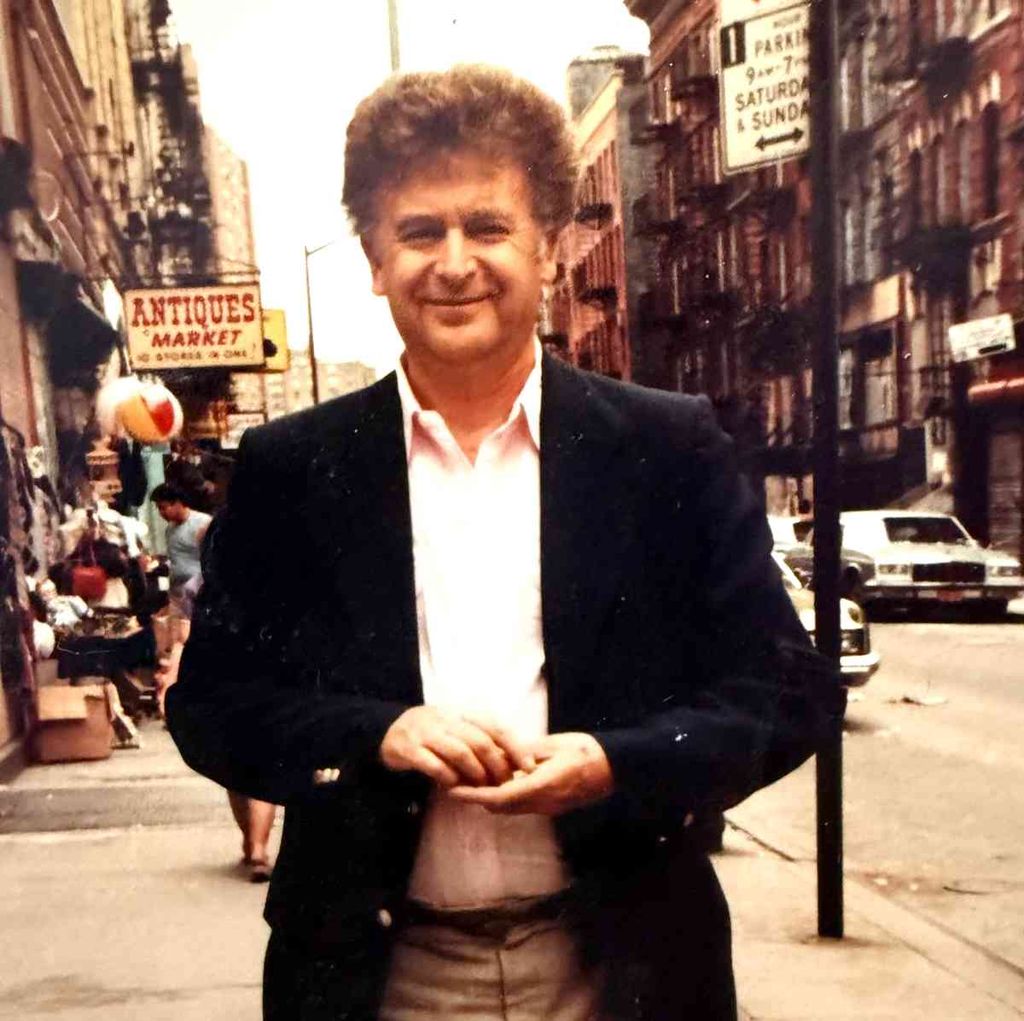
Uri Rueveni
1933 - 2025
Share Uri Rueveni's obituary with others.
Invite friends and family to read the obituary and add memories.
Stay updated
We'll notify you when service details or new memories are added.
You're now following this obituary
We'll email you when there are updates.
Please select what you would like included for printing:
Uri was born in Tel Aviv, Israel on July 10, 1933 to Tova (z'l) and Moshe Reuveni (z'l), brother to Rivka (Tzveeka) Rosianski (z'l) and Efraim Reuveni (z'l). Uri had many creative interests growing up including playing mandolin in orchestra, professional acting, self taught fluency in English, and a love of technology leading him to build his own radio in his youth and become proficient in morse code. After military service, Uri married the love of his life, Mira Triester, and in 1957 they moved to the United States to pursue a career originally in electrical engineering. Very quickly, Uri became fascinated by people and driven to contribute to the field of psychology. Uri devoted his professional career to understanding people not as isolated individuals but as members of families, communities, and living social networks. He believed that healing happens through human connection, honesty and shared responsibility, especially in moments of crisis. Uri was drawn to approaches that challenged rigid and impersonal models of care. He believed that emotional suffering and addiction could not be meaningfully addressed without engaging the people closest to those in pain. He believed in compassion over judgment, that all people be treated with dignity and that lasting change is rarely achieved in isolation.
In the 1960's, Uri together with his colleague, Ross Speck, originated the concept of Network Therapy and Uri then authored two books on the subject: Networking Families in Crisis (1979) and Therapeutic Intervention (1982) as well as hundreds of professional articles within the field. Uri was most known for developing, implementing and teaching this innovative approach which changed the traditional focus of psychology on the individual by broadening the lens to a larger societal context. He actively involved a person's wide social support system (family, friends, neighbors, community) facilitating large networks of people into the role of supporters and collaborative problem solvers in order to create and sustain lasting change beyond the immediate emotional crisis. Uri implemented the technique in private settings and at Eastern Pennsylvania Psychiatric Center (EPPI) also developing training programs, seminars and workshops to teach the method to psychiatrists and social service providers around the globe.
Uri's academic career led him to Houston, Texas in the role of Professor of Psychology at University of Houston and Director of The Family Therapy Training Program. He engaged in applied clinical research on such topics as patient empowerment, storytelling and metaphor in therapy and integrative treatment approaches for chronic illness. He was most known in his later academic career for bringing together professionals from police to politicians to service providers creating a multi disciplinary approach to violence prevention through annual collaborative multi disciplinary learning symposiums. This innovative, broad minded, and holistic model culminated in an invitation to the White House by Hilary Clinton who honored him with an award recognizing his valuable contribution to the field of violence prevention.
Uri is survived by his wife of 68 years, Mira Rueveni and his two children Roni and Deena Rueveni. Uri was a quiet, creative and unique person, always reading and writing, observing and learning and sharing interesting and unusual perspectives and humor. He was a dedicated and supportive husband and father and took interest in the perspectives and well being of his family and community. In later life, Uri returned with Mira to their country of origin where their son Roni was living and practicing medicine. He remained a lifelong learner, fascinated by every new wonder and sharing his knowledge up to the very end. Uri passed away peacefully in sleep on December 13, 2025 in his beloved homeland of Israel surrounded by family. He led a rich meaningful life and is remembered with love for his integrity, strong will power and dedication to his family and community. His professional influence lives on in the lives of the many individuals and families he helped, professionals he trained, and in therapeutic models that have come out of his innovative work and continue to stress connection over isolation where healing is rooted in relationships, trust and the courage to face challenges together.
Uri Rueveni's Guestbook
Visits: 28
This site is protected by reCAPTCHA and the
Google Privacy Policy and Terms of Service apply.
Service map data © OpenStreetMap contributors