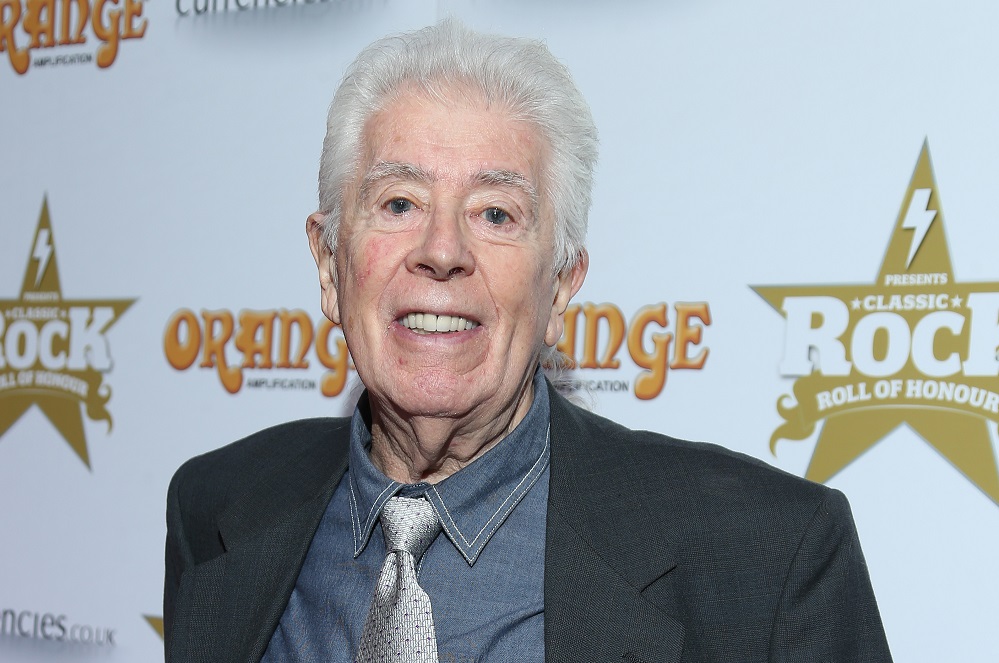
John Mayall was a British blues guitarist and bandleader who helped launch the careers of legends like Eric Clapton, Peter Green (1946–2020), and Mick Taylor.
- Died: July 22, 2024 (Who else died on July 22?)
- Details of death: Died at his home in California at the age of 90.
- We invite you to share condolences for John Mayall in our Guest Book.
John Mayall’s legacy
Mayall earned the title of the “godfather of British blues” as one of the driving forces behind the 1960s blues revival in England that did more than simply introduce the blues to a new generation – it also profoundly influenced the development of rock and roll. Bands like Cream, Led Zeppelin, Fleetwood Mac, the Yardbirds, and the Rolling Stones were born out of the British blues boom, and many of their members cut their teeth playing with the self-taught Mayall in his Bluesbreakers.
A lover of music from an early age, Mayall grew up listening to blues and jazz, but he was 30, and a British Army veteran of the Korean War, before he made music his profession. The Bluesbreakers began to coalesce in the early 1960s, with Mayall at the helm of an ever-evolving cast of musicians. In 1965, when the teenaged Eric Clapton left the Yardbirds and joined Mayall’s band, they began to make waves. The 1966 album “Blues Breakers with Eric Clapton” quickly became a classic and helped establish Mayall as a force in British blues.
Clapton was only with Mayall’s band briefly, leaving to form Cream and achieve even greater fame. But Mayall never intended the Bluesbreakers to have a single, unchanging lineup. He preferred to let the band change freely as members came and went, and there were plenty of young musicians eager to learn from Mayall as they played in his band. Jack Bruce (1943–2014), the bassist who formed Cream with Clapton, was one of them. So were Peter Green, Mick Fleetwood, and John McVie, who went on to found Fleetwood Mac; Mick Taylor, who later replaced Brian Jones (1942–1969) in the Rolling Stones; Andy Fraser (1952–2015), who quickly left the band to form Free, and dozens of others.
For those artists, Mayall was a teacher and mentor, as well as a leg-up to eventual musical stardom. Clapton even moved into Mayall’s house for a period to learn all he could from the seasoned musician. After helping launch some of the greatest British rock musicians of the 1960s, Mayall relocated to Los Angeles, where he brought U.S. musicians into his lineup. He added jazz stylings into his sound in later years but remained a bluesman at heart.
Mayall continued playing throughout his life, still a vibrant touring musician in his 80s. He recorded more than 70 albums, most recently releasing “The Sun Is Shining Down” in 2022. He was appointed Officer of the Order of the British Empire in 2005, and in 2024, just a few months before his death, he was inducted into the Rock and Roll Hall of Fame.
Mayall on the blues
“It’s about – and it’s always been about – that raw honesty with which the blues express our experiences in life, something which all comes together in this music, in the words as well. Something that is connected to us, common to our experiences. To be honest, though, I don’t think anyone really knows exactly what it is. I just can’t stop playing it.” — from a 2014 interview for the Guardian
Tributes to John Mayall
Full obituary: The New York Times