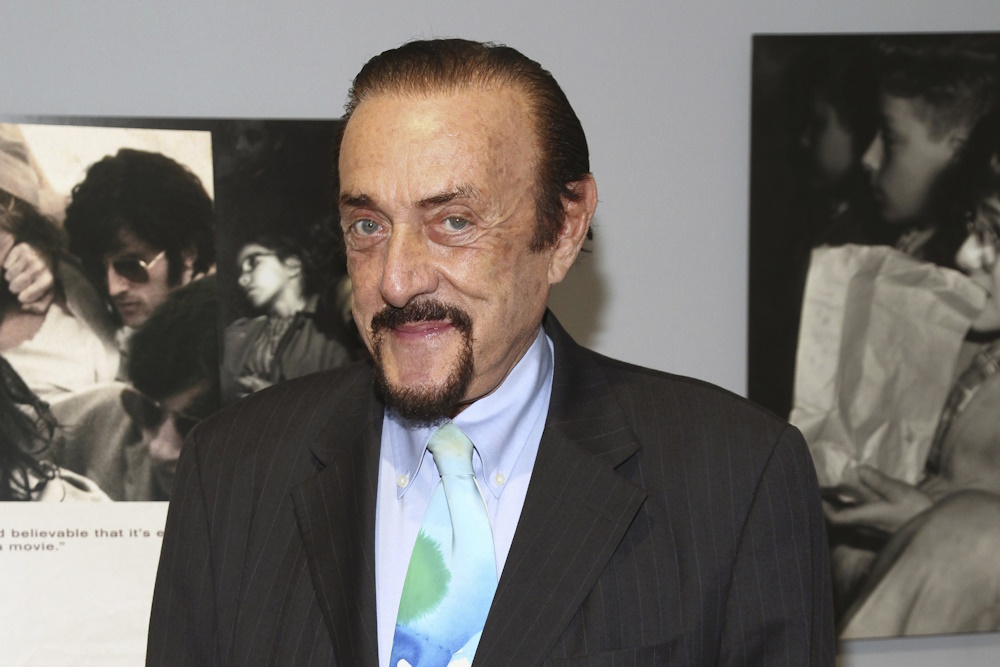
Philip G. Zimbardo was a psychologist, professor and author best known as the researcher who created and administered the Stanford Prison Experiment.
- Died: October 14, 2024 (Who else died on October 14?)
- Details of death: Died in San Francisco at the age of 91.
- We invite you to share condolences for Philip G. Zimbardo in our Guest Book.
Philip G. Zimbardo’s legacy
Born in New York City, Zimbardo got his B.A. at Brooklyn College, triple-majoring in psychology, sociology, and anthropology, then earned an M.S. and a Ph.D. in psychology from Yale University before launching a long career in academics. He began as a psychology professor at Yale, then taught at Columbia University and New York University College of Arts & Science before moving to California in 1968 to teach at Stanford University.
Three years later, at Stanford, Zimbardo conducted one of the most notorious and controversial experiments of his day, one still the subject of exhaustive debate. Now known as the Stanford Prison Experiment, its participants played the parts of prison guards and prison inmates. Ever-shifting roles and alleged abuse of power led to prisoner protests, allegedly abusive situations, and reportedly at least one mental breakdown. In the decades since, statements from the study’s participants, examinations from outside observers, and more have painted a murky picture of what really happened. For his part, Zimbardo defended the insights provided by the experiment, which was set for two weeks, but ended after six days.
Zimbardo’s career was not limited to this one landmark study. Over the course of his career, he studied person-to-person conflict, how we have power and influence over one another, cults, compassion, and more. His books include “The Lucifer Effect: Understanding How Good People Turn Evil,” “Shyness: What It Is, What to Do About It,” and “The Time Paradox: The New Psychology of Time That Will Change Your Life.”
He is the founder of the Heroic Imagination Project, a nonprofit organization devoted to encouraging everyday heroism. Zimbardo co-authored the introductory psychology textbook, “Psychology and Life,” and he assisted the anti-bullying organization Bystander Revolution. He taught at Stanford for 50 years before retiring in 2003.
On critics saying his experiment was not scientific:
“The single conclusion is a broad line: Human behavior, for many people, is much more under the influence of social situational variables than we had ever thought of before. I will stand by that conclusion for the rest of my life, no matter what anyone says.”—interview with Vox, 2018
Tributes to Philip G. Zimbardo
Full obituary: Stanford Report