Menu

Search by Name
Search by Name
Add a Memory
Make a Donation

FUNERAL HOME
Marc Simon Obituary
News story
By Mike Sigov
Blade Staff Writer
BOWLING GREEN - Marc Vanderhaar Simon, a political science associate professor and department chairman at Bowling Green State University respected as a political expert and a scholar of war, political violence, and conflict resolution, died Dec. 5 at Bridge Hospice Care Center in Bowling Green. He was 61.
He died following a brain hemorrhage, said his wife of 36 years, Maria Simon.
"He was the kind of professor who wanted to engage his students," said Heather Gallant, a former student. "He wanted to open doors for us. And he was so passionate about international relations and helping us understand peace and conflict."
For the past 24 years, Mr. Simon taught courses on international relations, foreign policy, peace studies, and conflict resolutions at BGSU. Additionally, he taught at the University of Salzburg in Austria in 1998 and in 2007 and at the Diplomatic Academy in Vienna, as a Fulbright fellow, in 2008.
Mr. Simon was also the department chairman intermittently since at least 2005.
Additionally, he volunteered for local and national political campaigns and spoke on international issues in local and regional media.
David Jackson, professor of political science at BGSU, said Mr. Simon was "a very well-respected expert" in peace and conflict studies, particularly in questions related to conflict resolution and sources of international conflict.
"He was such a good department chair, because he was effective at managing the conflicts that inherently arise among more than a dozen faculty members," Mr. Jackson said.
"When he took over, our department was essentially in ruins, with faculty in low single digits," he said. "And with his leadership, we've built it to a thriving political science department with something like 15 or 16 faculty members."
In 2010, Mr. Simon co-authored a book, Turmoil in American Public Policy: Science, Democracy, and the Environment.
He also co-authored book chapters: "Failing States and Failing Regimes" in Dealing with Failed States in 2009, and "Pillars of Conflict: Dynamics and Processes" in States and People in Conflict in 2017 along with multiple articles on political science.
"He was willing to share his expertise beyond just the traditional academic publishing realms," Mr. Jackson said. "He was very active in conferences aimed at peacemaking, very interested in it from a scholarly and theoretical perspective, but even more so from the perspective of applying theories to actually bring about solutions to conflicts."
Mr. Simon was also generous with his time outside the classroom, advising students one on one, he said.
He also volunteered as an adviser to the International Relations Student Organization and the Model United Nations and in the early 2000s helped create the Model United Nations Club at Bowling Green High School. He led the teams on regular trips to Chicago and New York.
"His commitment to his students, of course, was in the classroom, but it extended far beyond the classroom, into mentoring and inspiring and working with students to get them ... into hands-on activities related to the things they were studying," Mr. Jackson said.
"He wanted the students to know that stuff that they were learning wasn't just interesting in the abstract," he said. "He was trying to help [them] develop a tool to solve seemingly intractable problems."
Mr. Simon came from a lineage of intellectuals who included his grandfather, Yves Simon, a prominent Catholic political philosopher.
Part of the Catholic social justice movement, Marc Simon had advocated for the closure of the prison on the U.S. base at Guantanamo Bay and participated in demonstrations against the invasions of Iraq and Afghanistan.
"In the Catholic social justice movement, it's about putting thoughts into action," Mr. Jackson, a fellow activist, explained. "And if you witness an injustice, you have a moral obligation and an individual obligation as a citizen and a human to do something about it where you are and to apply your skills and your gifts to those issues, and to be present, and to witness, and to stand up."
In November, 2010, Mr. Simon was recognized as the BGSU Panhellenic Council Teacher of the Month. He was also a recipient of the university's 2010-2011 Student Alumni Connection Master Teacher Award.
"Marc liked teaching, but he also really liked learning," his wife said. "He was a lifelong learner who really valued learning from his students as much as he did teaching them what he knew."
"He was interested in and curious about what other people thought," Mrs. Simon said "He took other people seriously, and was really proud that his students would stay in touch with him. He was a good listener and that must be why he was also a great father."
Born Aug. 23, 1963, in South Bend, Ind., to Maria and Anthony Simon, he was raised in South Bend, where he graduated from John Adams High School in 1981.
He then attended Indiana University, where he graduated with a bachelor's degree in mathematics in 1985 and got a doctorate in political science in 1991.
In his free time, Mr. Simon liked to visit his relatives in France.
He also enjoyed playing baseball, biking, playing golf, growing vegetables, hiking in national parks, and skiing, especially in the Austrian Alps.
Additionally, he coached his children's T-ball, softball, and Little League teams and played in the Mid-American Masters Baseball League in Toledo.
He was a member of St. Aloysius Catholic Church, Bowling Green.
His other memberships included the Kiwanis Club of Bowling Green, the Democratic Party of Wood County, and BG Town and Gown.
Along with his wife, Maria Simon, surviving are his daughters, Anne-Marie Zwetsch and Genevieve Simon; son, Martin Simon; mother, Maria Porter; and brother, John-Paul Simon.
Visitation will be from 3 to 7 p.m. Wednesday at Dunn Funeral Home, Bowling Green.
A funeral Mass will begin at 10 a.m. Thursday at the church.
The family suggests tributes to the BGSU Foundation International Studies Program Fund or the Wood County District Public Library Foundation.
Memories and Condolences
for Marc Simon
1 Entry
Sarah Caserta
December 7, 2024
I'm so very sorry to hear about your loss. I remember Marc being such a positive presence in the audience for various BGHS orchestra, band, arts, and drama performances where his children were featured. He always had a kind word and was a great BGHS supporter. May the positive memories of Marc find their way to your family and bring you comfort.
How you can show support
Showing 1 - 1 of 1 results
Make a Donation
in Marc Simon's name
Memorial Events
for Marc Simon
Dec
18
Visitation
3:00 p.m. - 7:00 p.m.
DUNN FUNERAL HOME- Bowling Green Chapel
408 West Wooster Street Bowling Green, OH 43402
Dec
19
Funeral service
10:00 a.m.
St. Aloysius Catholic Church
150 S. Enterprise St. Bowling Green, OH 43402
Funeral services provided by:
Dunn Funeral Home - Bowling Green408 West Wooster Street, Bowling Green, OH 43402
How to support Marc's loved ones
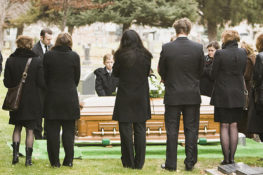

Should I Send Sympathy Flowers?
What kind of arrangement is appropriate, where should you send it, and when should you send an alternative?
Read more
What Should I Write in a Sympathy Card?
We'll help you find the right words to comfort your family member or loved one during this difficult time.
Read more
Resources to help you cope with loss

How to Cope With Grief
Information and advice to help you cope with the death of someone important to you.
Read more
Estate Settlement Guide
If you’re in charge of handling the affairs for a recently deceased loved one, this guide offers a helpful checklist.
Read more

Obituaries, grief & privacy: Legacy’s news editor on NPR podcast
Legacy's Linnea Crowther discusses how families talk about causes of death in the obituaries they write.
Read moreWays to honor Marc Simon's life and legacy
Obituary Examples
You may find these well-written obituary examples helpful as you write about your own family.
Read more

Obituary Templates – Customizable Examples and Samples
These free blank templates make writing an obituary faster and easier.
Read more
How Do I Write a Eulogy?
Some basic help and starters when you have to write a tribute to someone you love.
Read more