Menu

Search by Name
Search by Name
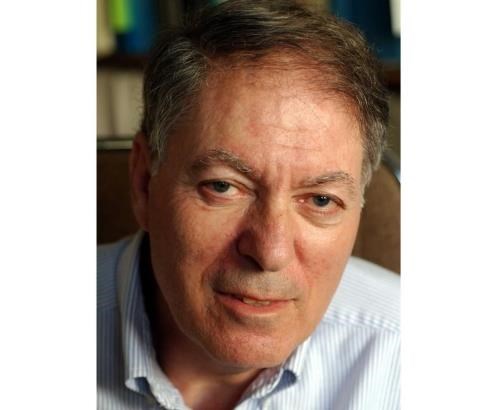
Thomas Phillips Obituary
Born on April 18, 1937, Tom was raised in a modest Jewish home in Watford, England, outside London. His mother, Iris, supported the family by boarding young men at their home and leveraging her earnings to buy larger boarding houses. His father, Joe, had aspired as a young man to become a mechanical engineer, but when his father died he was called to manage his mother's public house instead. Tom's stories of his childhood during World War II included the memory of hearing V1 missiles ("doodlebugs") and V2 rockets flying overhead, forcing the family to hide in their backyard air raid shelter. Food rationing meant that his hardworking mother had to make do with very little, and Tom acquired a particular appreciation for chicken liver, kidneys, hearts, and gizzards along with the occasional rhubarb pie.
From a young age there were hints of Tom's proclivity for invention. His younger brother, Barry, recalls him tinkering with mechanical toys, building a Meccano motorized walking robot and flying handcrafted model airplanes. He soon moved on to bigger toys, fixing up old motorbikes and cars. After he started working, he was able to afford what became his prized possession, a red Rover sports car, which would move to the United States with him. He would continue to build models throughout his life - models of cars, planes, ships, and even an elaborate toy train set.
At Watford Grammar School, Tom proved to be especially good at math and science. Encouraged by his teachers to take his university qualifying exams, Tom secured a full academic scholarship to Oxford University in the College of St. Edmund Hall. Most of the students at St. Edmund Hall were on athletic scholarships, and the college was well known for its excellent rugby team. Tom, athletic and confident, thought he had a good chance of making the rugby team, despite his slim build, but at the tryout for the position of hooker he found himself pitted against the hooker for the Welsh national rugby team. So he remained at Oxford based on his academic standing and graduated in 1961 with a "First" in physics (the most prestigious degree).
Tom married his first wife, Joy, in 1961 and started research for his D.Phil. in physics at Oxford. Early in his graduate career he broke protocol to publish his research on low-temperature solid-state physics, without permission, while his advisor was on vacation. Despite this early transgression, he became a Junior Research Fellow at Jesus College of Oxford in 1963, received his D.Phil. from Oxford in 1964, and accepted a postdoc position at Stanford University in 1965. Tom and Joy had two children, Claire and Stephen, in the three years after he completed his degree.
In 1968 Tom found recruiters standing outside his laboratory and accepted their offer for a research position at Bell Laboratories in Murray Hill, New Jersey. Bell Labs, nicknamed the "Idea Factory," was known for encouraging impromptu conversations between specialists of varying fields and is famous for its remarkable inventions, among them the transistor, the laser, solar cells, cellular technology, and communications satellites. At Bell Labs, Tom boldly conversed with Arno Penzias and Bob Wilson in the shared hall outside their respective laboratories. He was confident that he could invent more sensitive receivers than his colleagues were using. Tom's innovations at Bell Labs led to receiver technology that powers international observatories on mountaintops and satellites in space, opening the field of submillimeter-wave astrophysics to the science community worldwide.
In 1979 the California Institute of Technology invited Tom to join their faculty as a full professor. There he taught and trained generations of PhD students and postdocs. In 1986 he married his second wife, Caltech and JPL astronomer Jocelyn Keene, and together they raised their daughter, Elizabeth, while researching and building new observatories. To win the opportunity to build his own observatory, Tom first had to serve as the assistant director of the Owens Valley Radio Observatory, finishing the array of telescopes there. Successful in that endeavor, Tom won the funding for his own project, the Caltech Submillimeter Observatory (CSO) on Mauna Kea, Hawaii, which made its first observations in 1986. In addition to these ground-based efforts, Tom worked closely with NASA, first by flying with his instruments on the Kuiper Airborne Observatory, and, later in his career, by serving as the American Principal Investigator for the HIFI instrument on the Herschel Space Observatory, which launched in 2009.
From his late fifties onward, Tom battled Parkinson's disease. For much of his life he had been a witty, mostly soft-spoken, strong man who enjoyed playing rugby, cricket, squash, and golf with his brother and friends. Tom loved reading novels, watching his hometown Watford football team, and eating fudge, chocolate, and cookies; he gave terrific advice, always clear-minded, listening before carefully responding. He never gave up on anything he set his mind to, and took advantage of the newest technologies available within the medical field to fight Parkinson's. He had a no-nonsense demeanor, often using his favorite words "sensible" and "reasonable," though it must be admitted that he had a commanding temper that showed itself from time to time. Tragically, the debilitating disease he suffered in his retirement years stripped away his physical abilities and sharp acumen.
Thomas G. Phillips, the John D. MacArthur Endowed Professor of Physics, Emeritus, D.Phil. Oxford, recipient of the Joseph Weber Award of the American Astronomical Society, the Altair Professor of Physics at Caltech, the Paris Observatory Doctor Honoris Causa, and the NASA "Exceptional Public Service" medal, is survived by his wife, Jocelyn B. Keene; his three children, Claire L. Phillips, Stephen J. Phillips, and Elizabeth A. K. Phillips; his granddaughter, Elysia A. Phillips; and his brother, Barry J. Phillips. Donations in honor of Professor Thomas G. Phillips in any amount can be made to The Michael J. Fox Foundation (www.michaeljfox.org).
To plant trees in memory, please visit the Sympathy Store.
Memories and Condolences
for Thomas Phillips
1 Entry
Jerry Dunifer
September 8, 2022
My condolences to the family of Thomas G. Phillips. Tom and I worked together at Bell Labs for two years, 1969-71. I greatly enjoyed our collaboration, and I learned a lot from Tom during that time. I enjoyed the several opportunities to visit again with Tom after we both left Bell Labs, both in Pasadena and at the summit of Mauna Kea. Jerry Dunifer, Physics Department , Wayne State University
How you can show support
Follow
Get email updates whenever changes are made.
Send flowers
Consider sending flowers.
Add photos
Share their life with photo memories.
Plant trees
Honor them by planting trees in their memory.
Donate in Memory
Make a donation in memory of your loved one.
Share this page
Invite other friends and family to visit the page.
Showing 1 - 1 of 1 results
Make a Donation
in Thomas Phillips's name
Please consider a donation as requested by the family.
Memorial Events
for Thomas Phillips
People and places connected with Thomas
Recent Obituaries
Recent Obituaries
Recent Obituaries
Recent Obituaries
How to support Thomas's loved ones

Should I Send Sympathy Flowers?
What kind of arrangement is appropriate, where should you send it, and when should you send an alternative?
Read more
What Should I Write in a Sympathy Card?
We'll help you find the right words to comfort your family member or loved one during this difficult time.
Read more
Resources to help you cope with loss

How to Cope With Grief
Information and advice to help you cope with the death of someone important to you.
Read more
Estate Settlement Guide
If you’re in charge of handling the affairs for a recently deceased loved one, this guide offers a helpful checklist.
Read more

Obituaries, grief & privacy: Legacy’s news editor on NPR podcast
Legacy's Linnea Crowther discusses how families talk about causes of death in the obituaries they write.
Read moreWays to honor Thomas Phillips's life and legacy
Obituary Examples
You may find these well-written obituary examples helpful as you write about your own family.
Read more

Obituary Templates – Customizable Examples and Samples
These free blank templates make writing an obituary faster and easier.
Read more
How Do I Write a Eulogy?
Some basic help and starters when you have to write a tribute to someone you love.
Read more


