Jiddu Krishnamurti: The Guru Who Wasn’t
by Legacy Staff
by Legacy Staff
3 min readThough he refused to consider himself any kind of religious authority, Jiddu Krishnamuriti became one of the 20th century’s leading spiritual philosophers.
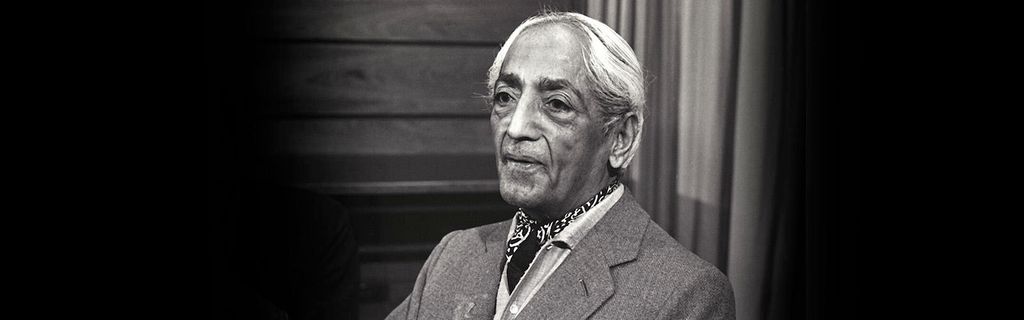
Spiritual leader Jiddu Krishnamurti died 25 years ago today at the age of 90. Though he refused to consider himself any kind of authority, he became one of the 20th century’s leading religious philosophers.
Born into a Brahmin family in the small town of Madanapalle, India, Jiddu Krishnamurti was the eighth child of eleven (though only six would survive into adulthood). His father was an official with the colonial British authorities; his mother would die when Krishnamurti was 10 years old. As a young child, Krishnamurti was malnourished and also contracted malaria, a disease he would suffer from during much of his young life. Given to daydreaming, Krishnamurti was taken by some to be mentally retarded and was at times beaten by school teachers and his father for his daydreaming.
In 1909, the family relocated to Adyar, where Krishnamurti’s father found work as a clerk for the Theosophical Society, a non-sectarian organization founded in New York in 1875 that merged elements of Western mysticism with traditional Eastern spiritual beliefs. Among their stated objectives were to encourage the study of comparative religion and “investigate the unexplained laws of nature and the powers latent in man.”
The organization also believed in the preparation of humanity for the coming of a World Teacher – an advanced spiritual entity named Lord Maitreya that periodically manifests itself in earthly form in order to direct the evolutionary progress of mankind.
Only months after moving to Adyar, Krishnamurti was discovered by influential Theosophist Charles Webster Leadbeater, a self-proclaimed clairvoyant impressed by Krishnamurti’s aura of unselfishness. He was convinced the boy – dismissed as a simpleton by so many others – would grow up to be a great orator and teacher. In 1911, he founded The Order of the Star in the East to prepare the world for the coming of the next World Teacher.
But first, he had to prepare the World Teacher himself. At the age of 14, Krishnamurti was taken to the Theosophist temple in Madras and groomed as the manifestation of Lord Maitreya. Living in relative opulence, he undertook formal academic and athletic education, and toured Europe and the Americas. During this period, he grew very close to Annie Besant, a British Theosophist who would act as a kind of surrogate mother (and later legal guardian) for Krishnamurti and his brother Nitya.
I maintain that truth is a pathless land, and you cannot approach it by any path whatsoever, by any religion, by any sect. That is my point of view, and I adhere to that absolutely and unconditionally. Truth, being limitless, unconditioned, unapproachable by any path whatsoever, cannot be organized; nor should any organization be formed to lead or coerce people along a particular path.
Krishnamurti’s abnegation of the World Teacher throne caused a schism in the organization – some arguing, with a kind of Life of Brian logic, that such a proclamation only proved that he really was the World Teacher. Krishnamurti left the Theosophists altogether, returning all the money and property they had given him in order to embark on a lifelong quest for spiritual enlightenment through meditation, discussion, speaking and writing – the latter greatly encouraged by his friendship with British author Aldous Huxley. When he was not travelling, he spent most of his time at his home in California, where for a time he was under surveillance by the FBI for his anti-war stance leading up to World War II.
TAGS