
Richard Codey Obituary
A native son of Essex County and a third-generation funeral director, Codey devoted his life to public service, guided by compassion, practicality and an instinct to tackle issues others avoided. Over more than five decades in the New Jersey Legislature, including service as Senate President, he earned a reputation as a steady hand and trusted listener, a leader guided less by ideology than by empathy and common sense.
Those qualities shaped his public and his private lives. Whether serving constituents, mentoring young people or sitting quietly with families in moments of grief, he brought a calming presence and humanity to everything he did.
Codey was born and raised in Orange, New Jersey, a place he never stopped believing in and never stopped serving. (See Exit 11, Route 280.) He learned the family business from a shared bedroom on the third floor, living above the funeral home where the work never stopped.
It was there he absorbed lessons that stayed with him for life: how to sit with grief, how to listen and how to be present without trying to fix the unfixable. Long before public office entered the picture, he understood pain and responded to it instinctively.
That understanding followed him into friendships, family life and public service - and later in life, when the former funeral director returned to the profession with not one, but two locations.
Empathy, humility and the example of fellow Irishman President John F. Kennedy drew him toward public service. He believed problems were meant to be worked, not debated in dueling press releases. (Growing up Irish certainly gave him a head start in conflict resolution.)
"The Gov" began his career in the New Jersey General Assembly before moving to the state Senate. His 50 years in the Legislature were longer than anyone else in state history, proving he was either a masochist or simply unwilling to give up his late-night diner stops on drives home from Trenton.
Over the years, he became known as a reliable dealmaker. A lifelong Democrat who counted U.S. presidents, Ambassadors & Essex County Country Club caddies among his friends, he especially valued working with Republican colleagues. If common ground existed, he took genuine pleasure in finding it.
Those hard-fought agreements moved the state forward and gave him something he quietly enjoyed: the chance to remind skeptics what could be accomplished by putting the interests of constituents first.
As Senate President, he became the state's "accidental governor" more than once, most notably for a 14-month stretch. History will show that in those 428 days, he accomplished more than anyone could have predicted, given the circumstances he inherited.
In truth, he never stopped being the people's governor. In the two decades after leaving the governor's office, there were few days when someone didn't tell him, "You were the best governor we ever had," or, "I wish you'd run again."
Even while holding the state's highest office, he remained amused by the idea it should impress anyone, or that he would be asked to write a book. After all, he had been asked to leave two high schools as a young man - one because he threw a frog out a classroom window, the other lost to the fog of time. (The family would like to acknowledge Oratory Prep and those who ultimately decided he deserved a diploma.)
As governor, he consistently deflected praise, preferring that credit and respect be shared with those around him, whether interns or cabinet members. He also used his time as governor to highlight his work on the single issue that best defined his public life: mental health.
Long before it was common, or comfortable, for public officials to speak openly about mental illness, Codey pushed to the front of the conversation, undeterred by the concerns of cautious staffers.
"Nahhhhhhhh. C'mon," he would say, rolling his head back and muttering something best left untranslated.
He pushed for funding, reform and awareness because he had seen suffering up close and believed silence only made it worse. He spoke openly about the struggles in his own family. He made sure the people who needed help had him 100% in their corner. And, most famously, he went undercover.
Some 35 years ago, he assumed the identity of a deceased criminal and worked as an orderly at Marlboro Psychiatric Hospital to investigate conditions from the inside. The systemic problems he discovered - including patient abuse and unsafe practices - had largely been hidden from public view. His findings prompted a state Senate task force and led to broad reforms in how New Jersey cared for its most vulnerable residents. That work helped pave the way for the facility's eventual closure in 1998.
Families - his own and others - noticed. Caregivers noticed. People struggling noticed. They felt seen.
Years after leaving office, The Gov continued advocating, often quietly and behind the scenes. The Codey Fund for Mental Health will carry that work forward for generations, because he believed the cause was bigger than any one person.
For all the weight he carried, The Gov never lost his sense of humor. How else could he remain loyal to his beleaguered Cincinnati Reds for the past 35 years? (And how many politicians from Essex County have ever been invited to throw out a first pitch in Ohio?)
He used laughter and a well-timed smirk or wink to soften hard moments and ease tense rooms. He created space to talk, to listen and to reconnect. He could make people laugh when things were heavy, especially when they were really heavy.
His humor was warm, sometimes a little risqu�, often self-deprecating and always rooted in an instinct to put others at ease. He didn't need to win the room. He just wanted everyone to feel comfortable in it, even if that meant telling a priest-and-a-rabbi joke � to actual priests and rabbis.
Away from Trenton, The Gov felt most at home in gymnasiums, arenas and stadiums, coaching or watching games, especially his beloved Seton Hall Pirates.
He coached basketball for five decades, and he did it the same way he governed, emphasizing effort, teamwork and showing up. Winning a national AAU championship in 2019 was a proud moment, made even more meaningful by the fact his younger son, Chris, coached alongside him.
Former players remember a coach who cared deeply about character and lessons that extended far beyond the court, into their lives as husbands and fathers. For a man who spent so many years in politics and funeral homes, he certainly understood the value of the long game.
At home, The Gov was exactly that - home. He treasured time with Mary Jo and the boys. Asked when he last took a vacation, he would mutter something under his breath, which, come to think of it, may explain that second high school departure.
He loved his family fiercely and quietly, showing it in everyday ways: listening, being present, paying attention. He took immense pride in his sons, often rattling off their accomplishments to visitors in the office they later shared. He delighted in his grandchildren. He was grounded by Mary Jo.
Family also gave him a wingman for weekend trips down the Parkway to Monmouth Park, a target for his barbs on the golf course and a companion on election nights, driving from senior centers to firehouses, counting votes.
Leaving a small polling place, he once told Kevin, his older son, "I won that one 2-1." Kevin wondered how it could take so long to count three votes, but eventually realized there was always another election ahead - and that leaving a vote on the table genuinely bothered The Gov.
In the days following his passing, tens of thousands of messages poured in from across New Jersey. They came from public officials, yes, but also from teachers, nurses, union workers, parents and people who crossed paths with him once and never forgot it.
They shared stories not of policies, but of moments: a returned phone call, a quiet kindness, a personal check that suddenly appeared, a path through government red tape, a joke delivered at exactly the right time.
Again and again, the same words appeared: warm, decent, kind.
It wasn't just about what he did.
It was about what he didn't have to do.
Codey was predeceased by his parents, Donald R. Codey Sr. and Patricia (Harling) Codey, and his brother, Donald R. Codey Jr.
He is survived by his beloved wife of 45 years, Mary Jo (Rolli) Codey; his treasured sons, Kevin X. Codey and his wife, Danielle (Firavanti); and Christopher Y. Codey; his cherished grandchildren, Brooke, Patrick and Paige Codey; his siblings, Robert Codey (Mary Ann), Sister Patricia Codey, SC, and Colleen Codey (Edward Hughes); his sister-in-law, Margaret Codey; the Rolli family; and many loving nieces, nephews and cousins.
He's also survived by millions of former constituents, extended family, friends, current and former staff members, basketball players and even political adversaries.
In lieu of flowers, donations to honor his life's work may be sent to: The Codey Fund for Mental Health, 307 Bloomfield Ave. Suite 303, Caldwell, N.J. 07006.
To plant trees in memory, please visit the Sympathy Store.
4 Entries
Tricia M. Lee (Fund Administrator)
January 21, 2026
It is not often that an organization has the privilege to be represented by a public servant, who they know and respect, not only for his action in his official capacity, but also for his kindness as a human being.
We, the members of the Board of Education Employees´ Pension Fund of Essex County were so fortunate to be represented by Governor Richard J. Cody when he served as a state senator. It was at that time that we observed this great man lead not only with vision, but with humility and kindness. He will be missed.
Respectfully,
Trustees of the Board of Education Employees Pension Fund of Essex County


The Rappaport Family
January 19, 2026
We are sorry to hear of the passing of Senator Codey.
Richard was a very close family friend to us for many years and he will be greatly missed. Sincere condolences from our family to yours.
The Rappaport Family
How you can show support
Follow
Get email updates whenever changes are made.
Send flowers
Consider sending flowers.
Add photos
Share their life with photo memories.
Plant trees
Honor them by planting trees in their memory.
Donate in Memory
Make a donation in memory of your loved one.
Share this page
Invite other friends and family to visit the page.
Showing 1 - 4 of 4 results
54 Roseland Ave, Caldwell, NJ 07006
Make a Donation
in Richard Codey's name
People and places connected with Richard
Recent Obituaries
Recent Obituaries
How to support Richard's loved ones
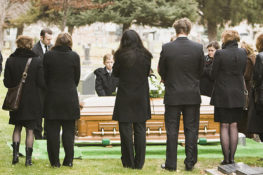

Should I Send Sympathy Flowers?
What kind of arrangement is appropriate, where should you send it, and when should you send an alternative?
Read more
What Should I Write in a Sympathy Card?
We'll help you find the right words to comfort your family member or loved one during this difficult time.
Read more
Resources to help you cope with loss

How to Cope With Grief
Information and advice to help you cope with the death of someone important to you.
Read more
Estate Settlement Guide
If you’re in charge of handling the affairs for a recently deceased loved one, this guide offers a helpful checklist.
Read more

Obituaries, grief & privacy: Legacy’s news editor on NPR podcast
Legacy's Linnea Crowther discusses how families talk about causes of death in the obituaries they write.
Read moreWays to honor Richard Codey's life and legacy

Obituary Examples
You may find these well-written obituary examples helpful as you write about your own family.
Read more

Obituary Templates – Customizable Examples and Samples
These free blank templates make writing an obituary faster and easier.
Read more
How Do I Write a Eulogy?
Some basic help and starters when you have to write a tribute to someone you love.
Read more


