The New York Times Is Retroactively Publishing Great Women's Obituaries
by
by
4 min readThe "Overlooked" series seeks to begin correcting historical biases in reporting notable lives and deaths.
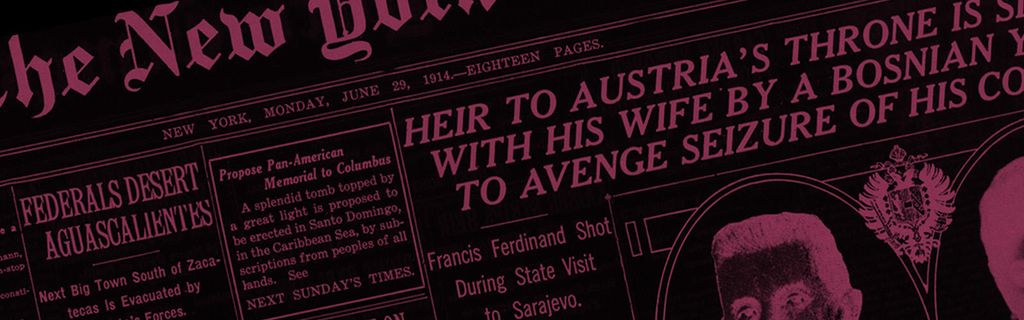
The editors of 50 and 100 years ago might not have noticed it, but it became painfully obvious to the people writing and publishing the New York Times today: The Times obituary page was disproportionately filled with the life stories of white men. It always has been, and it still is — except, now, for the stories being told in the paper's newest series, Overlooked.
Unlike the paid, family-placed death notices, which pretty much reflect the approximate 50/50 gender split of the world's population, a newspaper's journalistic obituaries — the featured stories of people who impacted the world in a big way — are curated by editors. Each day, the Times editorial staff considers the most recent deaths and chooses a small handful of stories to tell, focusing on the lives they think are the most newsworthy. Some VIPs are obvious choices, the kinds of household names who have shaped our world. Other days, the editors have to dig a bit more deeply into the news to find a few "notable" deaths to cover.
And, the editors of the Times admit, those obits they've reported for the past century and a half skew heavily toward white men. It's not much surprise that that was the case back in the 19th century, a time when American society didn't provide many opportunities for women and people of color to hold positions of influence and power. Why is it still the case? Because the people featured in journalistic obituaries page tend to be the people who made front-page news decades ago. Today, in 2018, it's the VIPs of the 1950s, '60s, and '70s who are dying in the greatest numbers, and even that recently, white men had far more opportunities for fame and notoriety than anyone else.
But it's not that simple, either. When today's New York Times editors looked back, they saw omissions, stories that weren't told years ago even though they were worth telling. The stories of women were disproportionately skipped. There are valid reasons for this, and the editors offer some suggestions for why it has happened and still happens, but more importantly, they're offering — finally! — some of the stories they didn't tell back then, but should have.
"Overlooked" is, on its launch date (coinciding today with International Women's Day), a collection of 15 obituaries written years after the deaths of their subjects. You've heard of some of them: poet Sylvia Plath, journalist Ida B. Wells, author Charlotte Bronte. Others might be new to you: Olympic champion Margaret Abbott, Chinese revolutionary Qiu Jin, Harlem Renaissance writer Nella Larsen.
In some cases, we can see why they didn't make it to the obituary page when they died. Abbott's Olympic achievement was muddled by history and wasn't really understood at the time of her death in 1955. When Wells died in 1931, the life of a radical black journalist who covered the stories of lynchings wasn't really the kind of story told in a newspaper with a majority-white readership.
But Plath was an established poet — not wildly famous, but notable, and married to the even better known poet Ted Hughes. Her most famous works weren't published until after her death, but she was a familiar name in literary circles. And Bronte was most definitely successful during her lifetime — her classic novel "Jane Eyre" was an instant success when she wrote it, eight years before herrtjsjd death.
It took more than literary success, apparently, for a woman's death to be covered in the New York Times in 1855, or even more than a century later when Plath died in 1963.
Linnea Crowther is Legacy's senior writer.
TAGS