
David Tracy Obituary
Professor of Theology and the Philosophy of Religions
Andrew Thomas Greeley and Grace McNichols Greeley Distinguished Service
Professor Emeritus of Catholic Studies
Emeritus Faculty in the Committee on Social Thought
David Tracy, internationally renowned Catholic theologian, professor, writer, and priest, passed away peacefully in Chicago on April 29, 2025, at the age of 86. Born on January 6, 1939, in Yonkers, New York, he dedicated his life to the study and teaching of theology, profoundly influencing the landscape of modern Christian thought.
Drawn to the priesthood from a young age, he attended the Cathedral College in New York, followed by seminary training in philosophy and theology at St. Joseph's Seminary and College, the major seminary of the Archdiocese of New York. In 1960, he began his studies at the Pontifical Gregorian University in Rome, and he was ordained a Roman Catholic priest in 1963. His years in Rome were set against the backdrop of the Second Vatican Council taking place in Vatican City at the time, which deeply influenced his evolving theological perspective. In 1964, he earned his Licentiate of Sacred Theology and in 1969 he earned his doctorate, both from the Pontifical Gregorian University in Rome.
Tracy served in the diocese of Bridgeport, Connecticut, and began his academic career at the Catholic University of America in Washington, D.C. In 1968, he joined with lifelong colleague and friend Bernard McGinn and twenty other professors at CUA in formally expressing their respectful dissent from Pope Paul VI's Humanae Vitae, an encyclical letter which reaffirmed the Church's traditional perspectives on married love and artificial birth control. Tracy and the others were dismissed by the
CUA Episcopal Board of Trustees. They sued the University, leading to a landmark legal case during which they were represented by American Civil Liberties Union lawyers. They ultimately won their academic case, thus highlighting Tracy's commitment to academic and personal freedom and conscience.
As a result of the ecumenical impetus of Vatican II, in 1969 David Tracy was one of the first Catholic theologians invited to join the faculty of the University of Chicago Divinity School, where he served for nearly four decades. He was appointed the Andrew Thomas Greeley and Grace McNichols Greeley Distinguished Service Professor of Catholic Studies, held a joint appointment in the Committee on Social Thought and was the first theologian of any denomination to be invited to sit on the University
of Chicago's prestigious Committee on the Analysis of Ideas and Study of Methods. His scholarship, characterized by a dialogue between Christian theology, philosophy, and modern thought, produced groundbreaking works, such as Blessed Rage for Order (1975), The Analogical Imagination (1981), Plurality and Ambiguity (1987), and Fragments and Filaments (2020). His vision in these works was remarkably sweeping and wide-ranging, covering a variety of intellectual landscapes, from hermeneutics and postmodernity to the classics of the religious traditions. He balanced a love of the Christian tradition with a daring exploration of modern ideas and perspectives. Whether discussing the mystics and prophets, the spiritual exercises of the ancient Greeks, biblical narratives and ideas, or contemporary philosophy and theology, he displayed a remarkable love of intellectual inquiry, dialogue, pluralism, and a concern for the poor and deprived of the world.
A member of the American Academy of Arts and Sciences since 1982 and the American Philosophical Society since 2020,
he was honored with the John Courtney Murray Award by the Catholic Theological Society of America in 1980 as well as with multiple honorary doctorates from universities throughout the world. In 1999–2000, he delivered the Gifford Lectures at the University of Edinburgh, a testament to his stature in the field. In 2023 he was honored with the release of the book Beyond the Analogical Imagination: The Theological and Cultural Vision of David Tracy, written by prominent modern theologians as a consideration, celebration and response to his seminal 1981 work, The Analogical Imagination.
Tracy lectured widely throughout the world and wrote many influential essays, including "Dialogue with the Other" (1990), which explored the significance of inter-religious dialogue and the necessity for a theology capable of engaging with diverse religious traditions. Dialogue was a fundamental feature of his work, and this included both dialogue among the various religions of the world, and dialogue between different cultures, classes, and nationalities. Tracy's reach and thinking often extended beyond academia, including into the worlds of art and culture; in 2018 his essay "The Catholic Imagination: The Example of Michelangelo" was a key contribution to the catalog of the Metropolitan Museum of Art exhibition Heavenly Bodies: Fashion and the Catholic Imagination. According to Andrew Bolton, the Wendy Yu Curator in Charge of the Costume Institute of the Metropolitan Museum of Art, the exhibition was "very much inspired by David Tracy's work."
Beyond his academic achievements, Tracy was known for his humility, generosity, unwavering commitment to the intellectual and spiritual life and a deep love and appreciation for art, literature, theatre, film and music. A passion for human rights and social justice coursed throughout the bloodstream of his scholarship, and led him to march step-by-step with Dr. Martin Luther King, Jr. in one instance, and with the Latin American liberation theologians in others. For three years, he was deeply involved with a Christian-Buddhist dialogue group, organized by John Cobb and Masao Abe and consisting of an international group of Buddhist and Christian scholars and theologians. His work has been a beacon not only for intellectuals, but also for those who insisted on the integration of theory and practice, spirituality and social justice, the arts and human rights.
Tracy is predeceased by his father John Charles Tracy, his mother Eileen Marie Tracy (née Rossell) and
by his two brothers, John Tracy Jr. and Arthur Tracy. He is survived by his family, including cousins,
nieces and nephews, and by many colleagues, cherished friends, and countless students and readers
whose lives he touched through his teaching and example. David Tracy's legacy endures in the many
lives he influenced, his profound contributions to the field of theology, and the enduring relevance of
his theological insights.
Quoted in Eugene Kennedy's November 9,1986 New York Times Magazine cover story "A Dissenting Voice: Catholic Theologian David Tracy", Tracy says: "The religious event described in the First Letter of John asks the question: What is the nature of ultimate reality? And the answer is: God. And, more explicitly, God is Love. That is an extraordinary thought, that ultimate reality is love that love is the basic reality. And that is what my work is all about."
Funeral Services are Thursday, May 8, 2025, at St. Thomas the Apostle Church, 5472 S. Kimbark Ave., Chicago, IL 60615 Visitation at 10:00 am, Eulogies at 10:30 am and Funeral Mass starting at 11:00 am.
Interment will be In Yonkers, New York.
In lieu of flowers, the family requests that donations be made to the following:
The Hyde Park Kenwood Interfaith Food Pantry/Greater Chicago Food Depository:
https://www.chicagosfoodbank.org/locations/hyde-park-kenwood-interfaith-food-pantry/
OR
The University of Chicago Divinity School (Dean's Fund for the Academic Study of Religion, Divinity School Ministry Program or The Martin E. Marty Center): https://giving.uchicago.edu/site/Donation2?df_id=1681&mfc_pref=T&1681.donation=form1
Arrangements entrusted to Donnellan Funeral Home, 10525 S, Western Ave., Chicago. For information call (773) 238-0075 or sign the guestbook at www.donnellanfuneralhome.com
To send flowers to the family or plant a tree in memory of David, please visit our floral store.
To plant trees in memory, please visit the Sympathy Store.
4 Entries
Paul benedict mcgee
September 30, 2025
0i sit in awe of his example and dedication in our church that would acknowake him so rarely.pb mcgee
Fr Nelson A Belizario O.Carm
May 31, 2025
Fr David Tracy was a very pastoral theologian. He had the skill of appreciating thinkers whom he may have disagreed with. He had left Catholic University when I was a student there, but his presence at U of Chicago was a great boon for him and for Catholic theology. His mother attended daily Mass at St Thomas the Apostle sometimes with Sr Anne Carr who also taught at the Divinity School. Fr David cared for the thinkers he studied and even more for the students in his classes. A gift for us all.
Fred Lawrence
May 19, 2025
Someone, whose name I cannot now recall, said it all at Logan Airport when I met him: "David Tracy is a DEAR!"
Bill Marrin
May 6, 2025
Went with him to see the Beatles movie 'A Hard day's Night' one evening in Washington, almost 60 years ago. He loved it. Humani nihil ab eo alienum.
How you can show support
Follow
Get email updates whenever changes are made.
Send flowers
Consider sending flowers.
Add photos
Share their life with photo memories.
Plant trees
Honor them by planting trees in their memory.
Donate in Memory
Make a donation in memory of your loved one.
Share this page
Invite other friends and family to visit the page.
Showing 1 - 4 of 4 results
10525 South Western Avenue, Chicago, IL 60643
Make a Donation
in David Tracy's name
People and places connected with David
Recent Obituaries
Recent Obituaries
Recent Obituaries
Recent Obituaries
How to support David's loved ones
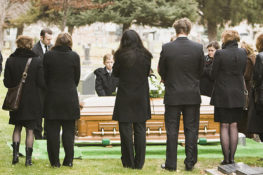

Should I Send Sympathy Flowers?
What kind of arrangement is appropriate, where should you send it, and when should you send an alternative?
Read more
What Should I Write in a Sympathy Card?
We'll help you find the right words to comfort your family member or loved one during this difficult time.
Read more
Resources to help you cope with loss

How to Cope With Grief
Information and advice to help you cope with the death of someone important to you.
Read more
Estate Settlement Guide
If you’re in charge of handling the affairs for a recently deceased loved one, this guide offers a helpful checklist.
Read more

Obituaries, grief & privacy: Legacy’s news editor on NPR podcast
Legacy's Linnea Crowther discusses how families talk about causes of death in the obituaries they write.
Read moreWays to honor David Tracy's life and legacy
Obituary Examples
You may find these well-written obituary examples helpful as you write about your own family.
Read more

Obituary Templates – Customizable Examples and Samples
These free blank templates make writing an obituary faster and easier.
Read more
How Do I Write a Eulogy?
Some basic help and starters when you have to write a tribute to someone you love.
Read more


